

 +86-0515-86223369
  0
0 en
en English
 日本語
日本語 Español



If you need any help, please feel free to contact us
 Products & Solutions
Home / News / Industry News / Fused Quartz Melting Point: 1713°C Guide for Industrial Buyers and Suppliers
Fused Quartz Melting Point: 1713°C Guide for Industrial Buyers and Suppliers
Content
- 1 What Is the Fused Quartz Melting Point and Why It Matters
- 2 Fused Quartz Melting Point vs. Softening, Annealing, and Strain Points
- 3 Why the Melting Point of Fused Quartz Exceeds 1,700°C
- 4 Visual Comparison: High-Temperature Limits of Fused Quartz and Common Materials
- 5 Industrial Applications That Depend on the Fused Quartz Melting Point
- 6 Selection and Purchasing Guide for Fused Quartz Components
- 7 Maintenance and Handling to Preserve High-Temperature Performance
- 8 Frequently Asked Questions About Fused Quartz Melting Point
- 9 Explore Related Fused Quartz Products
The fused quartz melting point is usually quoted as approximately 1713°C, yet a purchasing manager who orders a quartz crucible for 1400°C service may still see sagging, devitrification, or surface pitting long before that number is reached. The reason is simple: melting point is only one point on a temperature curve. Softening point, annealing point, strain point, impurity level, and thermal history all decide whether a fused quartz part survives a real furnace cycle. If you are sourcing fused quartz tubes, rods, plates, or crucibles from a manufacturer or supplier, the practical question is not “What is the melting point?” but “What is the safe working temperature for this specific grade and shape?”
This guide gives you the conclusion first: for most industrial buyers, the usable temperature limit of fused quartz is far below its melting point, often between 1000°C and 1200°C for continuous service, depending on grade and support structure. The rest of the article explains why, compares fused quartz with common high-temperature materials, and shows how to select and maintain quartz components without over-specifying or under-buying.
Fused quartz melts near 1713°C, but its practical continuous service limit is usually 1000°C to 1200°C because viscosity, devitrification, and mechanical load matter more than the melting point alone.
What Is the Fused Quartz Melting Point and Why It Matters
Fused quartz is an amorphous form of silicon dioxide, made by melting high-purity crystalline silica and cooling it rapidly so that it does not crystallize. Because the structure is a disordered network of silicon-oxygen tetrahedra, it has no sharp crystalline melting point in the same way a metal does. Instead, it softens gradually as temperature rises. The commonly cited fused quartz melting point, around 1713°C, refers to the temperature at which the viscosity drops enough for the material to flow like a very thick liquid under its own weight.
That number matters because it sets the absolute upper boundary for any thermal process. A quartz tube used in a diffusion furnace, a quartz plate used as an optical window in a high-temperature chamber, or a quartz crucible holding molten silicon must never approach that boundary in normal operation. Even at 1400°C, fused quartz can deform slowly under load. At 1500°C, the risk of creep and devitrification rises sharply. For industrial buyers, the melting point is a safety reference, not a target operating temperature.
Another reason the melting point matters is purity. High-purity fused quartz with very low metallic impurities can maintain optical clarity and chemical inertness up to higher temperatures than standard grades. However, trace sodium, potassium, calcium, and iron can lower the effective softening temperature and promote crystallization. A supplier who quotes only “fused quartz melting point 1713°C” without grade data is giving you an incomplete specification. Ask for the softening point, annealing point, hydroxyl content, and impurity profile instead.
The fused quartz melting point is an absolute ceiling, not a working limit; specify the softening point and impurity grade for the real operating window.
Fused Quartz Melting Point vs. Softening, Annealing, and Strain Points
Engineers often confuse melting point with other thermal reference points. The table below compares the key temperatures for typical fused quartz and two common glasses. These values are approximate and vary by grade, hydroxyl content, and manufacturing method, but they show why melting point alone is a poor selection criterion.
| Material | Strain Point (°C) | Annealing Point (°C) | Softening Point (°C) | Melting Point (°C) |
|---|---|---|---|---|
| Fused quartz (typical) | 1120 | 1215 | 1683 | 1713 |
| High borosilicate glass (COE 3.3) | 510 | 560 | 820 | Not sharply defined |
| Soda-lime glass | 470 | 510 | 700 | Not sharply defined |
The strain point is the temperature at which internal stress relaxes over a few hours. Below the strain point, a quartz part behaves elastically. Between the strain point and annealing point, stress relaxes in minutes to hours. Above the softening point, the material deforms rapidly under its own weight. For fused quartz, the softening point is about 1683°C, only 30°C below the quoted melting point. That narrow gap means there is no practical “high-temperature molten” service range: once you approach 1680°C, the part is already losing shape.
In real equipment, the safe continuous limit is usually set at or below the strain point, around 1100°C to 1150°C, unless the quartz is supported along its entire length or is used in a vertical orientation with minimal load. For short-term processing, some operations push to 1250°C, but the risk of devitrification and sag increases quickly. This is why experienced buyers ask for the strain point and annealing point first, and treat the fused quartz melting point as a last-resort safety data point.
For continuous service, design around the strain point near 1120°C, not the fused quartz melting point near 1713°C.
Why the Melting Point of Fused Quartz Exceeds 1,700°C
The high melting point comes from the strong silicon-oxygen bond and the rigid tetrahedral network. Each silicon atom is bonded to four oxygen atoms, and each oxygen is shared between two silicon atoms. This creates a three-dimensional network with a bond energy of roughly 452 kJ/mol for Si-O. Breaking that network requires a large amount of thermal energy, which is why fused quartz remains solid and rigid far above the temperatures that soften ordinary window glass.
Amorphous Structure and Bond Energy
Unlike crystalline quartz, fused quartz lacks long-range order. There are no grain boundaries and no cleavage planes. This isotropic structure gives fused quartz excellent thermal shock resistance and low thermal expansion, about 0.55 × 10⁻⁶ /°C. When heated, the material expands very little, so thermal gradients do not generate the same destructive stresses seen in crystalline ceramics. That property is often more valuable than the melting point itself, because it lets quartz survive rapid heating and cooling cycles that would crack alumina or graphite components.
Impurity Effects on Melting Behavior
Impurities act as network modifiers. Sodium, potassium, calcium, and iron break some Si-O bonds and lower the viscosity at a given temperature. A high-purity fused quartz with total metallic impurities below 50 ppm may show a softening point close to 1683°C. A less pure grade with higher alkali content may begin to deform at 1500°C or lower. For semiconductor and photovoltaic applications, this difference is critical. Electronic-grade quartz crucibles must maintain shape and chemical purity at 1450°C to 1500°C while holding molten silicon, and even small impurity levels can cause crystal defects in the final wafer.
The fused quartz melting point is high because of the strong Si-O network, but impurities can reduce the practical thermal limit by hundreds of degrees.
Visual Comparison: High-Temperature Limits of Fused Quartz and Common Materials
Before choosing a material for a high-temperature process, it helps to see the relative thermal limits in one view. The chart below compares the melting point of fused quartz with crystalline quartz and the softening points of two common glasses. This comparison is not about which material is “best” in every case. It is about understanding where each material stops behaving like a solid structure. The values are approximate and depend on grade, but they reveal a clear gap between fused quartz and ordinary glass. The gap explains why fused quartz is specified for furnace tubes, crucibles, and optical windows while soda-lime glass is limited to windows and containers.
The chart shows a dramatic gap between fused quartz and ordinary glasses. Fused quartz and crystalline quartz both have thermal limits above 1600°C. High borosilicate glass softens near 820°C, and soda-lime glass near 700°C. That means a fused quartz tube can operate in a furnace zone where borosilicate would collapse. The chart also shows that crystalline quartz and fused quartz have similar melting points, but their behavior below melting is very different. Crystalline quartz undergoes a phase change near 573°C, which can cause cracking under thermal cycling, while fused quartz remains amorphous and stable. For a buyer, the first conclusion is that fused quartz belongs to a different temperature class than common laboratory glass. The second conclusion is that the melting point gap does not mean unlimited service temperature. Even fused quartz must be supported and protected from contamination. The third conclusion is that material selection should compare softening points, not just melting points, because softening is what causes deformation in real furnaces. The fourth conclusion is that high borosilicate glass remains a cost-effective choice for applications below 500°C. The fifth conclusion is that soda-lime glass should never be used where thermal shock or temperatures above 400°C are expected. The sixth conclusion is that the visual gap is large enough to justify the higher cost of fused quartz in semiconductor, photovoltaic, and high-temperature optical equipment. The seventh conclusion is that grade selection within fused quartz matters, because low-purity grades can lose shape well below 1600°C. The eighth conclusion is that the chart is a screening tool, not a final design specification. The ninth conclusion is that engineers should always request vendor data for the exact grade and shape being purchased. The tenth conclusion is that a supplier who understands these differences can help prevent costly failures in the field.
Fused quartz operates in a temperature class above 1600°C, while common borosilicate and soda-lime glasses soften below 850°C; never substitute one for the other in high-temperature equipment.
Industrial Applications That Depend on the Fused Quartz Melting Point
Industries that use fused quartz do not rely on the melting point as a process setpoint. They rely on the combination of high melting point, low thermal expansion, chemical inertness, and optical transparency. The following applications show where those properties create value and where the melting point sets a hard safety boundary.
Semiconductor and Photovoltaic Processing
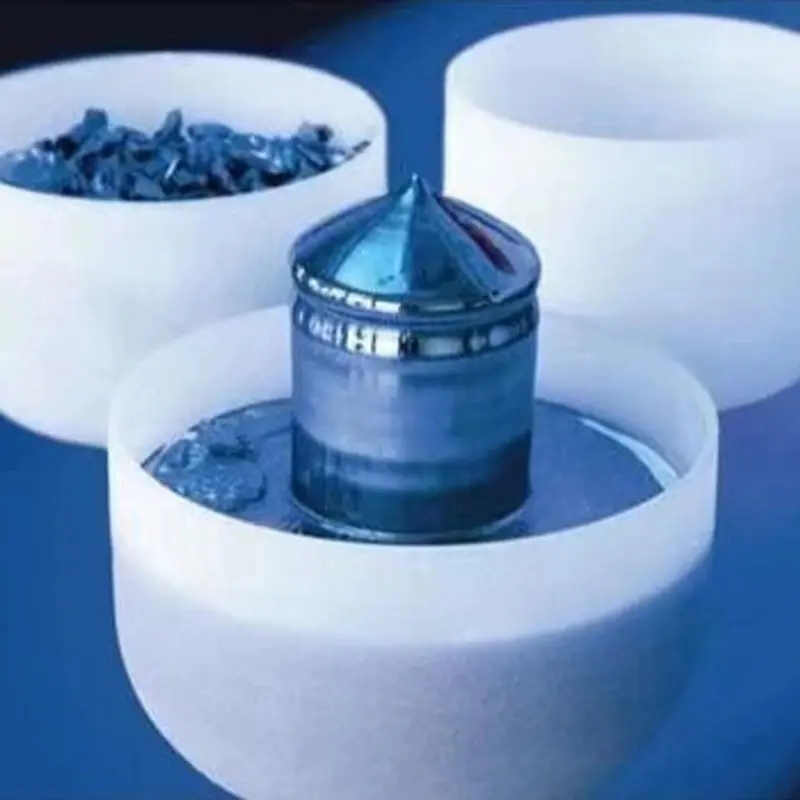
In semiconductor diffusion furnaces, fused quartz tubes and boats hold silicon wafers at 1000°C to 1200°C for hours. The quartz must not sag, release impurities, or devitrify. In photovoltaic crystal growth, quartz crucibles contain molten silicon at approximately 1450°C. The crucible’s inner surface must resist dissolution while the outer surface withstands thermal gradients. A semiconductor-electronic-grade quartz crucible is designed for this exact balance of purity and high-temperature strength.
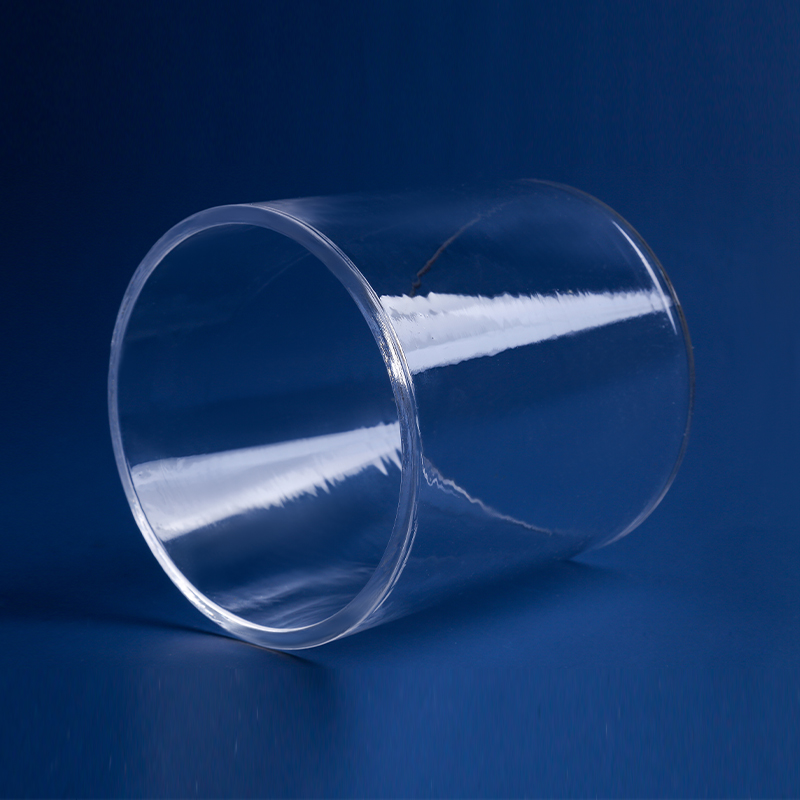
 Electronic-Grade Quartz Crucible for Semiconductor and Photovoltaic High-Temperature ProcessingHigh-purity electronic-grade quartz crucible with SiO2 above 99.998%, low impurities and inclusions, intended for semiconductor and photovoltaic processes requiring thermal strength and contamination resistance.View Product →
For buyers, the melting point of fused quartz is relevant because it confirms that the crucible will not melt if temperature control briefly overshoots. However, the real failure mode is usually devitrification or contamination, not bulk melting. That is why electronic-grade quartz crucibles are specified with strict impurity limits and controlled hydroxyl content.
Optical and UV Systems
Fused quartz windows and lenses are used in UV reactors, laser systems, and high-temperature optical chambers. The material transmits deep UV and visible light while withstanding heat from lamps and process gases. In these systems, the fused quartz melting point ensures that the window does not soften during lamp operation, but the more important property is low thermal expansion, which prevents cracking during rapid warm-up.
Heating Elements and Furnace Components
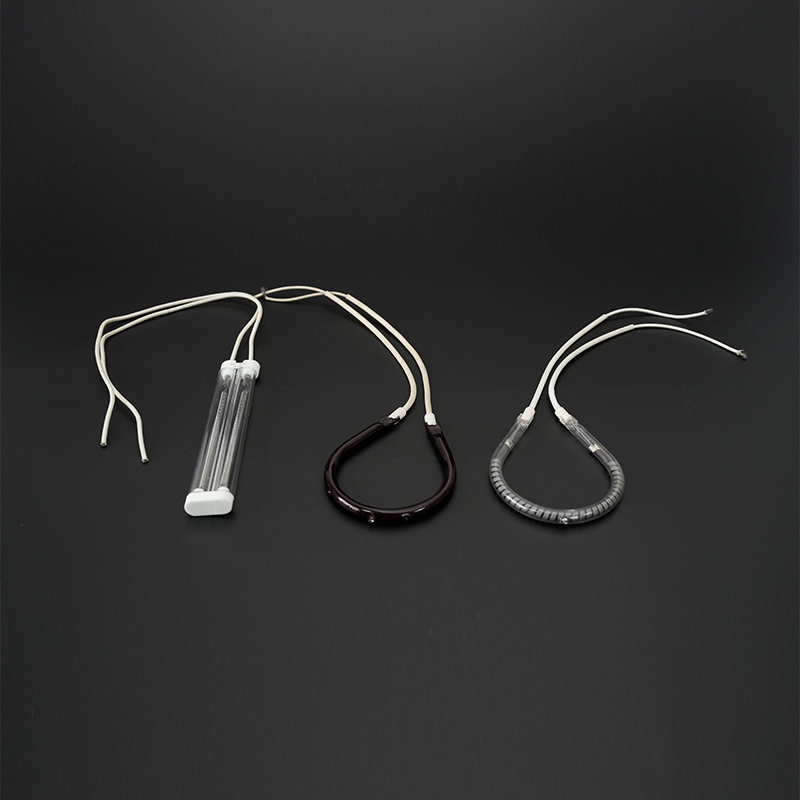
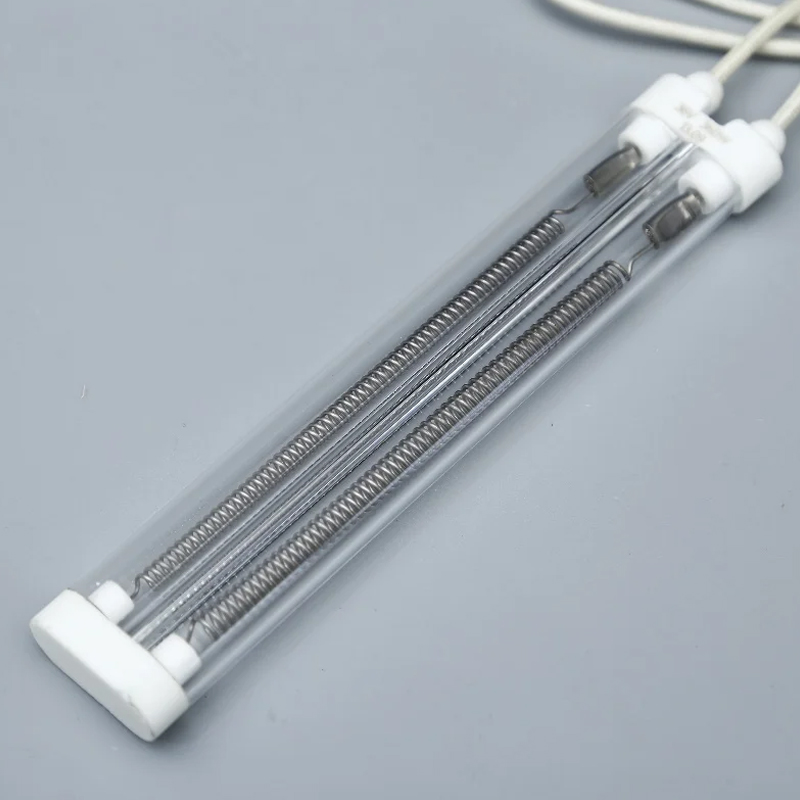
Quartz infrared heating tubes use a fused quartz envelope to protect the heating element from oxidation and contamination. The envelope must operate at 800°C to 1100°C while remaining transparent to infrared radiation. Carbon fiber quartz infrared heating tubes are a common choice for industrial dryers and semiconductor processes. Here, the melting point of fused quartz provides a safety margin above the element temperature, but the envelope’s wall thickness and hydroxyl content affect how much heat it can handle without deformation.
In semiconductors, photovoltaics, optics, and heating, the fused quartz melting point provides a safety margin, but purity, thermal expansion, and devitrification control determine success.
Selection and Purchasing Guide for Fused Quartz Components
When you source fused quartz components from a manufacturer, supplier, or wholesaler, the melting point should be one item in a larger specification package. Use the following checklist to avoid overpaying for unnecessary purity or under-specifying a critical part.
- Define the maximum continuous operating temperature and the peak short-term temperature separately.
- Request the strain point, annealing point, and softening point for the exact grade offered.
- Specify hydroxyl content (OH) because low-OH fused quartz has different infrared transmission and thermal stability.
- State the chemical environment: molten silicon, halogen gases, acids, or high-purity water all affect material choice.
- Confirm dimensional tolerances, wall thickness, and concentricity, because thin walls deform faster under heat.
- Ask for devitrification data after extended high-temperature exposure, not just the melting point.
- Check whether the part will be supported horizontally or vertically, because mechanical load lowers the safe temperature.
- Verify packaging and handling instructions to prevent surface contamination before installation.
A transparent quartz tube used in a UV reactor may only need standard purity and a moderate softening point. A semiconductor-grade quartz plate used as a carrier may require extremely low metallic contamination and a verified annealing point. The cost difference can be significant, so match the grade to the application rather than buying the highest purity for every job. If you need a supply partner who can produce standard and custom quartz tubes, rods, plates, and crucibles, review the fabrication capabilities and ask for grade-specific thermal data before placing a production order.
Specify fused quartz by grade, geometry, and thermal reference points; the melting point alone cannot protect a part from sagging, devitrification, or contamination.
Maintenance and Handling to Preserve High-Temperature Performance
Even the best fused quartz component can fail early if it is mishandled during installation, cleaning, or operation. These practices help preserve the material’s high-temperature performance and extend service life.
- Clean quartz surfaces with high-purity solvents and lint-free wipes; avoid touching the hot zone with bare hands.
- Inspect for chips, scratches, and embedded particles before installation, because surface defects become crack initiation sites.
- Support horizontal tubes at multiple points to reduce sag; never let a long quartz tube span unsupported at high temperature.
- Avoid rapid thermal cycling above 1000°C; follow the equipment maker’s ramp rate, typically 5°C to 10°C per minute.
- Keep the quartz surface free of alkali metals, which lower the effective softening temperature and promote devitrification.
- Replace parts showing milky or cloudy zones, because devitrification reduces strength and can lead to sudden failure.
In furnaces and reactors, quartz parts often fail at the support points or seals rather than in the middle. That pattern tells you that mechanical stress and contamination are more common causes than bulk melting. If a part fails repeatedly near a metal clamp or gasket, review the contact materials and thermal expansion mismatch before blaming the fused quartz melting point.
Most high-temperature quartz failures come from mechanical stress, contamination, and devitrification, not from reaching the fused quartz melting point.
Frequently Asked Questions About Fused Quartz Melting Point
What is the exact melting point of fused quartz?
The commonly accepted value is approximately 1713°C. Because fused quartz is amorphous, it does not melt sharply. Instead, it softens over a temperature range, and the quoted melting point refers to the temperature at which its viscosity becomes low enough for flow under load.
Does fused quartz melt at the same temperature as crystalline quartz?
No. Crystalline quartz melts near 1670°C, slightly lower than fused quartz, but it also undergoes a solid-state phase change near 573°C. That phase change can cause cracking in thermal cycling. Fused quartz avoids the phase change because it is already amorphous.
Can fused quartz be used above 1,200°C continuously?
In most unsupported applications, continuous service above 1200°C is risky. The strain point is about 1120°C, and the annealing point is about 1215°C. Above those temperatures, the material can deform slowly under its own weight. Short-term excursions to 1250°C are possible in well-supported, high-purity parts, but long-term operation should be designed below the strain point.
How does the melting point affect quartz crucible selection?
For quartz crucibles holding molten silicon at about 1450°C, the melting point of fused quartz provides a safety margin against catastrophic melting. However, the real selection criteria are purity, devitrification resistance, and the ability to maintain shape under thermal gradients. A crucible that meets the melting point requirement but has high impurity levels can still fail by contamination or surface crystallization.
Is fused quartz the same as fused silica?
In industrial practice, the terms are often used interchangeably. Both refer to high-purity amorphous silicon dioxide. Some suppliers use “fused silica” for synthetic grades and “fused quartz” for grades made from natural quartz crystal, but the thermal behavior is similar when purity is comparable.
The fused quartz melting point is about 1713°C, but safe continuous use is usually governed by the strain point near 1120°C and by impurity-related devitrification.
Explore Related Fused Quartz Products
If you are evaluating fused quartz for a high-temperature process, start with the grade that matches your temperature, purity, and geometry requirements. For more information on raw materials and electronic-grade components, review high-purity fused quartz and semiconductor-grade quartz. These pages explain how purity and manufacturing method influence thermal performance beyond the basic fused quartz melting point.
For custom shapes, tubes, rods, plates, and crucibles, work with a manufacturer that can provide grade-specific thermal data and fabrication tolerances. A clear specification at the purchasing stage is the most reliable way to avoid deformation, contamination, and premature failure in service.
Choose fused quartz by grade and application data, and treat the melting point as a safety reference rather than a design target.
Featured Products
Copyright © Yancheng Mingyang Quartz Products Co., Ltd. All Rights Reserved.
Wholesale Quartz Products Manufacturer Quartz Glass Factory