

 +86-0515-86223369
 0
 en
 English
 日本語
 Español



If you need any help, please feel free to contact us
 Products & Solutions
Home / News / Industry News / Fused Silica Thermal Conductivity: Values, Temperature Trends, and Buying Notes
Fused Silica Thermal Conductivity: Values, Temperature Trends, and Buying Notes
Content
- 1 Fused Silica Thermal Conductivity: The Numbers Buyers Actually Use
- 2 Why the Value Is Low: An Amorphous Network With No Free Electrons
- 3 Fused Silica Thermal Conductivity vs Temperature
- 4 What a Low Conductivity Does Inside Real Parts
- 5 Thermal Shock: Where Conductivity and Expansion Meet
- 6 Where Low Conductivity Helps, and Where It Hurts
- 7 Reading a Supplier Data Sheet Without Being Misled
- 8 Matching Grade to Process: Semiconductor, Photovoltaic, Laboratory, Optical
- 9 Sourcing Questions for a Fused Silica Manufacturer
- 10 Cost, Lead Time and Order Size in Practice
- 11 Simple In-House Checks on Incoming Quartz
- 12 FAQ: Fused Silica Thermal Conductivity
- 12.1 What is the thermal conductivity of fused silica at room temperature?
- 12.2 Does fused silica thermal conductivity increase with temperature?
- 12.3 Is fused silica a good thermal insulator?
- 12.4 Is fused silica thermal conductivity the same as fused quartz thermal conductivity?
- 12.5 How does hydroxyl content affect the number?
- 12.6 Can I use 1.38 W/(m·K) to model a 1000 °C furnace?
- 12.7 Why do two suppliers quote different values for the same product?
- 12.8 Does coating change the thermal conductivity of fused silica?
- 12.9 How thick should a quartz part be for thermal insulation?
- 12.10 Which grade should I request for a high-temperature structural part?
- 13 Bringing the Numbers Back to the Part
A furnace builder once asked for the thermal conductivity of a 120 mm clear quartz tube and got three different answers in a single afternoon: 1.3, 1.38 and 2.6 W/(m·K). All three were honest. The first came from a room-temperature catalogue line, the second from a handbook value measured at 25 °C, and the third from an in-house test at 900 °C where infrared radiation had quietly joined the heat transfer.
The short answer is that fused silica thermal conductivity is about 1.38 W/(m·K) at room temperature, roughly one-fiftieth that of stainless steel and a small fraction of dense alumina. It is one of the lowest values among solid oxide glasses, and it does not stay fixed: as temperature rises, the number climbs, and above roughly 500 °C a growing share of the heat travels by radiation through the glass rather than by lattice vibration.
That single sentence drives most of the engineering consequences. Low conductivity means steep gradients across a wall, slow heat-up, and heat that stays close to where you put it. It also means a quartz window facing a 3 kW lamp runs hot on one face and comparatively cool on the other, which is useful right until the gradient exceeds what the material can survive. What follows covers the numbers, how they shift with temperature, and what to confirm with a fused silica manufacturer before a purchase order is released.
Fused Silica Thermal Conductivity: The Numbers Buyers Actually Use
Clear fused silica is quoted at 1.38 W/(m·K) at 25 °C in the standard references, with a practical working band of about 1.3 to 1.4 W/(m·K) depending on grade, hydroxyl content and test method. Borosilicate 3.3 glass sits near 1.2, soda-lime float glass near 1.0, dense 96% alumina near 20 to 25, and 304 stainless steel near 16. Copper, at roughly 400, is not part of the same conversation.
The figure that gets confused with conductivity is thermal diffusivity, and the confusion causes real design errors. Conductivity describes how much heat crosses a unit thickness under a unit gradient. Diffusivity describes how quickly a temperature change travels through the body. For fused silica, diffusivity works out to roughly 0.85 mm²/s, which for a 6 mm wall means a thermal response time on the order of 40 seconds. A quartz window does not instantly adopt the temperature of whatever it is looking at, and that lag is often the property you are actually buying.
| Property | Typical value at 25 °C | What it changes in practice |
|---|---|---|
| Thermal conductivity | 1.38 W/(m·K) | Wall gradients, insulation value, heat loss through supports |
| Thermal diffusivity | ~0.85 mm²/s | How fast a part responds to a step change in temperature |
| Coefficient of thermal expansion | 0.55 × 10⁻⁶ /°C | Surviving fast quench and joining to other materials |
| Specific heat capacity | ~700 to 750 J/(kg·K) | Energy needed to bring a fixture up to process temperature |
| Density | 2.2 g/cm³ | Mass of large tubes, crucibles and plates |
| Annealing point | ~1215 °C | Whether stress relief is possible after fabrication |
| Softening point | ~1683 °C | Upper limit for forming and sag resistance |
| Dielectric constant | ~3.8 | Insulating spacers in RF and high-voltage assemblies |
Two habits make these numbers usable rather than decorative. First, always ask at which temperature the value was measured, because a room-temperature figure applied to a 1000 °C furnace wall will understate heat flow. Second, keep units straight: 1 W/(m·K) equals about 6.93 BTU·in/(ft²·hr·°F), so a supplier quoting 9.6 in imperial units is describing the same material as one quoting 1.38 in metric.
Treat 1.38 W/(m·K) as a room-temperature starting point, not as the number you design a hot zone with.
Why the Value Is Low: An Amorphous Network With No Free Electrons
Heat moves through solids by two routes: free electrons and lattice vibrations, known as phonons. Metals have plenty of free electrons, which is why copper reaches 400 W/(m·K). Fused silica has essentially none, so the entire burden falls on phonons travelling through a disordered silicon-oxygen network. Disorder is the point here. Every deviation in the Si-O tetrahedral arrangement scatters a phonon and shortens its mean free path, and short mean free paths translate directly into low conductivity.
This is also why fused silica behaves so differently from crystalline quartz. Quartz crystal is ordered, so phonons travel further, and its conductivity reaches roughly 6 to 10 W/(m·K) depending on crystal direction. Fused silica is isotropic: one value in every direction, no axis to worry about. For a designer, that isotropy is a small gift, because a drawn tube, a pressed disc and a machined plate all conduct heat the same way regardless of orientation.
What Moves the Number Within the Family
Purity matters less than structure. Commercial clear fused silica is typically above 99.9% SiO₂, and the residual fraction is too small to create conductive pathways. What does shift the measured value is hydroxyl content, bubble population and the thermal history of the part. High-hydroxyl material made by flame fusion carries several hundred ppm of OH, while electrically fused and synthetic low-OH grades drop below 10 ppm. Those differences barely move conductivity at room temperature, but they change infrared transmission, which changes how much heat radiates through the part at high temperature.
Bubbles act as tiny voids. A heavily bubbled opaque grade scatters light and also interrupts heat paths, and its effective conductivity can read slightly lower in a steady-state test. Do not plan a thermal design around that difference. Bubble class is a quality and optical specification first, a thermal one a distant second.
Coating is a separate conversation. A reflective or absorbing coating changes the surface energy balance and therefore the temperature the part reaches, but it does not alter the bulk conductivity of the silica underneath. When a supplier reports a different conductivity after coating, they are describing a system measurement, not a material property.
Fused silica conducts heat through phonons alone, so structural disorder, not chemical purity, keeps its conductivity near 1.38 W/(m·K).
Fused Silica Thermal Conductivity vs Temperature
Every hot-zone design eventually asks the same question: what happens to the number at 800 °C. Below about 500 °C the rise is modest and mostly a lattice effect, with phonon transport becoming slightly more efficient as the material expands. Above that point, radiative transport across the thickness adds to the measured heat flow and the apparent conductivity climbs faster.
Approximate apparent thermal conductivity of clear fused silica by temperature
25 °C~1.38
200 °C~1.55
400 °C~1.75
600 °C~2.00
800 °C~2.35
Indicative values in W/(m·K). Figures above roughly 500 °C include a radiative contribution and depend on thickness and surface finish.
The practical reading is that a part rated at 1.38 at room temperature may behave like 2.0 to 2.4 W/(m·K) in the working zone of a diffusion furnace, which is a 45% to 70% increase in heat flow for the same wall thickness. On a large-diameter furnace tube this rarely changes the mechanical design, but it does change the thermal model behind heater zoning and warm-up ramps. Engineers who size insulation or predict cold-face temperatures using only the catalogue figure tend to under-predict losses.
Thickness dependence is the second trap. A thin disc radiates heat across its faces more effectively per unit volume than a thick block, so a 2 mm plate and a 30 mm block can return different apparent values from the same test house. When you compare two suppliers, compare like geometry and like temperature, or the comparison is meaningless. For parts such as infrared heater envelopes and sight glass assemblies, ask for the value at the actual service temperature and, where possible, the method used.
Above roughly 1100 °C the thermal discussion starts to lose priority to devitrification. Cristobalite formation, often seeded by surface contamination from alkali or handling residues, changes both the structure and the thermal expansion behaviour. A material that conducted heat predictably at 900 °C is no longer the same material after a long soak at 1200 °C.
Design hot zones with the conductivity at the service temperature, and expect something close to double the room-temperature figure near 800 °C.
What a Low Conductivity Does Inside Real Parts
Numbers become useful only when they map onto a component. The same 1.38 W/(m·K) produces very different behaviour in a window, a furnace tube, a crucible and a heater envelope, because geometry decides how much heat has to cross how little material.
Windows, Sight Glasses and Viewports
A viewport is a thin wall with a large temperature difference across it. Low conductivity keeps the outer face cool enough for an O-ring or a graphite gasket, provided the radiant load is not extreme. The gradient, not the absolute temperature, is what usually fails the part, and a 5 mm disc survives a much harsher environment than a 25 mm disc because the thinner section cannot build the same internal stress. Polished surfaces also radiate differently from ground surfaces, so two visually similar windows can run at different temperatures.
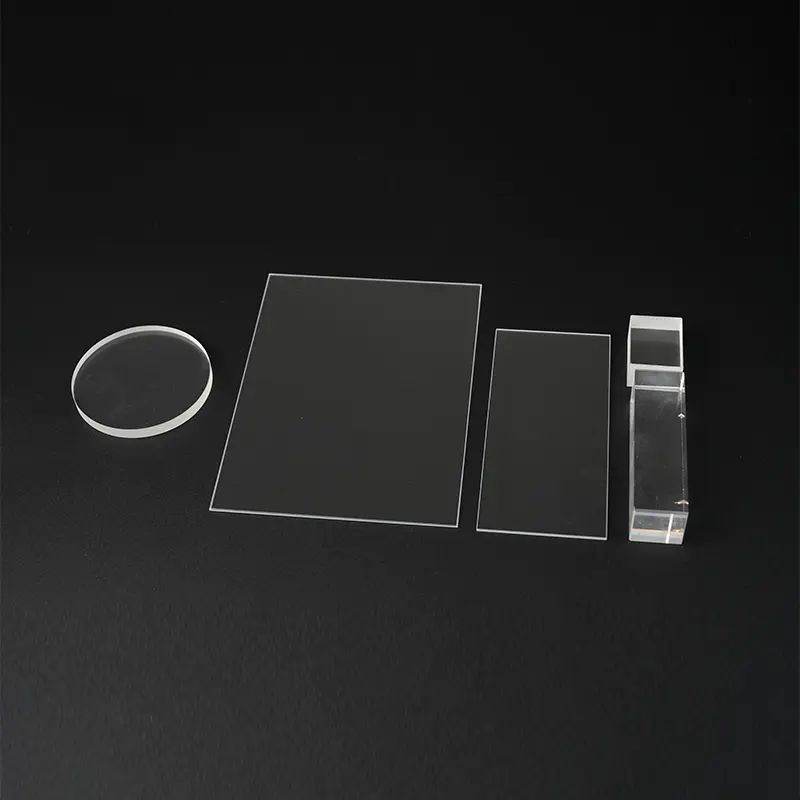
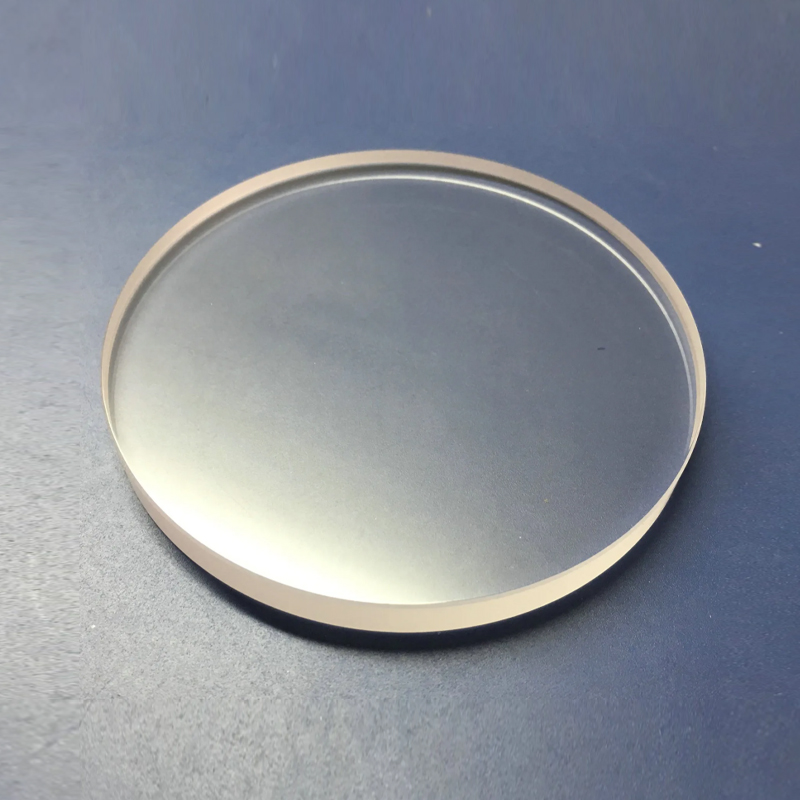
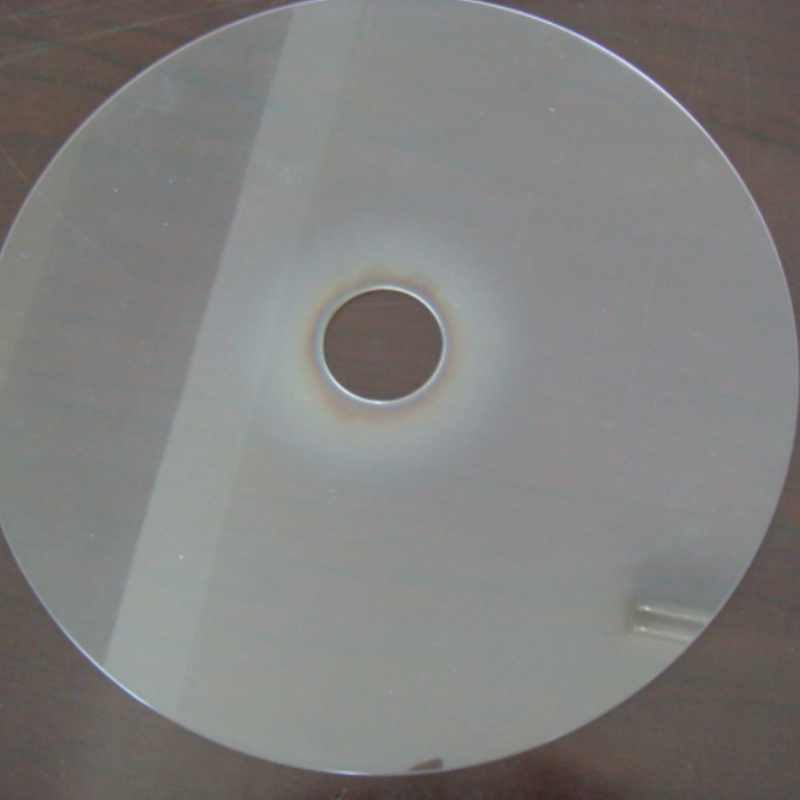
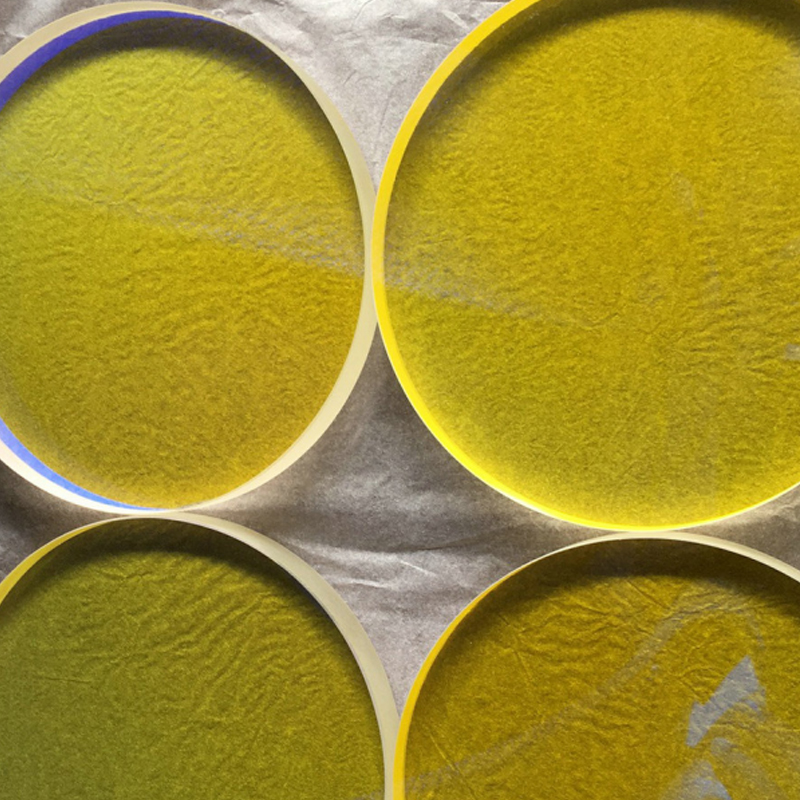
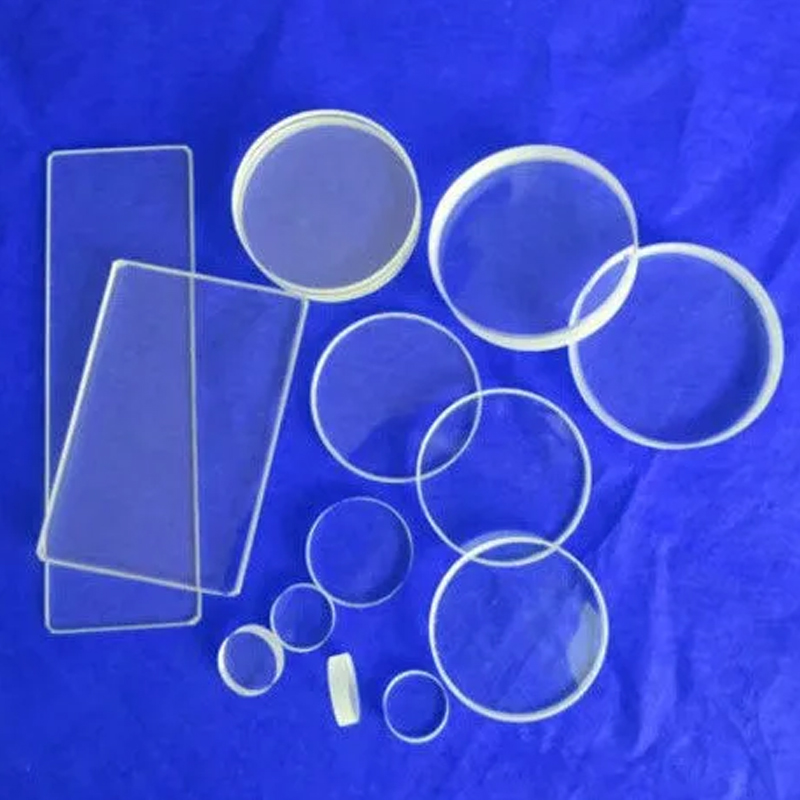 High-Purity Quartz Window and Glass PlateHigh-purity quartz window for viewport and furnace applications, offering thermal shock resistance and optical transmission where thin, stable walls matter.View Product →
Furnace Tubes and Process Liners
In a horizontal or vertical furnace tube, heat arrives from the outside elements and must pass through the wall to reach the wafer or the sample. A low-conductivity wall slows that transfer, which smooths the thermal profile along the tube and reduces the penalty for uneven heater zoning. The trade-off appears during ramp-up and cool-down, when slow diffusion through the wall limits how fast the process can move. For 200 mm and 300 mm furnace applications, the wall also has to stay dimensionally stable through thousands of cycles, which is a thermal expansion question rather than a conductivity one.
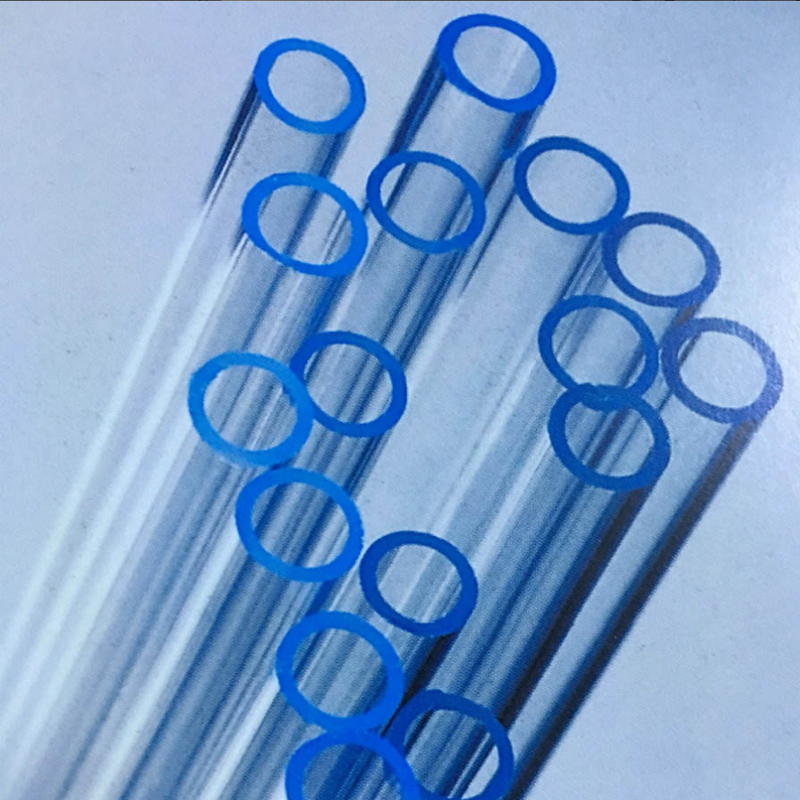
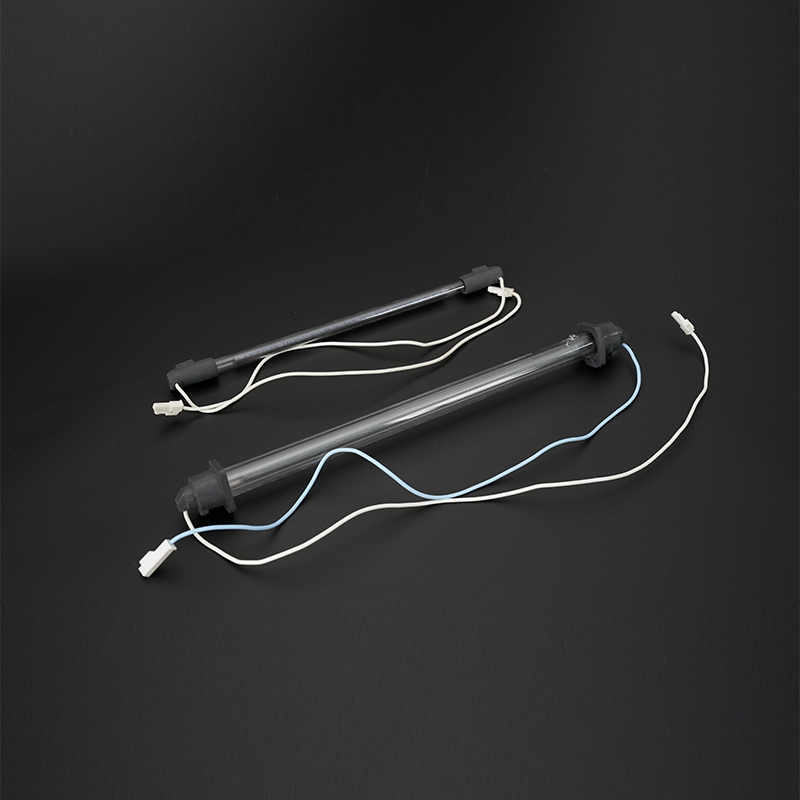
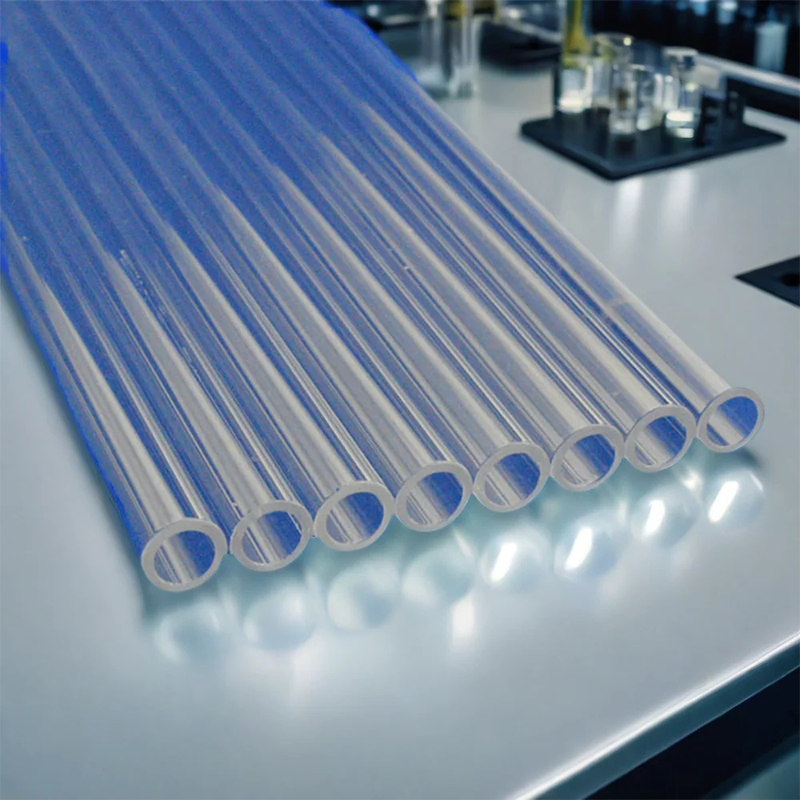 Transparent Quartz Tube for Furnace and Lamp ApplicationsHigh-purity quartz tube with low hydroxyl content and high transmittance, suited to furnace and lamp uses where thermal stability and geometry matter.View Product →
Crucibles in Crystal Growth
A fused silica crucible holding a silicon melt is a heat transfer device as much as a container. The wall has to deliver enough heat to keep the melt at the right temperature while resisting the thermal stress of the charge and the pull. Because conductivity is low, the crucible wall becomes a significant part of the thermal resistance between the heater and the melt, and that resistance is one of the reasons furnace design around the crucible is as elaborate as it is.
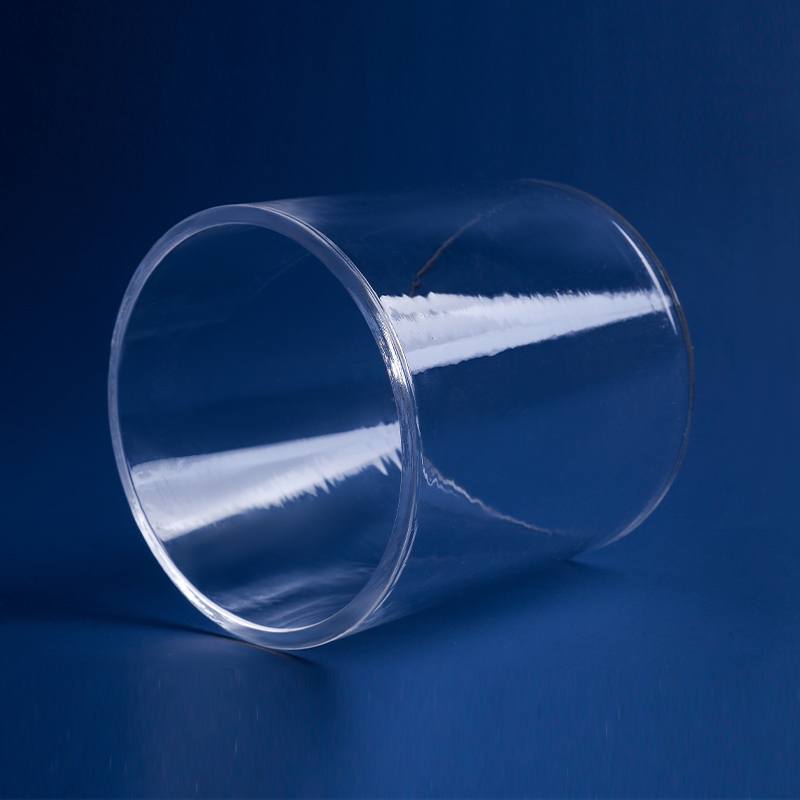
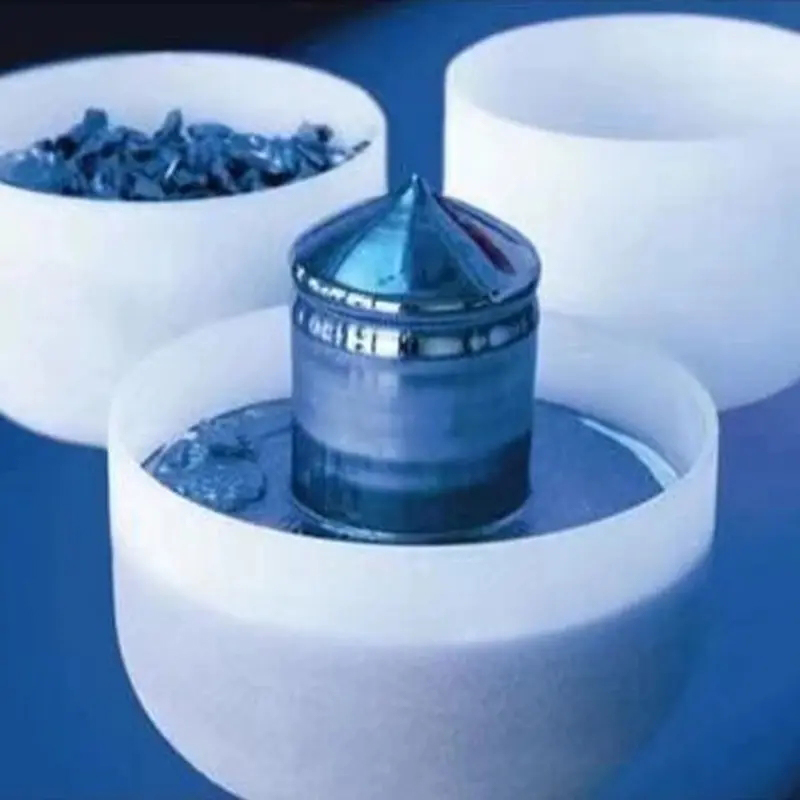
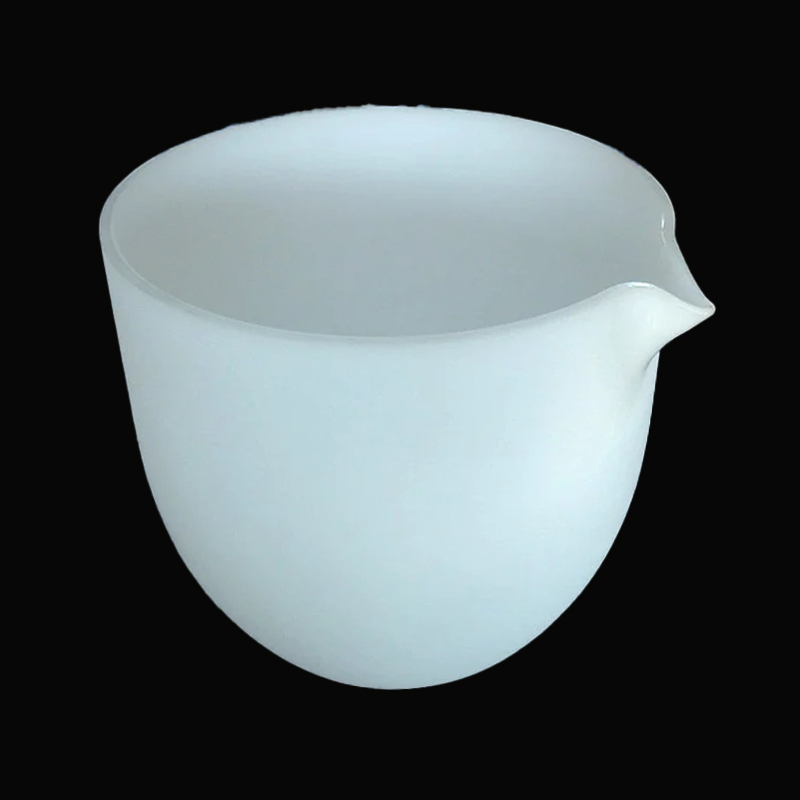 High-Purity Quartz Crucible for Solar SiliconHigh-purity fused quartz crucible for solar-grade monocrystalline silicon, available in 14–28 inch sizes with high dimensional accuracy for high-temperature melt containment.View Product →
Infrared Heater Envelopes
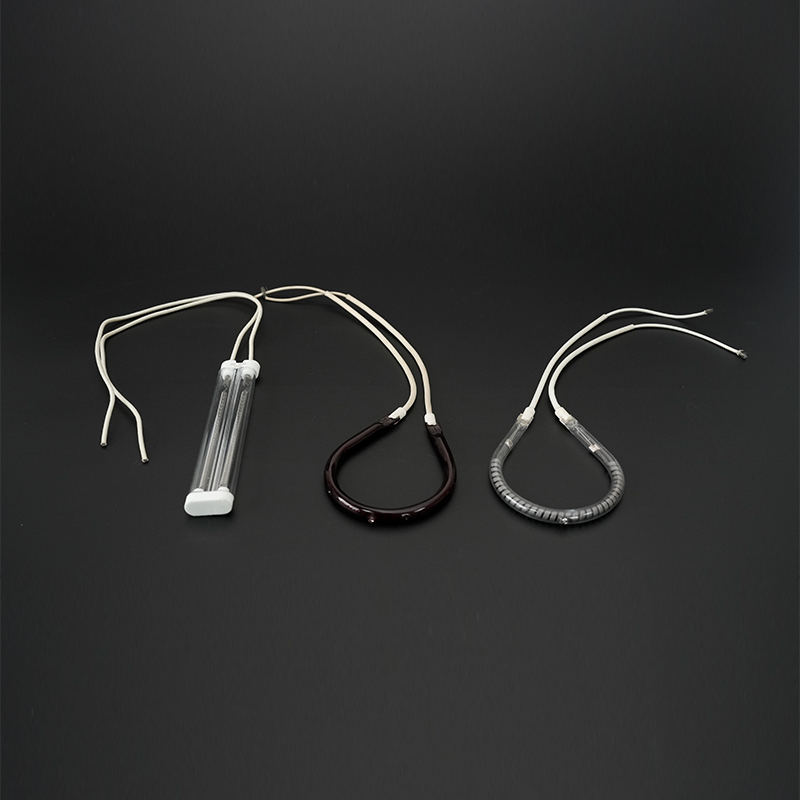
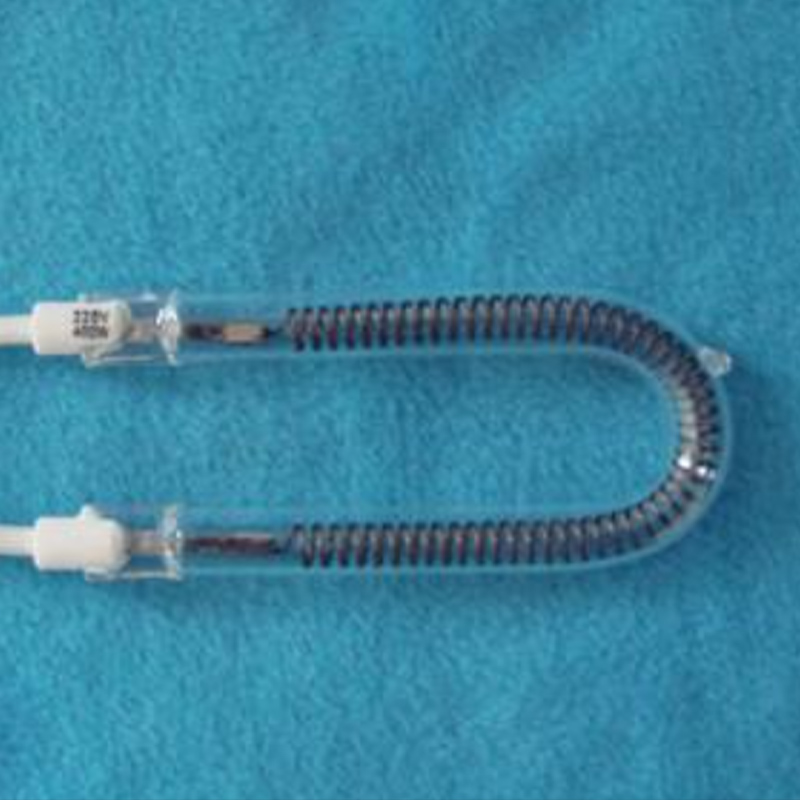
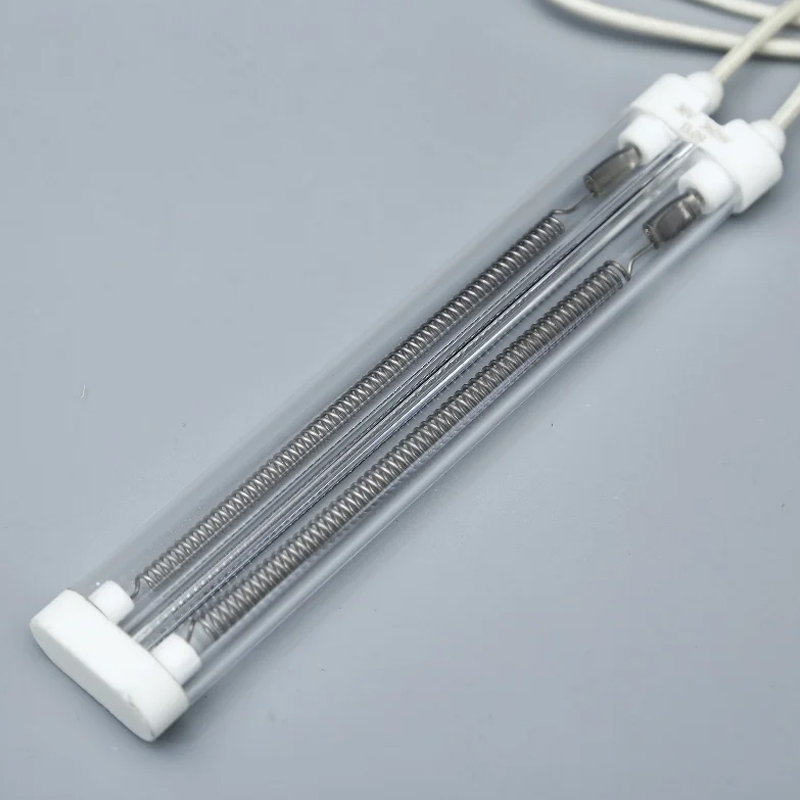
A quartz tube around a carbon fibre or tungsten filament has an unusual job: it must pass radiant energy outward while surviving the local hot spot of the filament. Low conductivity keeps the tube surface from tracking the filament temperature too closely, and the same property keeps the ends of the tube cooler where the caps and leads sit. Heater makers usually care more about transmission in the 1 to 4 µm band than about conductivity, but the thermal figure still governs how much heat conducts along the tube to the end fittings.
Low conductivity buys you a cool outer face and a smoother thermal profile, and it charges you in ramp time and cooling speed.
Thermal Shock: Where Conductivity and Expansion Meet
Conductivity alone never breaks a part. It breaks a part together with expansion. The standard figure of merit for thermal shock resistance is the ratio of strength to the product of modulus and expansion coefficient, adjusted for Poisson's ratio. For fused silica that calculation lands near 1000 K of tolerable instant temperature difference. For soda-lime glass, with its expansion coefficient roughly sixteen times higher, the same calculation lands near 60 K.
That contrast is why a quartz tube can be pulled from a 1000 °C furnace into room air without shattering, while a soda-lime jar will not survive a dishwasher cycle. It is also why the reputation sometimes outruns reality. The figure of merit assumes a perfect surface, and real parts carry grinding marks, scratches, weld beads and contamination. A deep scratch from a careless tube puller reduces strength locally and can turn a 1000 K margin into a 200 K margin.
Why Wall Thickness Changes the Rule
Thick walls store more heat, develop steeper gradients under the same quench, and therefore fail at smaller temperature differences than thin walls. A heavy-wall quartz sleeve rated for a 900 °C process may tolerate a fast cool-down that a 10 mm section of the same material would not. This is where the diffusivity figure earns its keep: the slower heat moves through the wall, the longer the surface stays hot while the interior stays cold, and the bigger the stress that builds between them.
Annealing is the other lever. Fabricated parts carry residual stress from flame working, bending and machining. A proper annealing cycle near the annealing point relieves that stress before the part ever enters service, and it is one of the details worth specifying explicitly rather than assuming.
Fused silica survives extreme thermal shock because its expansion coefficient is tiny, but surface damage and heavy walls quietly remove most of that margin.
Where Low Conductivity Helps, and Where It Hurts
It helps wherever you want heat to stay put or move slowly. Quartz labware on a hotplate heats gently and does not scorch the sample at the contact point. Quartz insulating spacers keep a hot zone from leaking into a cold assembly. Quartz windows in front of lamps and sensors isolate a hot environment from a delicate one, and the low conductivity carries part of that duty alongside the high softening point.
It hurts wherever you need heat out. A high-power optical window absorbing even a fraction of a kilowatt accumulates heat in the middle of the aperture because the rim cannot drain it fast enough. In electronics, the very low conductivity of fused quartz is one of the reasons it is a poor choice for high-power circuit substrates, a limitation noted even in general reference material. Laser optics face the same problem: absorption heats the centre, conduction is slow, and the resulting gradient distorts the wavefront or eventually cracks the part.
A Quick Comparison Table
| Material | Conductivity, W/(m·K) | Practical consequence |
|---|---|---|
| Fused silica | ~1.38 | Steep gradients, good insulation, slow cool-down |
| Borosilicate 3.3 | ~1.2 | Similar thermal behaviour, lower cost, lower temperature ceiling |
| Soda-lime glass | ~1.0 | Comparable conductivity, but far worse thermal shock resistance |
| 96% alumina | ~20 to 25 | Spreads heat quickly, used where conduction is wanted |
| 304 stainless steel | ~16 | Conducts roughly twelve times more heat than fused silica |
| Copper | ~400 | Heat sink territory, orders of magnitude apart |
Reading the table sideways is often more useful than reading it down. The gap between fused silica and stainless steel explains why a quartz tube mated to a steel flange develops a temperature step at the joint, and why the gasket at that joint sees a different temperature than the flange face. Designing the interface with that step in mind avoids a whole category of leaks and cracked flanges.
The same low conductivity that makes fused silica a fine insulator makes it a poor heat spreader, so match the material to whether you want heat moved or held.
Reading a Supplier Data Sheet Without Being Misled
Three measurement details separate a usable data sheet from a marketing line. The first is method. Steady-state guarded hot plate testing is accurate but slow, and it becomes unreliable at high temperature because of convection and edge losses. Laser flash measures diffusivity on a small disc and converts it using density and specific heat, which is fast and works well to high temperature but depends on good values for those two inputs. Transient hot wire sits in between.
The second detail is whether the figure is true or apparent conductivity. Apparent values include radiation across pores, bubbles and the sample thickness, and they rise faster with temperature than the true lattice value. A supplier reporting 2.5 W/(m·K) at 900 °C is not contradicting a supplier reporting 1.38 at 25 °C; they are reporting different physics at different temperatures.
The third detail is grade. Electrical fusion, flame fusion and synthetic routes produce different hydroxyl levels, different bubble populations and slightly different thermal behaviour. A data sheet that does not name the grade, the hydroxyl band and the test temperature is a data sheet you cannot design with.
Checks Worth Making Before You Compare Quotes
- Confirm the units, because imperial sheets quote BTU·in/(ft²·hr·°F) and the numbers look seven times larger.
- Ask for the conductivity at your service temperature, not only at 25 °C.
- Ask whether the sample was clear, translucent or opaque, since bubble content shifts apparent values.
- Confirm whether the value applies to the bulk material or to a coated or metallized part.
- Request the hydroxyl classification if the part sees infrared radiation above 2 µm.
- Ask for the annealing condition on fabricated parts, since residual stress affects real thermal shock performance.
None of these questions is adversarial. A competent fused silica supplier will have most of the answers on file, and the ones who hesitate are telling you something useful about their process control.
A conductivity figure is only meaningful when it comes with a method, a temperature and a named grade.
Matching Grade to Process: Semiconductor, Photovoltaic, Laboratory, Optical
Grade selection is where thermal properties meet contamination control, and the thermal requirement is rarely the deciding factor on its own. In semiconductor furnace work, alkali content, bubble class and dimensional tolerance usually drive the choice, with conductivity entering the model as a secondary input. Low-hydroxyl grades are preferred where infrared transmission matters or where outgassing at temperature has to be minimal.
Photovoltaic crucibles face a different balance. The wall has to survive contact with molten silicon and repeated thermal cycles, and the thermal resistance of the wall is part of the furnace design. Purity and the inner surface condition dominate, but the conductivity still shapes the temperature profile through the charge.
Laboratory glassware sits at the other end of the cost curve. A quartz beaker or digestion tube mainly needs chemical inertness and a high softening point, and standard clear fused silica delivers both. High-hydroxyl material is perfectly acceptable here, and specifying low-hydroxyl grade for a beaker usually adds cost without adding value.
Optical parts split by wavelength band. Deep ultraviolet windows, ultraviolet plates and infrared plates are selected by transmission band rather than by conductivity, but the thermal figure matters once laser power or lamp power rises. A window that absorbs a few percent of a kilowatt beam heats in the centre, and the low conductivity of the material means the rim does not rescue it. In those cases the design fix is usually mechanical, such as a larger aperture, a thinner disc, or edge cooling, rather than a different grade.
| Application | Role of conductivity | Dominant specification |
|---|---|---|
| Semiconductor furnace tubes | Sets wall gradient and ramp behaviour | Purity, bubble class, dimensional tolerance |
| Photovoltaic crucibles | Part of the thermal path to the melt | Inner surface quality, purity, thermal cycling life |
| Laboratory ware | Gentle heating, low heat loss | Chemical inertness, softening point |
| Optical windows and plates | Limits heat spreading under beam load | Transmission band, hydroxyl content, surface quality |
| Infrared heater envelopes | Controls heat flow to end fittings | Transmission in the infrared, wall uniformity |
| Insulating spacers and sleeves | Primary function | Dielectric strength, dimensional accuracy |
Choose the grade by purity, transmission and tolerance first, then use conductivity to check that the thermal design still closes.
Sourcing Questions for a Fused Silica Manufacturer
Buying quartz is not like buying sheet metal. Small differences in hydroxyl level, bubble count and annealing practice change how a part behaves in service, and those differences are invisible in a photograph. The following questions separate a manufacturer who controls the process from a trader who forwards whatever is in stock.
- Which production route do you use for this grade, and what hydroxyl band does it fall into?
- Can you supply the thermal conductivity at my service temperature, with the test method named?
- What bubble class and maximum bubble size apply to this product, and how is it inspected?
- What dimensional tolerances are standard, and what does tightening them cost?
- Are fabricated parts annealed, and can you provide the cycle parameters?
- What is the maximum continuous service temperature you recommend, and under what atmosphere?
- Do you clean and pack for cleanroom entry, or is standard packing the only option?
- What is your typical lead time for standard stock versus custom fabrication?
- Can you supply a certificate of analysis with the shipment, and what does it cover?
- How do you handle a part that fails incoming inspection?
Ask these before sampling, not after. A supplier who answers question three with a specific inspection method and question five with actual cycle numbers is usually a manufacturer with in-house forming and annealing. A wholesaler will often answer with generalities and route you to the original plant for technical detail, which is fine as long as you know which role you are buying from and price accordingly.
There is one more practical point. Very large tubes, thick-walled sleeves and big crucibles are difficult to ship and difficult to inspect on arrival. Ask in advance how the part is supported in the crate, whether the packing isreturnable, and what documentation travels with it. Handling damage that happens in transit looks exactly like a manufacturing defect by the time it reaches your incoming inspection bench.
Ask for hydroxyl band, bubble class, annealing data and high-temperature conductivity before you ask for a price.
Cost, Lead Time and Order Size in Practice
Price in this category tracks three variables: raw material grade, fabrication complexity and inspection level. Standard clear tubing and rod cut to length are commodity items with short lead times. A precision-ground plate with tight flatness, or a custom assembly of rods and windows, moves into a different cost band because of machining time, annealing cycles and yield loss.
Order size behaves in a way that surprises first-time buyers. Small quantities of custom parts are expensive per piece because setup dominates. Large quantities of standard parts are cheap per piece but carry inventory risk if the specification later changes. The sensible middle ground for most projects is a standard grade in a modest quantity for prototyping, followed by a custom run once the design is frozen.
Where Cost Quietly Accumulates
- Tighter wall tolerance on large-diameter tubing, because yield falls as tolerance narrows.
- Low-hydroxyl grades, which require different melting practice and have fewer suppliers.
- Optical polishing on windows, where surface quality often costs more than the material.
- Annealing of complex fabricated parts, which consumes furnace time and adds handling steps.
- Cleanroom packing and documentation for semiconductor customers.
- Freight and crating for long tubes, which can rival the material cost on small orders.
Lead time usually follows the same logic. Stock sizes ship in days. Custom cutting and grinding add one to three weeks. Custom forming, annealing and optical finishing can add considerably more, and the bottleneck is rarely the raw glass but the finishing queue. Placing a schedule hold early costs nothing and prevents a rush charge later.
Most cost overruns in quartz purchasing come from tightening tolerances and adding finishing steps, not from the raw material itself.
Simple In-House Checks on Incoming Quartz
You do not need a thermal lab to catch most problems. A handful of checks at goods-in will catch the failures that matter, and they take minutes per part once the routine is established.
- Inspect under crossed polarizers for residual stress patterns, especially near bends and seals.
- Check bubble count and maximum bubble size against the agreed class using a bright backlight.
- Measure wall thickness at four points around the circumference, since ovality affects both fit and thermal behaviour.
- Check end squareness and length against the drawing, and record it rather than eyeballing.
- Look for scratches, grinding marks and handling chips on sealing surfaces, which are the usual origin of thermal shock failures.
- For optical parts, verify transmission at the specified wavelength rather than relying on visual clarity.
- Confirm the certificate of analysis matches the delivered lot number.
Record the results. When a part fails six months into service, a goods-in record with bubble counts and stress observations is worth more than any amount of recollection. It also gives a supplier something concrete to investigate, which shortens the loop between complaint and fix.
Crossed polarizers, a backlight and a pair of calipers catch most of what matters on arrival.
FAQ: Fused Silica Thermal Conductivity
What is the thermal conductivity of fused silica at room temperature?
About 1.38 W/(m·K) at 25 °C, with normal commercial grades falling between roughly 1.3 and 1.4. The spread reflects grade differences and measurement method rather than any meaningful material variation.
Does fused silica thermal conductivity increase with temperature?
Yes. The lattice contribution rises gradually, and above roughly 500 °C a radiative component adds to the apparent value. By 800 °C many measurements land near 2.0 to 2.4 W/(m·K), depending on thickness and surface finish.
Is fused silica a good thermal insulator?
Compared with other solids, yes. Its conductivity is close to that of borosilicate glass and roughly one-twelfth that of stainless steel. Compared with purpose-made insulation such as silica fibre blanket, it is a poor insulator, because the fibre product traps air and the solid does not.
Is fused silica thermal conductivity the same as fused quartz thermal conductivity?
The two names describe the same amorphous silica material in most commercial contexts, so the value is the same. What differs between suppliers is grade, hydroxyl level and the temperature at which the figure was measured.
How does hydroxyl content affect the number?
Barely at room temperature. At high temperature, high-hydroxyl material absorbs more strongly in the infrared, which changes how much heat radiates through the part rather than conducting through the lattice. For infrared optics and hot windows, the hydroxyl classification matters more than the conductivity figure itself.
Can I use 1.38 W/(m·K) to model a 1000 °C furnace?
Not directly. Using the room-temperature value will under-predict heat flow at the hot end of the range. Use a value measured or interpolated at the working temperature, and confirm whether the figure is true or apparent conductivity.
Why do two suppliers quote different values for the same product?
Usually because of test temperature, test method, sample thickness or surface condition. Occasionally the difference is grade. Ask each supplier for the method and the temperature before concluding that one of them is wrong.
Does coating change the thermal conductivity of fused silica?
No, the bulk material is unchanged. A coating changes how much radiant energy the surface absorbs or reflects, which changes the temperature the part reaches and therefore the heat flow you observe. That is a system effect, not a material property.
How thick should a quartz part be for thermal insulation?
Thickness follows from the allowable heat loss, the available space and the gradient the part can tolerate. Because conductivity is low, adding thickness helps less than intuition suggests once radiation and convection at the surfaces take over, so the calculation is worth doing rather than guessing.
Which grade should I request for a high-temperature structural part?
Start from purity, bubble class and maximum service temperature, then check conductivity at the working temperature. For most structural hot-zone parts, a standard clear grade with documented hydroxyl band and annealing data is sufficient.
Almost every disagreement about fused silica thermal conductivity dissolves once temperature and test method are on the table.
Bringing the Numbers Back to the Part
The useful summary is compact. Fused silica conducts heat at roughly 1.38 W/(m·K) at room temperature, climbs toward 2.0 to 2.4 by 800 °C once radiation contributes, and pairs that low conductivity with a thermal expansion coefficient small enough to survive quenches that would destroy ordinary glass. Those three facts together explain why the material appears in furnace tubes, viewports, crucibles, heater envelopes and laboratory ware, and why the same three facts limit it in heat-spreading roles.
The purchasing side is equally compact. Ask for the value at your service temperature, ask which method produced it, ask which grade it applies to, and ask how the part was annealed. A supplier who answers those four questions with specifics is worth keeping on the approved list, because the answers show process control rather than catalogue copying. Everything else, from bubble class to packing, is detail that follows once the thermal design is sound.
Two starting points for the next step:
High purity fused quartz grades and their typical applications
Get the service-temperature value, the method and the grade on paper, and the thermal design will hold up in the furnace as well as it does in the spreadsheet.
Featured Products
Copyright © Yancheng Mingyang Quartz Products Co., Ltd. All Rights Reserved.
Wholesale Quartz Products Manufacturer Quartz Glass Factory