

 +86-0515-86223369
  0
0 en
en English
 日本語
日本語 Español



If you need any help, please feel free to contact us
 Products & Solutions
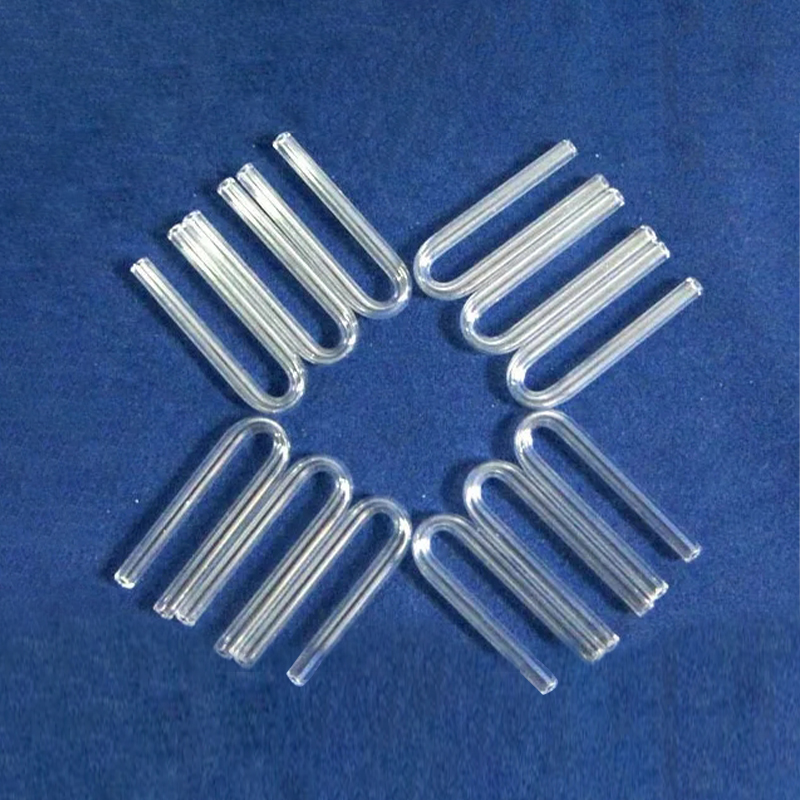
What should I do if a quartz U-tube cracks?
Content
- 1 Immediate Steps When a Crack Is Detected
- 2 Quartz U-Tube Crack Detection Methods
- 3 Root Causes of Quartz U-Tube Cracking
- 4 How to Select a Replacement Quartz U-Tube
- 5 Quartz U-Tube Heating Principle and Uniformity
- 6 Applications of Quartz U-Tubes in Chemical Experiments
- 7 Quartz U-Tube Alternatives — When Quartz Is Not the Right Choice
- 8 Preventing Future Cracks — Maintenance and Handling Best Practices
- 9 About Yancheng Mingyang Quartz Products Co., Ltd.
- 10 Frequently Asked Questions
If a quartz U-tube cracks, stop using it immediately, isolate the system, assess the crack location and depth, and determine whether repair or replacement is the appropriate response. Most surface micro-cracks in non-pressure applications can be monitored for a short period, but cracks penetrating the wall or located near heated zones require immediate replacement with a new quartz U-tube — continuing to operate a cracked tube under heat or pressure significantly increases the risk of sudden failure.
This guide covers quartz U-tube crack detection methods, root causes, safe handling after cracking, replacement selection, and how to prevent cracking through proper use and maintenance. Whether your tube is used in a laboratory setup or an industrial chemical process, the steps outlined here apply directly to your situation.
Immediate Steps When a Crack Is Detected
The moment a crack is identified — whether visible to the eye or detected through a pressure drop or unexpected condensation — follow this response sequence:
- Shut down the heat source or flow input immediately. Thermal shock is the leading cause of crack propagation in quartz glass.
- Allow the tube to cool naturally to room temperature — do not accelerate cooling with water or compressed air, as rapid temperature change will worsen the crack.
- Depressurize the system fully before handling the cracked tube.
- Inspect the crack under strong lighting or with a UV lamp to determine its length, depth, and proximity to connection joints or heated sections.
- Document the crack location with a photograph for root cause analysis and future procurement reference.
- Replace the tube if: the crack penetrates the full wall thickness, the crack length exceeds 10 mm, or the crack is within 20 mm of a heating element or brazed joint.
Surface crazing (a network of very shallow surface lines with no depth) on low-temperature sections does not always require immediate replacement but should be monitored closely. Any tube showing structural cracks in a pressurized or high-temperature zone should be treated as failed and removed from service.
Quartz U-Tube Crack Detection Methods
Effective quartz U-tube crack detection requires more than visual inspection. Small cracks — particularly internal stress fractures — can be invisible under normal lighting yet cause catastrophic failure under operating conditions. The following methods are widely used across laboratory and industrial settings:
Visual and UV Inspection
Hold the tube against a strong backlight or use a UV lamp (254 nm or 365 nm wavelength). Cracks in high-purity quartz will scatter UV light differently from intact regions, making them visible as bright lines or halos. This method reliably detects surface cracks as small as 0.1 mm in length.
Acoustic Tap Test
Lightly tap the tube with a small metal rod. An intact quartz tube produces a clear, high-pitched ring. A cracked tube produces a dull thud or a noticeably shortened resonance. This is a quick field test used by experienced technicians before installing any used or stored tube.
Pressure Leak Test
For tubes used in closed-loop systems, a low-pressure nitrogen or inert gas test at 1.2–1.5 times the rated operating pressure for 10 minutes will identify through-wall cracks via pressure decay. This is especially important when evaluating quartz U-tube pressure resistance after any suspected thermal shock event.
Root Causes of Quartz U-Tube Cracking
Understanding why a quartz U-tube cracked is essential before selecting a replacement. The same failure mode will repeat if the underlying cause is not addressed. The majority of cracks fall into four categories:
Thermal Shock
This is the most common cause. Despite the exceptional temperature resistance of quartz U-tubes — pure fused silica withstands continuous use up to approximately 1100°C — quartz is highly susceptible to sudden temperature changes. Introducing cold fluids into a tube operating above 500°C, or cooling a hot tube with ambient air flow, generates internal tensile stress that exceeds the material's fracture toughness. The allowable temperature gradient for standard fused silica quartz is approximately 200°C per minute — exceeding this rate consistently leads to cracking.
Mechanical Stress from Improper Mounting
Quartz glass has no plastic deformation range — it is brittle and will crack rather than bend under localized stress. Over-tightened clamps, asymmetric support structures, or tube-to-fitting misalignment all create point stress concentrations. In a U-tube geometry, the curved section is particularly vulnerable because bending stress concentrates at the inner radius of the curve.
Chemical Devitrification
Prolonged exposure to alkali vapors (sodium, potassium) or certain acidic environments at elevated temperatures causes the quartz surface to crystallize — a process called devitrification. Devitrified zones have lower thermal shock resistance and higher brittleness than the surrounding amorphous silica, creating preferential crack initiation sites. This is why high-purity quartz U-tubes with OH content below 1 ppm are preferred for high-temperature chemical applications: they devitrify more slowly.
Pressure Overage
Standard quartz glass tubes have a pressure tolerance that decreases sharply with wall thickness reduction or elevated temperature. A tube rated at 10 bar at room temperature may only withstand 4–5 bar at 800°C. Operating beyond rated quartz U-tube pressure resistance limits — even briefly during system startup transients — can nucleate internal cracks that grow over subsequent cycles.
How to Select a Replacement Quartz U-Tube
When replacing a cracked tube, matching the original specification precisely — or improving on it based on the failure root cause — is critical. This is where a structured approach to selection of quartz U-tubes for laboratory use or industrial replacement pays off. The following parameters must be confirmed before ordering:
| Parameter | Standard Range | Notes for Replacement |
|---|---|---|
| Outer diameter (OD) | 4 mm – 120 mm | Match original exactly; custom sizes available |
| Wall thickness | 1 mm – 5 mm | Increase if pressure cracking was root cause |
| U-bend radius | Custom per design | Larger radius reduces stress concentration at bend |
| Quartz purity grade | Standard / High-purity / UV-grade | Use high-purity if devitrification was the cause |
| Max operating temp | Up to 1100°C (continuous) | Confirm against actual system peak temperature |
| Pressure rating | Varies with wall thickness and temp | Request datasheet from manufacturer |
If your application involves custom quartz U-tube dimensions — non-standard bend radii, asymmetric leg lengths, or specialized flange connections — a manufacturer with in-house forming capability is required. Off-the-shelf catalog tubes cannot accommodate these requirements. Sourcing directly from a specialist quartz manufacturer reduces lead time and ensures that dimensional tolerances are held to specification.
Quartz U-Tube Heating Principle and Uniformity
Understanding the quartz U-tube heating principle helps explain both why quartz is chosen for thermal applications and why cracking risk is inherently tied to how heat is applied. Quartz glass transmits infrared radiation efficiently — particularly in the near-infrared range (0.7–5 µm) — allowing radiant heat sources to heat the tube contents directly rather than needing to first heat the tube wall to high temperatures.
Quartz U-tube heating uniformity is affected by three main factors: the position of the heat source relative to the tube, the flow rate and thermal mass of the fluid inside, and whether the tube wall thickness is consistent around the bend. Uneven heating creates differential expansion stress — the most common precursor to thermal shock cracking during normal operation rather than at startup or shutdown.
For most laboratory setups, a flow rate of 2–5 L/min provides the best balance between heating uniformity and residence time. Very low flow rates create hot spots near the bend; very high rates reduce heat transfer efficiency and can introduce turbulent stress in the tube wall. Proper quartz U-tube flow rate calculation should account for tube ID, fluid viscosity, required outlet temperature, and heat source power output.
Applications of Quartz U-Tubes in Chemical Experiments
The applications of quartz U-tubes in chemical experiments span a wide range of research and process contexts. Their combination of chemical inertness, high transparency, and thermal stability makes them uniquely suited for work that other glass types cannot support.
- Catalytic reaction studies: The U-tube geometry allows controlled flow of reactants through a catalyst bed heated at the bend, with inlet and outlet ports on each leg for sampling.
- Vapor-liquid equilibrium (VLE) measurements: Transparent quartz walls allow optical observation of phase transitions at elevated temperatures without interference from the tube material.
- UV-induced photochemistry: UV-grade quartz transmits wavelengths down to approximately 160 nm, enabling UV-driven reaction studies inside the tube while it is heated.
- Thermal pyrolysis: High-temperature organic decomposition experiments require tube materials that will not outgas contaminants — quartz is chemically inert up to 1100°C and introduces no interfering species.
- Quartz U-tube cooling efficiency tests: The U-geometry is used in condensation studies to compare coolant flow configurations, with the tube acting as the condensation surface or inner wall of a counter-flow heat exchanger.
Quartz U-Tube Alternatives — When Quartz Is Not the Right Choice
Understanding quartz U-tube alternatives helps you make an informed decision when quartz does not fit the application — whether due to operating conditions, budget considerations, or mechanical requirements.
| Material | Max Temp | Transparent | Chemical Resistance | Best For |
|---|---|---|---|---|
| Fused Quartz | 1100°C | Yes (UV–IR) | Excellent | High-temp, UV, chemical |
| Borosilicate Glass | 500°C | Yes (visible) | Good | General lab, lower temp |
| Alumina Ceramic | 1600°C | No | Very Good | Ultra-high temp, no UV need |
| Stainless Steel | 800°C | No | Moderate | High-pressure, impact-prone |
Preventing Future Cracks — Maintenance and Handling Best Practices
Most quartz U-tube cracking incidents are preventable. The following practices significantly reduce crack risk across both laboratory and industrial use environments:
- Control heating and cooling rates to under 200°C per minute — use programmable controllers rather than manual adjustments where possible.
- Use soft mounting hardware — PTFE or silicone gaskets at all contact points prevent point stress on the quartz surface.
- Handle with clean, dry cotton or lint-free gloves — alkali ions from skin contact accelerate surface devitrification, particularly on high-purity quartz U-tubes.
- Store horizontally on padded surfaces — do not allow the tube to contact metal surfaces without protection.
- Inspect before each use cycle using the UV/backlight method — do not assume a tube that passed its last inspection is still intact after a thermal event.
- Clean with dilute HF solution only when approved for the tube grade — standard cleaning is with hot distilled water or dilute HCl, followed by deionized water rinse.
About Yancheng Mingyang Quartz Products Co., Ltd.
Yancheng Mingyang Quartz Products Co., Ltd. is a company specializing in the production of quartz and special glass products, serving as the Jiangsu production facility of Jinzhou Mingde Quartz Glass Co., Ltd. Since its establishment, the company has developed rapidly, introducing advanced technology and production equipment to continuously improve product quality across a broad and growing product range.
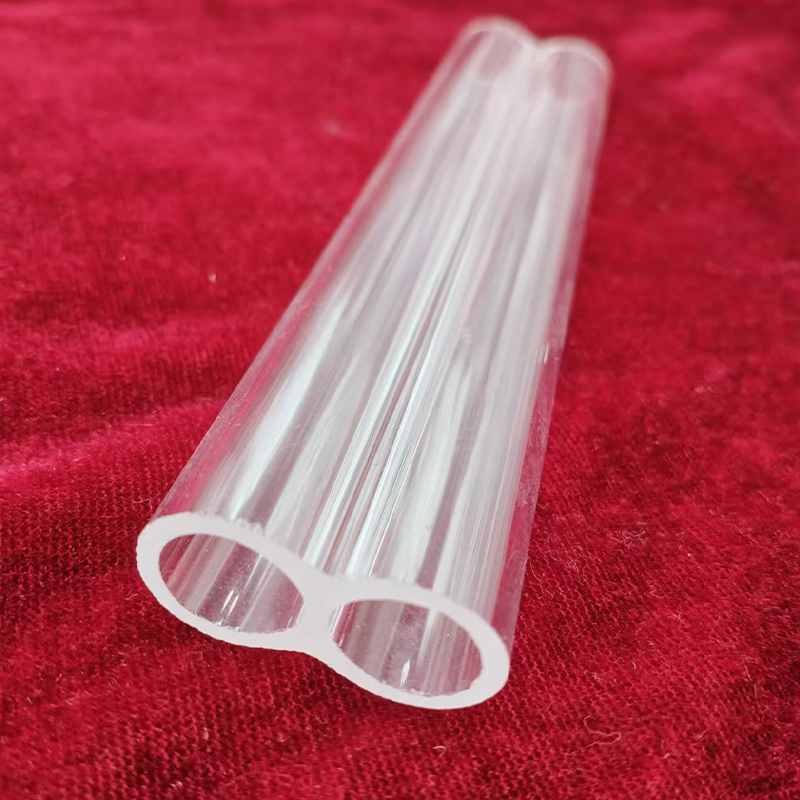
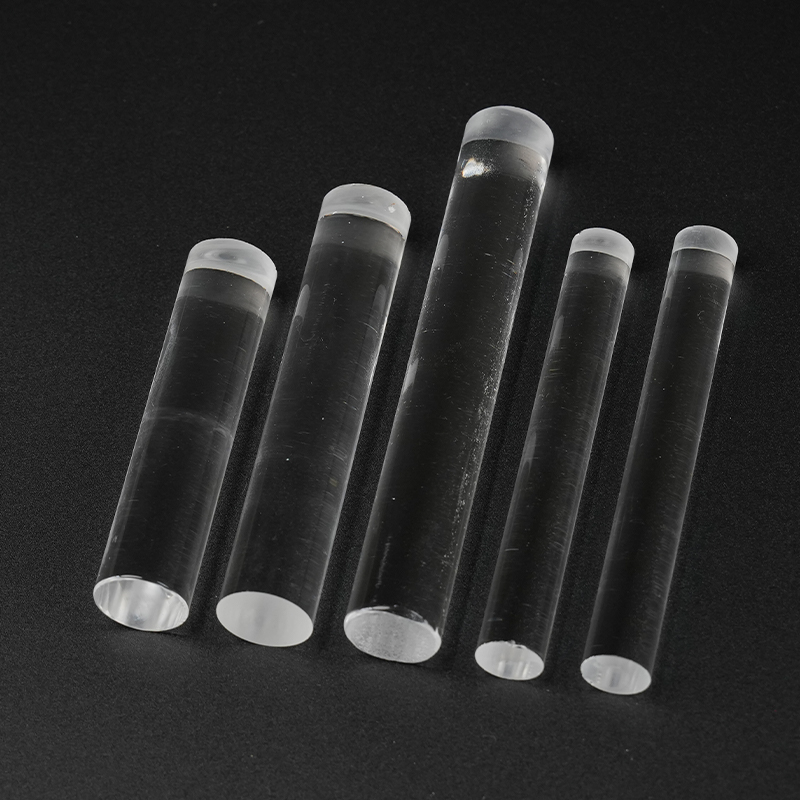
The company's product portfolio includes quartz glass tubes, double-hole quartz glass tubes, quartz glass rods, quartz sheets, sapphire windows, calcium fluoride glass windows, infrared ultraviolet coatings, high-pressure resistant aluminosilicate glass window panels, quartz glass instruments, high borosilicate glass instruments, quartz crucibles, quartz gold-plated tubes, quartz heaters, quartz infrared heating tubes, far-infrared directional radiation heaters, ultraviolet germicidal lamps, and a wide range of other specialized quartz glass products.
Backed by strong technical expertise, complete testing capabilities, and professional design and customization services, Yancheng Mingyang provides one-stop product development, production, and sales support. The company's ability to produce custom quartz U-tube dimensions and other non-standard configurations has made it a trusted supplier for research institutions and industrial customers with exacting specifications.
Frequently Asked Questions
Featured Products
Copyright © Yancheng Mingyang Quartz Products Co., Ltd. All Rights Reserved.
Wholesale Quartz Products Manufacturer Quartz Glass Factory