

 +86-0515-86223369
 0
 en
 English
 日本語
 Español



If you need any help, please feel free to contact us
 Products & Solutions
Home / News / Industry News / Fused Silica Transmission: UV, Visible, and IR Grade Selection Guide for Engineers
Fused Silica Transmission: UV, Visible, and IR Grade Selection Guide for Engineers
Content
- 1 What Fused Silica Transmission Really Means in Practice
- 2 Why OH Content and Wavelength Decide Your Grade
- 3 Matching Transmission to Real Applications
- 4 How to Verify Fused Silica Transmission Before You Buy
- 5 Common Misunderstandings About Fused Silica Transmission
- 6 Working With a Fused Silica Manufacturer and Supplier
- 7 FAQ: Fused Silica Transmission
- 7.1 What is the difference between UV grade and IR grade fused silica?
- 7.2 Does thickness affect fused silica transmission?
- 7.3 Can I use a visible transparent window for UV applications?
- 7.4 How do I specify OH content for transmission?
- 7.5 What transmission tolerance is realistic?
- 7.6 Can I get custom sizes and grades from a manufacturer?
A process engineer orders a fused silica window for a 248 nm excimer laser. The drawing says “UV grade,” the price is right, and the part arrives with a polished surface. Three weeks later, the window has degraded, the beam profile is uneven, and the team is troubleshooting a transmission problem that should have been caught at the quotation stage. The issue is rarely the material itself; it is the mismatch between the specified grade and the actual operating wavelength, thickness, and OH content.
Fused silica transmission is not a single number. It is a curve that changes with wavelength, material grade, and thickness. For buyers and engineers, the practical rule is simple: choose the grade that delivers the highest internal transmission at your working wavelength, not the grade with the highest peak transmission on a datasheet. This guide explains how UV, visible, and IR transmission differ, how OH content shifts the curve, and how to verify a supplier’s claim before you place a production order.
We will look at JGS1, JGS2, JGS3, and low-OH fused silica, compare their typical transmission windows, and connect those differences to real applications in semiconductor processing, UV sterilization, infrared heating, analytical instruments, and fiber optics. You will also find a practical inspection checklist and answers to common procurement questions.
What Fused Silica Transmission Really Means in Practice
When a datasheet says “high transmission,” it usually refers to internal transmission: the percentage of light that survives the journey through the glass after absorption and scattering are accounted for. The number you actually measure on a finished part is external transmission, which also includes Fresnel reflection losses at both surfaces. For a typical fused silica window with a refractive index around 1.46, each air-glass interface reflects about 3.5% of the light at normal incidence. A 10 mm thick window with 99.9% internal transmission can still show only about 92.5% external transmission because of those two surfaces.
This distinction matters during procurement. If a supplier quotes “99% transmission” without stating whether it is internal or external, or without specifying thickness and wavelength, the number is not actionable. A better specification reads: “Internal transmission ≥ 99.5% at 250 nm, 10 mm thickness, OH content ≤ 50 ppm, both surfaces polished.” That sentence gives you something to verify with a spectrophotometer and something to compare across quotations.
OH content is the second major variable. Hydroxyl groups in the silica network absorb infrared light at specific bands, especially around 2.73 µm, 1.38 µm, and 0.95 µm. High-OH fused silica, often used for UV-grade windows, can have several hundred to over 1,000 ppm OH. That is helpful for deep UV transmission because the OH groups help suppress color centers, but it creates absorption in the near-infrared. Low-OH fused silica, typically below 1–10 ppm OH, trades some deep UV performance for much better IR transmission.
The table below summarizes how the main grades compare. Use it as a starting point, then confirm the actual curve with your supplier for the thickness you need.
| Grade | OH content (typical) | Best transmission window | Typical applications | Procurement note |
|---|---|---|---|---|
| JGS1 (far UV) | High OH, often 200–1,000 ppm | Deep UV to visible, roughly 160–400 nm | Excimer laser optics, UV lithography, deep UV windows | Ask for transmission at 193 nm or 248 nm at the actual thickness. |
| JGS2 (UV) | High OH, often 100–300 ppm | UV to visible, roughly 250–700 nm | UV sterilization, analytical instruments, general UV windows | Confirm resistance to solarization if exposed to short-wave UV. |
| JGS3 (IR) | Low OH, often below 10 ppm | Visible to near IR, roughly 400–2,500 nm | IR heating, thermal imaging, near-IR spectroscopy | Check absorption bands near 2.7 µm if your application uses that region. |
| Low-OH fused silica | Very low, often below 1 ppm | UV to IR, with reduced OH absorption | Broadband windows, fiber optics, high-power lasers | Specify both UV and IR endpoints because low OH can reduce deep UV performance. |
The grade that gives the highest transmission at your operating wavelength is the right one, not the grade with the highest peak transmission on a datasheet.
Why OH Content and Wavelength Decide Your Grade
A transmission curve is a fingerprint of the material’s chemistry. High-OH fused silica shows strong absorption in the infrared because the O-H bond vibrates at frequencies that match IR wavelengths. Low-OH fused silica removes those absorption bands, which is why IR-grade windows are often made from low-OH material. The trade-off is that low-OH glass can be more susceptible to UV-induced color centers, so deep UV applications usually prefer high-OH grades.
The chart below gives an indicative view of the high-transmission windows for the four common grades. It is not a substitute for a measured curve, but it helps you see why a single “fused silica” specification is insufficient.
Wavelength (nm)
150200300400700100020004000
JGS1 (far UV)
JGS2 (UV)
JGS3 (IR)
Low-OH
Indicative high-transmission windows; actual curves vary with thickness, OH content, and surface finish.
The chart shows why JGS1 is the go-to choice for 193 nm lithography and excimer laser windows: its high-OH chemistry keeps deep UV absorption low. JGS2 extends well into the visible and is often used for 254 nm germicidal lamps and general UV instrumentation. JGS3 and low-OH grades push the useful window into the near infrared, which is essential for IR heating elements, thermal cameras, and near-IR spectrometers. If your application spans both UV and IR, low-OH fused silica can be a compromise, but you should still verify the deep UV endpoint because low OH does not automatically guarantee strong 200 nm transmission.
For B2B buyers, the practical takeaway is to request a transmission curve at the exact thickness you plan to use, not a generic “typical” value. A 1 mm sample and a 20 mm sample can behave very differently at the absorption edges. Suppliers who understand this will ask for your wavelength, thickness, and surface finish before recommending a grade.
OH content is the main lever that shifts transmission between UV and IR; specify it explicitly rather than relying on a generic “fused silica” label.
Matching Transmission to Real Applications
Different applications fail in different ways when the transmission grade is wrong. A UV window that absorbs too much at 254 nm will run hot and lose sterilization efficiency. An IR heating tube with high OH content will absorb energy before it reaches the target. A broadband spectrometer window with the wrong OH level will show false absorption peaks. The following subsections connect the material to the use case.
Semiconductor and UV Lithography
Deep UV lithography and excimer laser processing use wavelengths such as 193 nm and 248 nm. At these wavelengths, high-OH fused silica is preferred because it resists solarization and maintains high internal transmission. JGS1 is a common choice for windows, lenses, and beam delivery components. The procurement risk is not just transmission; it is also bubble content, inclusions, and surface polish. A window that looks clear in visible light can still have a 5% transmission loss at 193 nm due to micro-bubbles or an inadequate OH specification.
When sourcing JGS1 components, ask for a transmission curve from 190 nm to 400 nm, a bubble and inclusion specification, and a surface flatness value if the part is used in imaging. For custom sizes and precision polishing, work with a manufacturer that can document the measurement conditions.
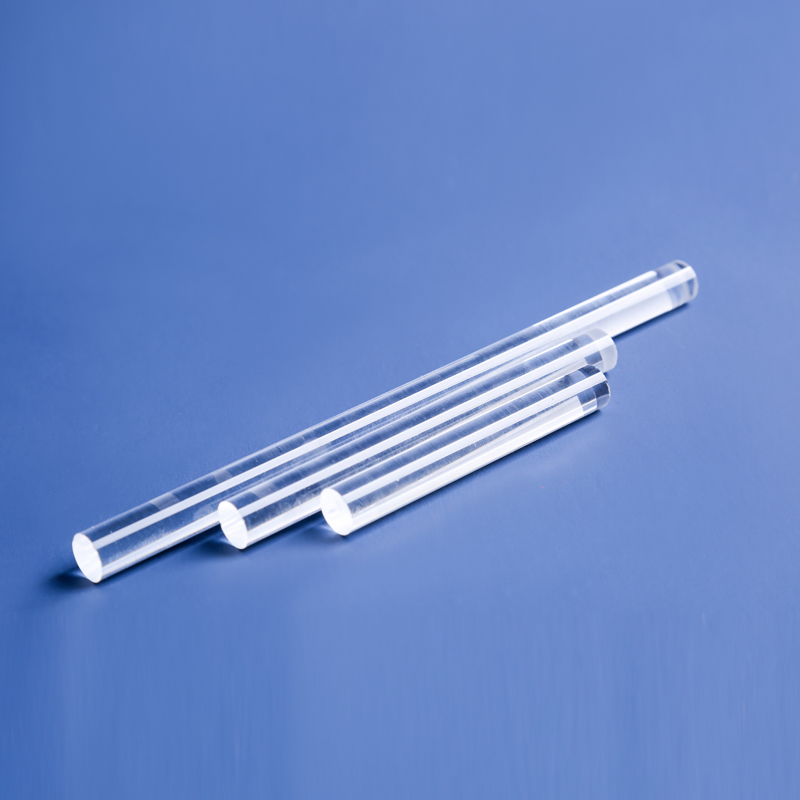
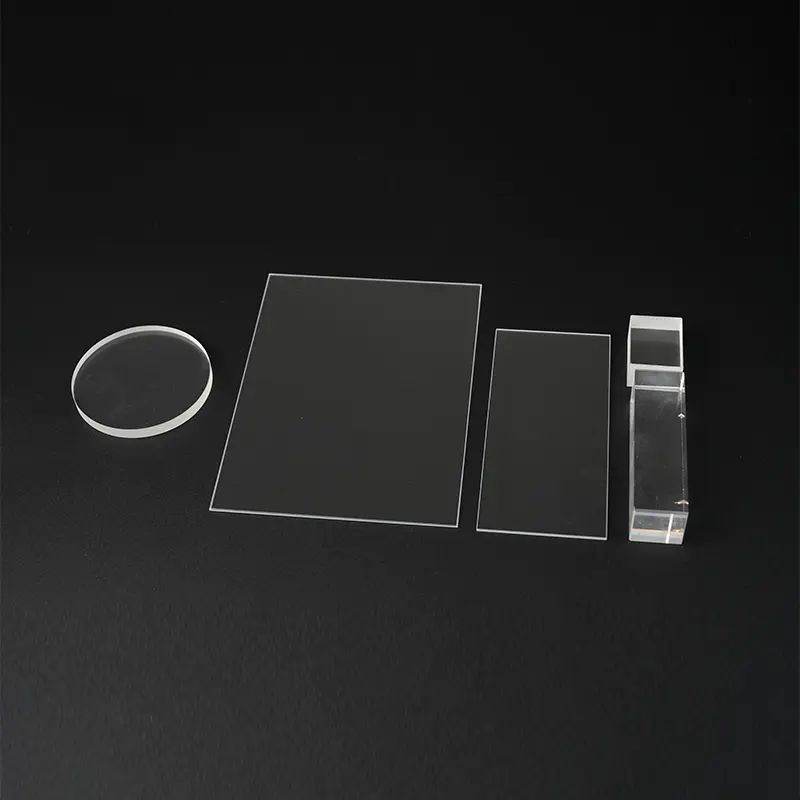
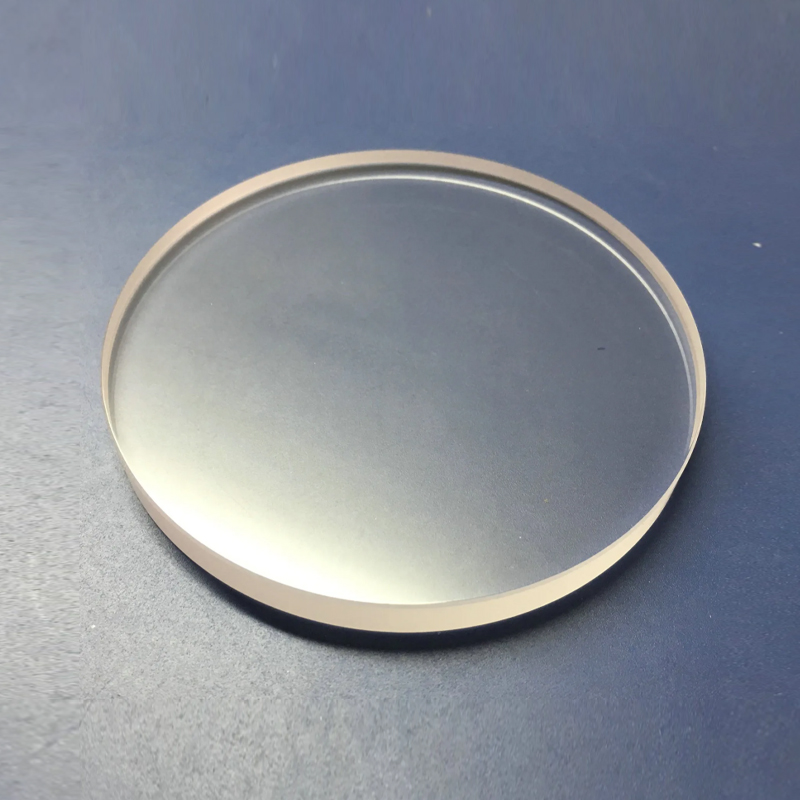
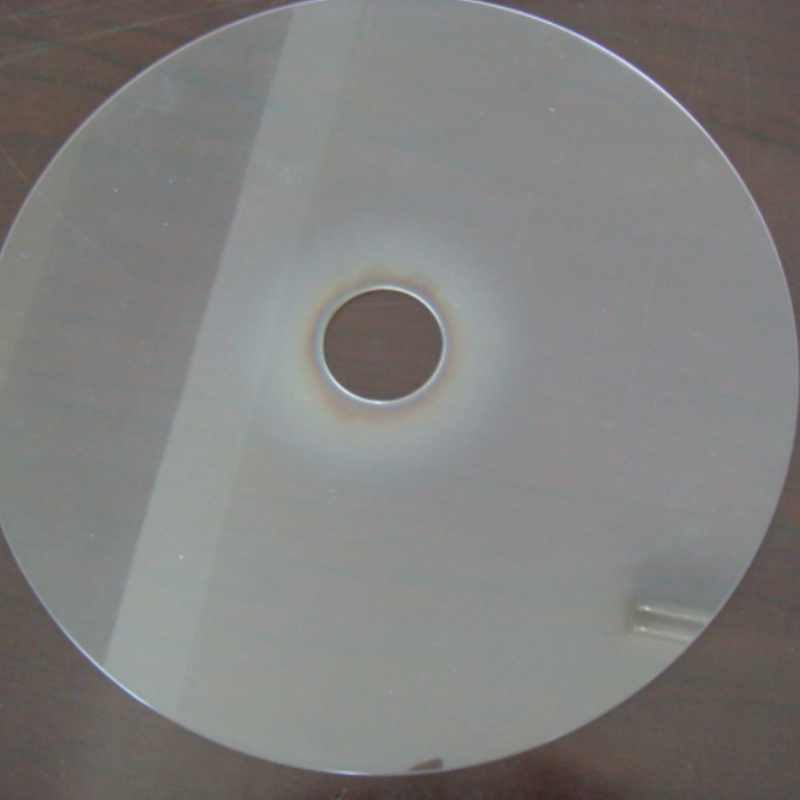
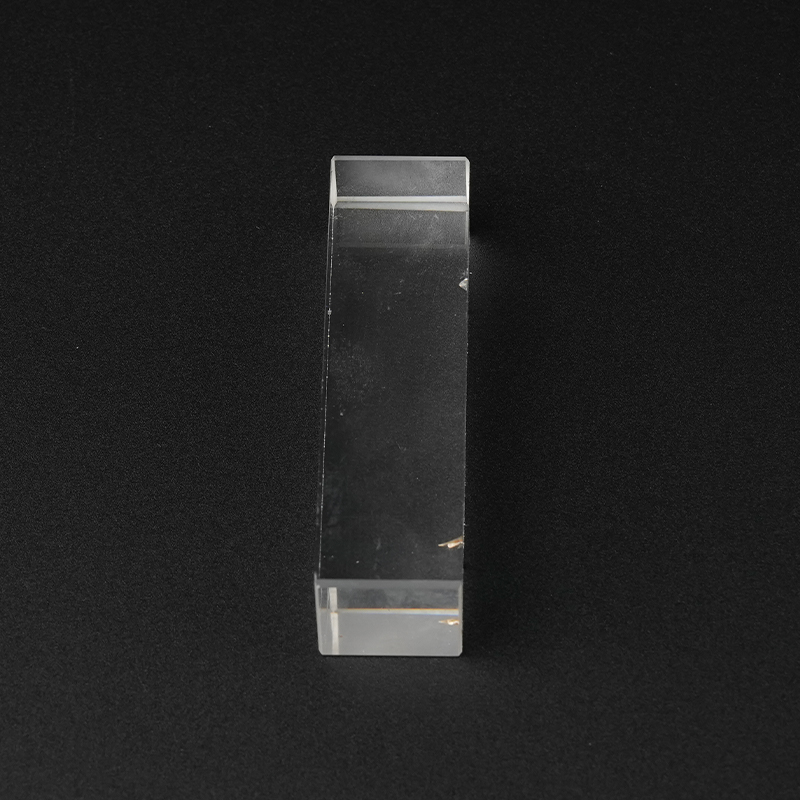 JGS1 Far-UV Optical Quartz GlassJGS1 far-UV quartz glass covers 0.185–2.5 µm and is offered in custom ingots, plates and discs for UV/visible optical parts requiring documented transmission.View Product →
UV Sterilization and Germicidal Lamps
Germicidal lamps emit at 254 nm, and the quartz envelope must pass that wavelength efficiently while withstanding thousands of on-off cycles. JGS2 or a comparable high-OH UV grade is typically used. The transmission requirement is straightforward: high internal transmission at 254 nm, low solarization, and good thermal shock resistance. A common mistake is to substitute a visible-grade quartz tube because it looks transparent. Visible transparency says little about 254 nm performance; a low-OH IR grade may actually absorb more at 254 nm than a high-OH UV grade.
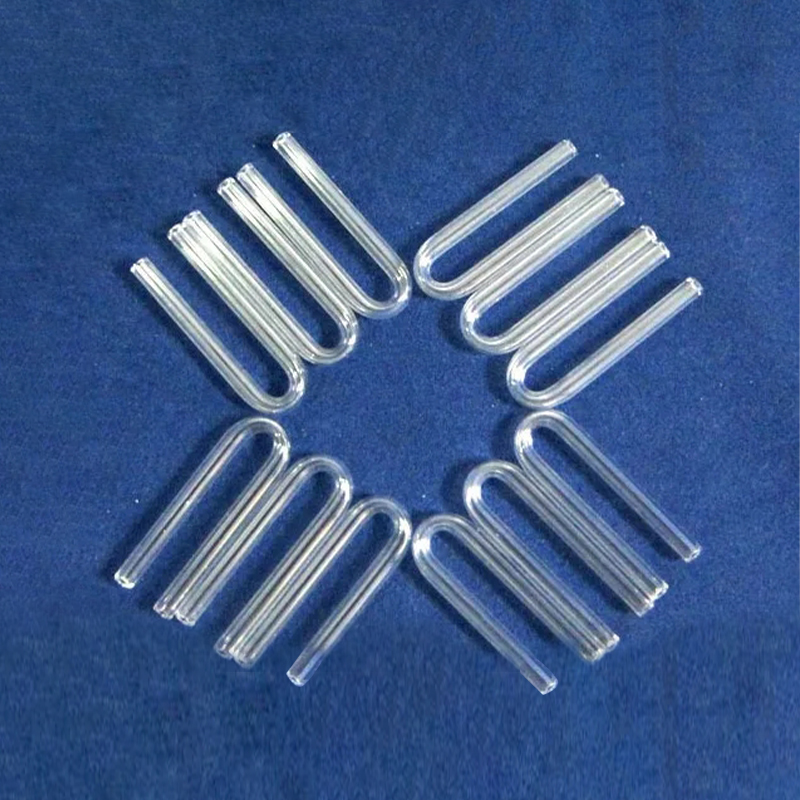
For lamp envelopes and UV reactor tubes, specify the OH content range and request a transmission value at 254 nm for the wall thickness you need. If the tube will be bent or flanged, confirm that the bending process does not introduce contamination or devitrification.
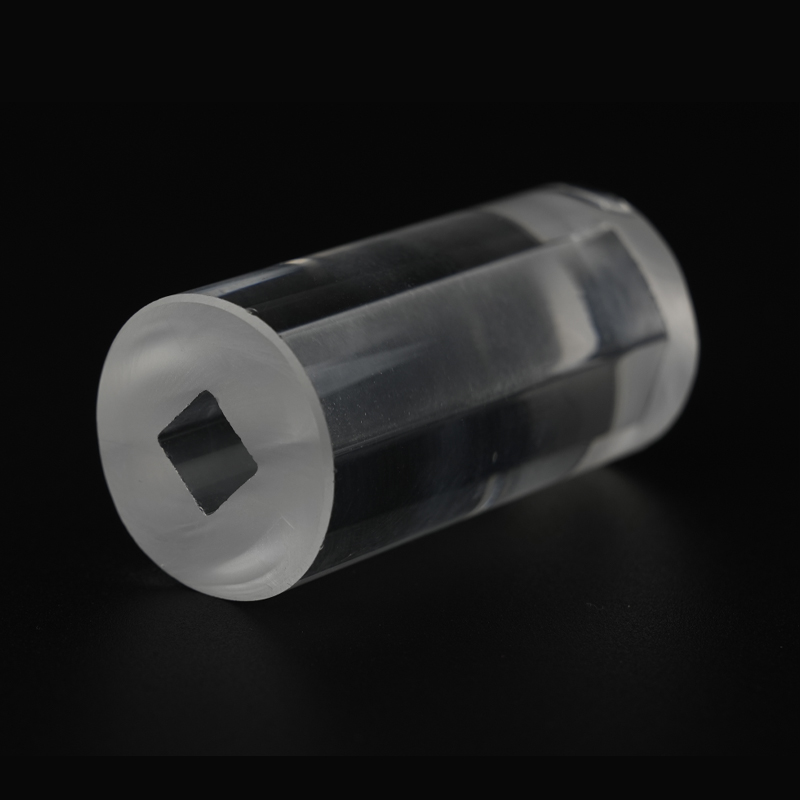
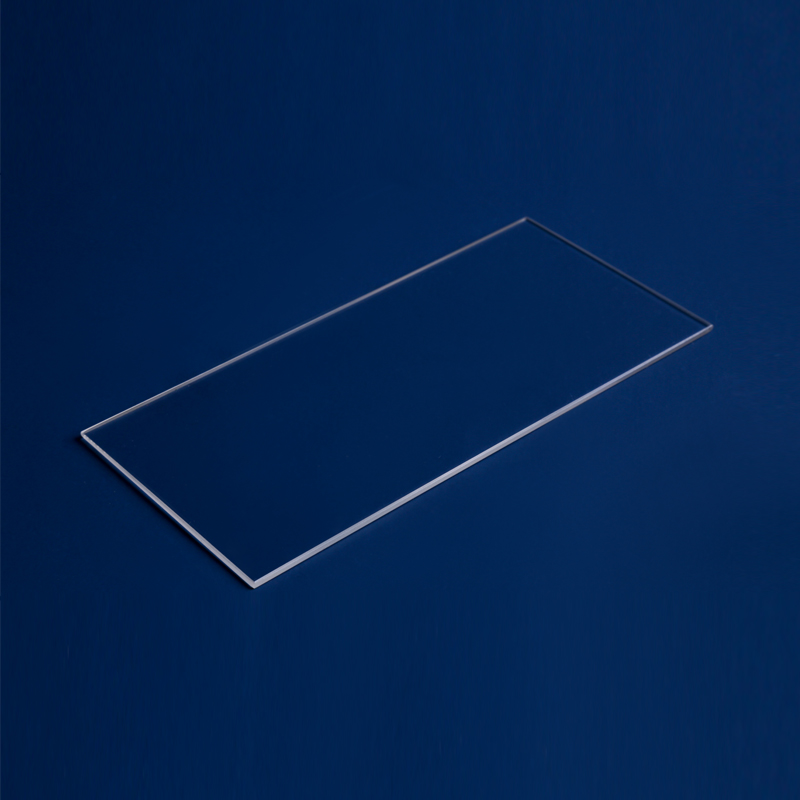
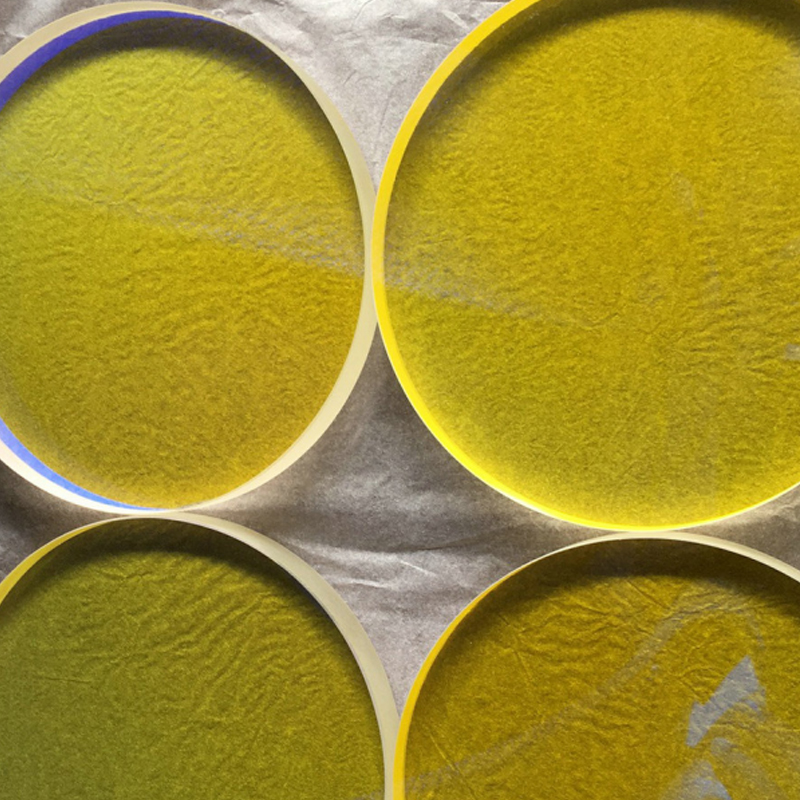
JGS2 UV Optical Quartz PlateJGS2 UV optical quartz plate covers 0.220–2.5 µm with OH around 120–260 ppm and is available in custom plates, discs and ingots for UV/visible optics.View Product →
IR Heating and Thermal Imaging
Infrared heating elements, thermal cameras, and near-IR spectroscopy windows need low-OH fused silica to avoid the OH absorption bands around 2.7 µm. JGS3 is a common grade for these applications. The transmission curve should be flat across the working band, and the material should be free of bubbles that scatter IR light. For high-power IR heaters, the quartz tube also needs good thermal shock resistance and a compatible coefficient of thermal expansion with any metal seals.
Buyers should be careful with “IR grade” claims that do not state an OH content. A low-OH grade with 5 ppm OH will perform differently from one with 50 ppm, especially at the longer wavelengths. Ask for a transmission curve at 2.5 µm or 3 µm if your application operates in that region.
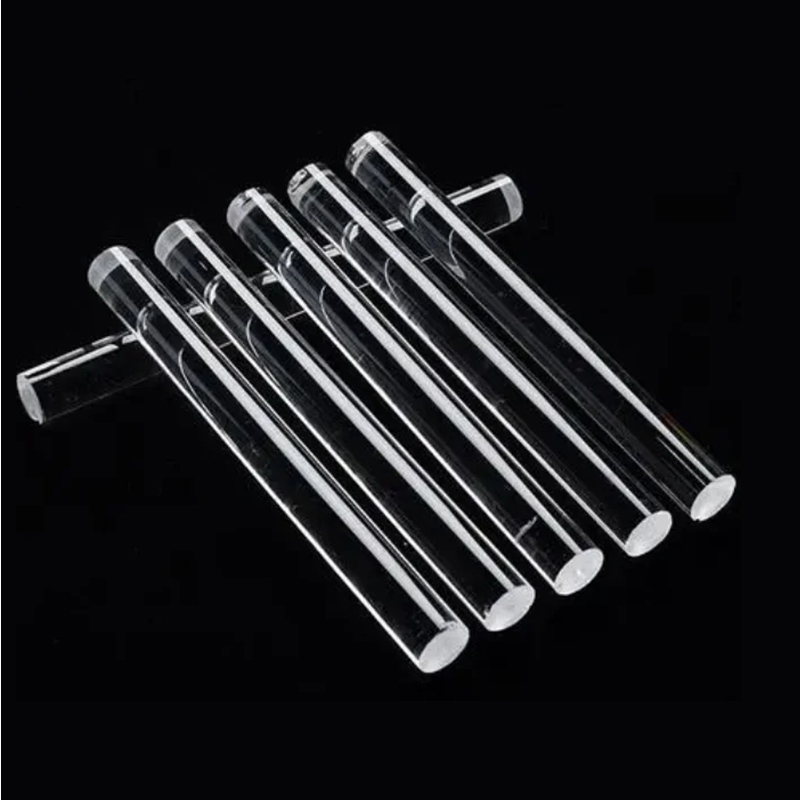
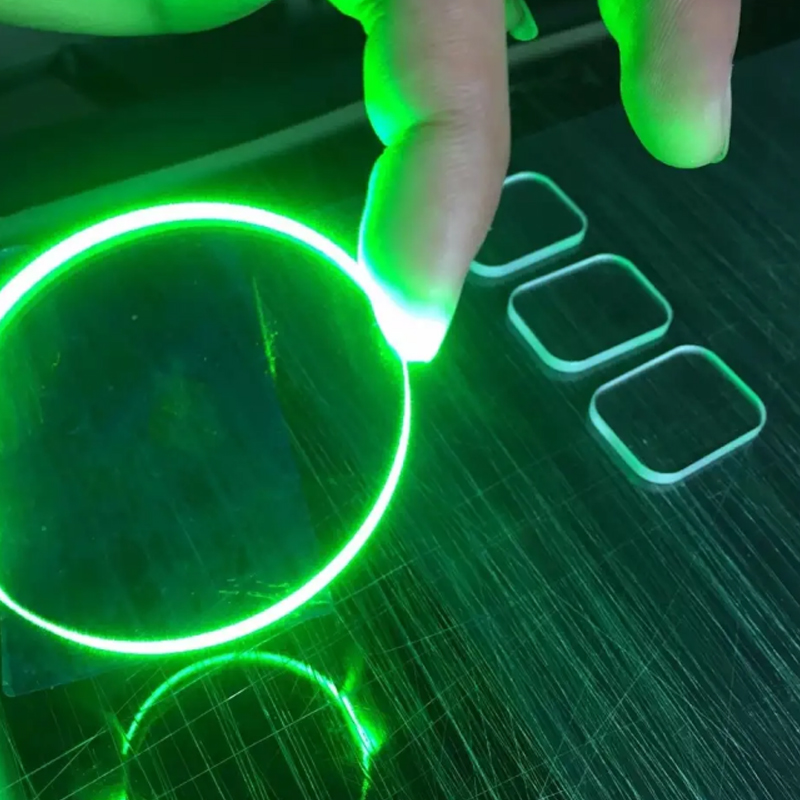
JGS3 Infrared Optical Quartz PlateJGS3 infrared quartz plate transmits 0.260–3.5 µm and lists OH content, useful for IR windows and optical components where 2.5–3 µm transmission data matter.View Product →
Analytical Instruments and Fiber Optics
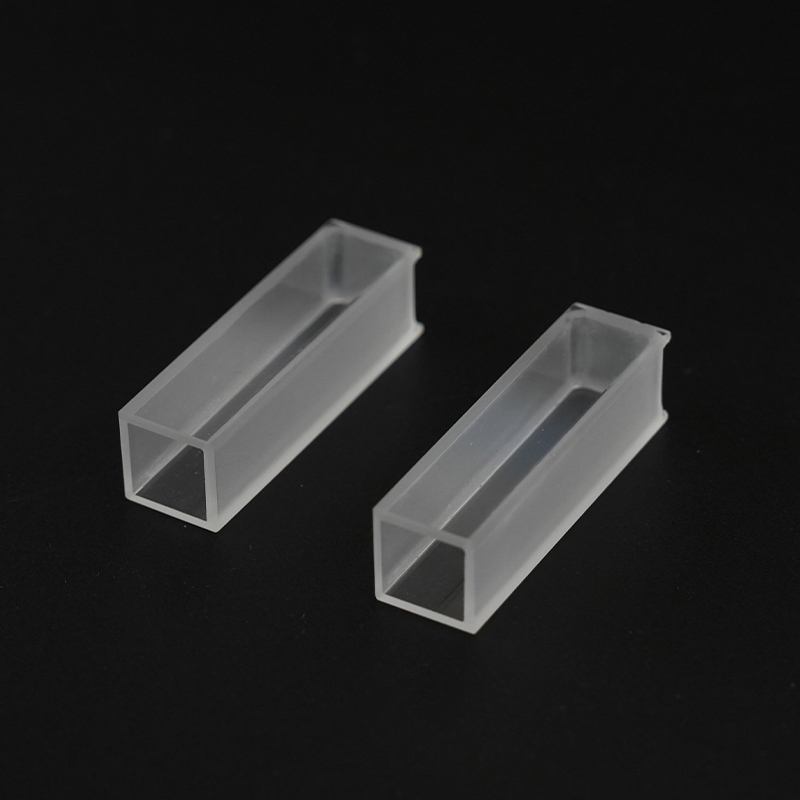
Spectrophotometer cells, flow cells, and fiber-optic components often need broad transmission from the UV to the near IR. Low-OH fused silica can cover a wide range, but the UV endpoint may be lower than a dedicated UV grade. For fiber optics, the material also needs low attenuation at the operating wavelength, tight dimensional tolerances, and a high-purity core-cladding interface. In analytical instruments, the main risk is false absorption from the cell material itself; a cuvette with poor UV transmission can mimic a sample absorbance peak.
For these applications, request a baseline scan of an empty cell or window at the same path length as your measurement. That simple check catches most transmission problems before they affect your data.
Specify transmission at the wavelength that matters for your application, not an average over the visible spectrum.
How to Verify Fused Silica Transmission Before You Buy
Verification starts with the measurement method. A UV-Vis-NIR spectrophotometer can scan from 175 nm to 3,300 nm depending on the model, but the sample thickness and surface finish must match the specification. If the supplier measures a 1 mm polished sample and you need a 10 mm ground window, the numbers are not directly comparable. For accurate internal transmission, the measurement should account for Fresnel reflection or use a reference sample with the same surface finish.
Here is a practical checklist for procurement teams:
- Request a transmission curve at the actual thickness and wavelength range, not a single point.
- Confirm whether the value is internal or external transmission, and whether reflection losses are included.
- Ask for OH content by method (e.g., FTIR absorption band at 2.73 µm) and the acceptable range.
- Check bubble, inclusion, and striae specifications, because scattering reduces transmission in the UV and IR.
- Verify surface finish: polish, lapping, or ground surfaces have different scattering losses.
- Request a certificate of analysis or a measurement report with the spectrometer model and calibration date.
- For custom parts, ask for a first-article inspection that includes transmission at the critical wavelength.
A transmission curve is only useful if it is traceable. If a supplier cannot provide the measurement conditions, treat the number as a marketing claim rather than an engineering specification. This is especially important for deep UV and IR grades, where small changes in OH content or bubble density can shift performance by several percentage points.
A transmission curve at the actual thickness and wavelength is the only reliable specification for comparing suppliers.
Common Misunderstandings About Fused Silica Transmission
Several myths persist in procurement discussions. The first is that all fused silica is the same. In reality, OH content, bubble class, and raw material source can change the transmission curve significantly, especially at the UV and IR edges. The second myth is that thicker material is always worse. Thickness does reduce transmission through absorption and scattering, but a thicker window can also shift the effective absorption edge, and some applications need thickness for mechanical strength or thermal mass. The third myth is that visible transparency guarantees UV performance. A window can look perfectly clear to the eye and still absorb heavily at 254 nm.
Another common misunderstanding is that higher transmission is always better. For some applications, a slightly lower transmission with better solarization resistance or lower fluorescence is more valuable than a higher initial number. For example, a deep UV window that loses 2% transmission after 1,000 hours of exposure is worse than one that starts 1% lower but remains stable. Always ask about the stability of the transmission curve, not just the initial value.
Finally, buyers sometimes assume that a “low-OH” label means good UV performance. In fact, low-OH fused silica is optimized for IR and may have reduced deep UV transmission. If your application spans both ends of the spectrum, you need to test both endpoints and accept a compromise or use two different materials.
Transmission is a curve, not a single number; evaluate it at your operating wavelength and over the life of the part.
Working With a Fused Silica Manufacturer and Supplier
For B2B buyers, the supplier relationship matters as much as the material grade. A manufacturer that understands transmission will ask for your wavelength, thickness, and environmental conditions before quoting. A wholesaler or trading company may offer a lower price but may not be able to provide a measured curve or control the OH content batch to batch. If your application is sensitive to transmission, prefer a manufacturer with in-house melting, forming, and measurement capabilities.
Yancheng Mingyang Quartz Products Co., Ltd. is a fused silica and quartz glass manufacturer serving semiconductor, photovoltaic, laboratory, optical, heating, and UV sterilization applications. The product range includes JGS1, JGS2, and JGS3 optical plates, low-OH fused silica, high-purity fused quartz, quartz tubes, rods, windows, and custom fabricated components. Because the company operates as a manufacturer rather than a pure trader, it can discuss grade selection, thickness effects, and custom dimensions in the same conversation.
When requesting a quotation, include the following information: operating wavelength, required transmission at that wavelength, thickness, surface finish, OH content range, and any dimensional tolerances. If the part is for a regulated industry, ask about material traceability and inspection reports. A supplier that can answer these questions quickly is more likely to deliver a part that meets your transmission requirement.
Related resources from the manufacturer
High-purity fused quartz for applications that need low metallic contamination and controlled OH content.
Low-OH fused silica for IR transmission and broadband windows where OH absorption must be minimized.
The right supplier will ask for your wavelength and thickness before quoting a transmission grade.
FAQ: Fused Silica Transmission
What is the difference between UV grade and IR grade fused silica?
UV grade fused silica typically has high OH content, which supports deep UV transmission and resists solarization. IR grade fused silica has low OH content, which reduces absorption bands in the near infrared. The two grades are optimized for different wavelength ranges, so choosing the wrong one can cause significant transmission loss at your operating wavelength.
Does thickness affect fused silica transmission?
Yes. Transmission decreases with thickness because light travels through more material and encounters more absorption and scattering. The effect is strongest near the absorption edges, such as deep UV or the OH bands in the IR. Always request a transmission curve at the thickness you plan to use; a value measured on a 1 mm sample may not apply to a 20 mm window.
Can I use a visible transparent window for UV applications?
Not necessarily. Visible transparency only tells you that the material passes wavelengths between roughly 400 and 700 nm. A window can be clear to the eye and still absorb strongly at 254 nm or 193 nm. For UV work, ask for a measured transmission value at the specific UV wavelength and confirm the OH content and solarization resistance.
How do I specify OH content for transmission?
Specify OH content as a range in ppm, and state the measurement method, such as the absorption band at 2.73 µm. For UV-grade parts, a typical range might be 200–1,000 ppm; for IR-grade parts, below 10 ppm. If your application spans both UV and IR, discuss the trade-off with the manufacturer and consider testing both endpoints.
What transmission tolerance is realistic?
For standard optical grades, a tolerance of ±1–2% at a specified wavelength and thickness is common, but the exact value depends on the grade and measurement uncertainty. For critical deep UV or IR applications, request a tighter tolerance and a certificate of analysis. Remember that surface finish and bubbles can add scattering losses that are not captured by a bulk transmission specification.
Can I get custom sizes and grades from a manufacturer?
Yes. Many manufacturers, including Yancheng Mingyang Quartz Products, offer custom dimensions, polishing, and grade selection for JGS1, JGS2, JGS3, and low-OH fused silica. Provide your drawing, operating wavelength, thickness, and transmission requirement, and ask for a first-article inspection before production.
For any critical application, verify transmission at the final thickness and wavelength rather than relying on a generic grade name.
Fused silica transmission is a solvable engineering problem when the specification is written correctly. Start with the operating wavelength, then choose the OH content and grade that match it. Request a measured curve at the actual thickness, confirm the measurement method, and check the supplier’s ability to control bubble content and surface finish. Whether you are sourcing a single UV window or a production batch of IR heater tubes, the same principle applies: the right transmission is the transmission at your wavelength, not the highest number on a brochure. A manufacturer who understands that difference will help you avoid the costly trial-and-error cycle and deliver a part that performs from the first day.
Featured Products
Copyright © Yancheng Mingyang Quartz Products Co., Ltd. All Rights Reserved.
Wholesale Quartz Products Manufacturer Quartz Glass Factory