

 +86-0515-86223369
 0
 en
 English
 日本語
 Español


If you need any help, please feel free to contact us
 Products & Solutions
Home / News / Industry News / Melting point of quartz: Applications, Selection Criteria, and Practical Guidance
Melting point of quartz: Applications, Selection Criteria, and Practical Guidance
Content
- 1 Melting Point of Quartz: 1670 °C, Plus Three Temperatures That Decide Your Process
- 2 Melting and Softening Points Compared With Other High-Temperature Materials
- 3 Why Two Suppliers Quote Different Numbers for the Same Grade
- 4 Quartz Tubes, Rods and Plates: Where the Melting Point Stops Mattering
- 5 Quartz Crucibles: The Hottest Wall in the Whole Process
- 6 Optical and UV Parts: Heat and Transmission Together
- 7 Heating Elements and Laboratory Ware: The Everyday Side of a 1670 °C Material
- 8 Six Rules for Working Between 1100 °C and 1400 °C
- 9 Frequently Asked Questions About the Melting Point of Quartz
- 9.1 What is the melting point of quartz in Celsius and Fahrenheit?
- 9.2 Does quartz glass melt or soften?
- 9.3 Can a transparent quartz tube run continuously at 1400 °C?
- 9.4 Why does my quartz tube turn milky white after a few weeks?
- 9.5 Does OH content change the melting point of quartz glass?
- 9.6 Is quartz the same as fused silica?
- 9.7 What is the maximum working temperature of quartz glass?
- 9.8 What should I tell a quartz manufacturer or supplier when I request a quotation?
- 10 Checking a Specification Against Real Product Data
A process engineer sizing a 1,200 °C tube furnace usually asks two questions before the purchase order goes out: what is the melting point of quartz, and what will the tube actually do once it is hot. The first answer is short — crystalline quartz melts somewhere between 1670 °C and 1713 °C, depending on which crystalline form and which measurement route is quoted. The second answer is the one that decides whether the furnace runs for three years or three months.
Here is the working answer we give customers: quartz glass does not fail at its melting point. It fails where it sags, devitrifies or crystallises, and for standard transparent fused quartz that point arrives between 1100 °C and 1200 °C in continuous service. The rest of this article explains that gap, because the gap is where every purchasing decision actually lives.
The melting point of quartz is about 1670 °C, but no quartz part is ever selected on that number alone — continuous service temperature and devitrification resistance are what keep a furnace running.
Melting Point of Quartz: 1670 °C, Plus Three Temperatures That Decide Your Process
The 1670 °C figure describes crystalline quartz — the mineral, with an ordered lattice of SiO4 tetrahedra. Heating it is not a single clean event. The alpha-to-beta inversion at 573 °C is a structural flip that most furnace users never notice, because they work with glass rather than crystal. Higher up, above roughly 870 °C, the lattice begins converting toward tridymite and cristobalite, and cristobalite melts at about 1713 °C. That is why textbooks, handbooks and supplier datasheets quote anything between 1670 °C and 1713 °C for the same chemical formula without anyone being wrong.
Melt crystalline quartz and cool it quickly and you get fused quartz glass, an amorphous solid. Amorphous means no long-range order, which in turn means no sharp melting point. Instead of a melting line there is a viscosity curve, and engineers read four practical points off that curve.
Crystalline quartz versus fused quartz glass
For buyers the distinction is practical, not academic. A crystalline quartz part and a fused quartz part can carry identical SiO2 purity statements and behave completely differently in the same furnace. The crystal form expands sharply at the 573 °C inversion and can spall or crack; the glass form has no inversion, which is the entire reason transparent quartz tubes, quartz plates and quartz windows are made from fused material rather than sliced crystal. When a drawing calls for an optical window that must hold at 900 °C, the material being specified is glass, not crystal, and it should be ordered that way.
There is a second consequence that is easy to miss. Fused quartz is a melted product, so the melting point sets the ceiling for the manufacturing process itself, not only for the finished part. Electric fusion furnaces run well above 2000 °C at the arc to melt high-purity sand, and the tube drawing process that follows works the glass at around 2000 °C. By the time a tube reaches a customer, it has already been hotter than it will ever be in service — which is exactly why the as-supplied bubble class and OH content matter so much.
Strain, annealing and softening points in plain terms
Rather than one temperature, transparent fused quartz is specified by three, and all of them sit far below the melting point. The values below are typical for standard transparent quartz glass; exact figures move a little with OH content and grade.
| Reference point | Typical value | What it means on the shop floor |
|---|---|---|
| Strain point | About 1075 °C | Above this, internal stress relaxes slowly and dimensions begin to drift over long holds. |
| Annealing point | About 1140 °C | Internal stress is relieved within minutes; used after flame working or forming. |
| Softening point | About 1665 °C | The glass starts to flow under its own weight; the practical end of load-bearing service. |
| Working point | Around 2000 °C | Viscosity low enough for drawing, bending and lampworking into manifolds or U-tubes. |
Read that table as a set of limits rather than trivia. If a plate has to keep its flatness after ten thermal cycles, hold it under the strain point; above that, stress relaxes and geometry moves. If a tube is going to be flame-worked into a manifold or a U-shape, the working point tells you how much it will move under its own weight while hot. Softening is where the material stops behaving like a solid component and starts behaving like a very stiff liquid.
A rule we repeat often: a transparent quartz tube suspended across 600 mm at 1150 °C will sag measurably within a few hundred hours, even though it sits roughly 500 °C below softening. Sag, not melting, is the failure mode most furnace builders actually run into.
The melting point of quartz tells you where the material can be manufactured; the strain point tells you whether the finished part will still be straight after a year at temperature.
Melting and Softening Points Compared With Other High-Temperature Materials
Designers rarely choose quartz in isolation; it is usually weighed against alumina, borosilicate or graphite. The chart below puts the key numbers on one scale, using softening points for glasses because softening is the figure that behaves like a working limit in a real furnace.
Melting or softening point in °C, common furnace materials
Alumina ceramic, melting
2054
Fused quartz, melting
1713
Quartz crystal, melting
1670
Fused quartz, softening
1665
Borosilicate 3.3, softening
820
Soda-lime glass, softening
696
Three things stand out when the numbers are side by side. First, the softening point of fused quartz glass sits within a few tens of degrees of the melting point of crystalline quartz, so the headline figure and the practical ceiling are closer than most people expect. Second, the gap between quartz and borosilicate 3.3 is over 800 °C, which is why laboratories keep borosilicate for ambient chemistry and move to quartz cuvettes, quartz digestion tubes and quartz beakers once a method needs 300 °C or a clean UV path. Third, thermal shock performance does not follow temperature ranking: quartz survives a water quench from red heat largely because its expansion is about 0.55 ppm/K, so the strain across a wall stays small even under a brutal gradient, while alumina at 8 ppm/K will not.
| Material | Melting or softening point | Expansion, ppm/K | Typical continuous use | Typical role |
|---|---|---|---|---|
| Fused quartz glass | Softens about 1665 °C | 0.55 | 1100–1200 °C | Furnace tubes, windows, crucibles, heaters |
| High-silica glass, 96 percent | Softens about 1530 °C | 0.8 | 900–1000 °C | Lower-cost furnace ware |
| Borosilicate 3.3 | Softens about 820 °C | 3.3 | 400–500 °C | Laboratory glassware, sight glasses |
| Soda-lime glass | Softens about 696 °C | 9.0 | Up to 300 °C | Lighting envelopes, general glazing |
| Alumina ceramic, 99 percent | Melts about 2054 °C | 8.0 | 1400–1500 °C | Insulators, setters, wear parts |
| Graphite | Sublimes above 3600 °C | 2 to 5 | 2000 °C plus, inert gas only | Susceptors, heating elements |
The graphite row explains a pattern you see in crystal-growing hot zones: graphite is used behind the quartz crucible, not instead of it. Graphite needs an inert or vacuum atmosphere, quartz does not, and quartz is transparent, which matters when a process engineer wants to see what is happening inside a reactor. Choosing between them is rarely about which one melts later.
Quartz is chosen for the combination of a high softening point and near-zero thermal expansion; alumina goes hotter, but it will not survive the quench that quartz shrugs off.
Why Two Suppliers Quote Different Numbers for the Same Grade
Two quotations for what looks like an identical transparent quartz tube can differ by 30 percent, and the melting point is almost never the reason. Standard transparent grades are all specified in the same band. What moves is OH content, bubble class and trace metallic impurity, and those three change how the part behaves below softening.
How the fusion route changes the behaviour
- Electric fusion melts high-purity sand in a resistance or arc furnace, giving transparent quartz with moderate OH, good infrared transmission and consistent viscosity.
- Flame fusion uses a hydrogen-oxygen flame, produces higher OH content, lowers viscosity and is common for tubing drawn in volume.
- Plasma fusion keeps metallic contamination very low and is used where the part must not colour or devitrify quickly.
- Synthetic or vapour-deposited material starts from a silicon precursor rather than sand, reaching the lowest metallic impurity levels for semiconductor and deep-UV work.
OH content is the practical variable. Hydroxyl groups break up the silica network and lower viscosity, so a high-OH tube sags earlier at the same temperature than a low-OH tube of identical dimensions. The trade-off is not free: low-OH material holds shape better in a hot furnace but absorbs differently in the infrared, which matters for heaters and for infrared optical parts. That is the real reason a datasheet lists both a softening point and an OH figure.
Bubbles work the same way. A visible bubble string near the inner wall becomes a nucleation site for cristobalite growth, and cristobalite is the beginning of the milky patch that eventually flakes into the process chamber. Two tubes with the same softening point but different bubble classes will not have the same service life.
When quotations for the "same" quartz part differ sharply, ask about OH content, bubble class and impurity levels before asking about the melting point.
Quartz Tubes, Rods and Plates: Where the Melting Point Stops Mattering
Once a part is inside a furnace, nobody is checking the melting point any more. The questions are whether the tube keeps its bore, whether a flange joint stays sealed after forty cycles, and how quickly the inner wall goes milky.
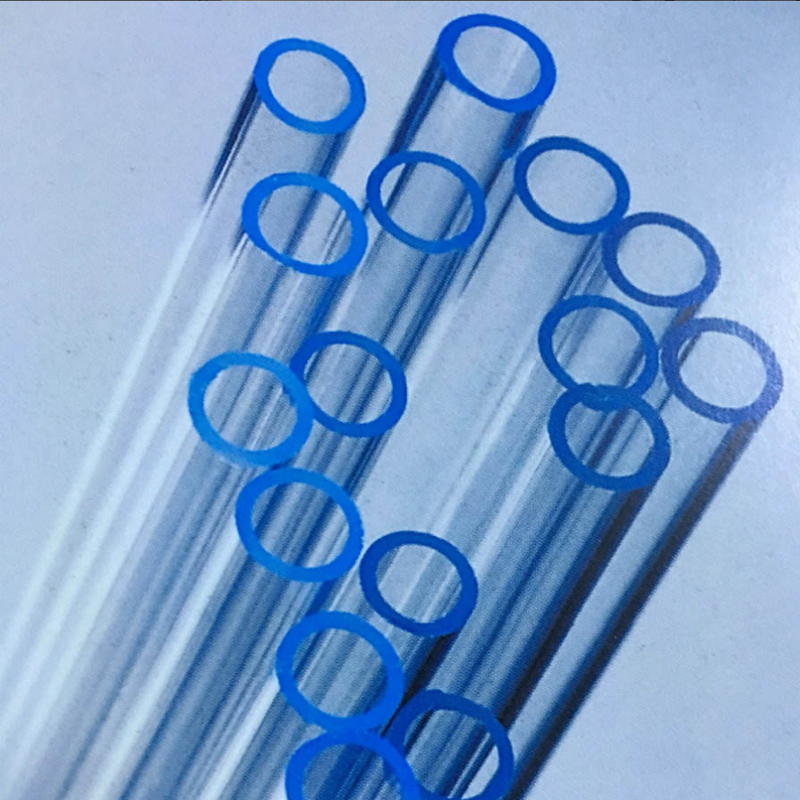
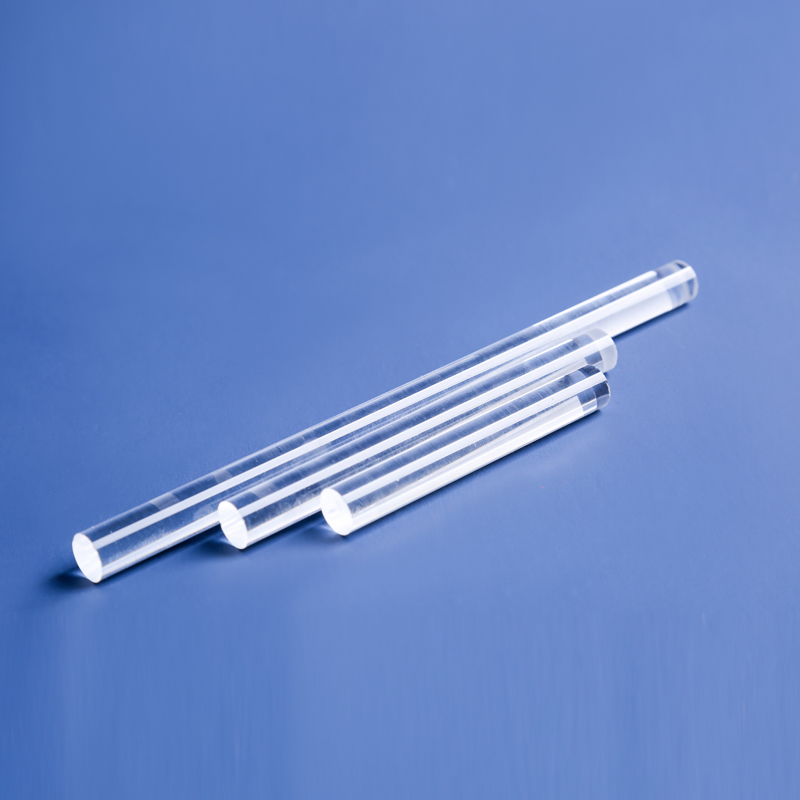
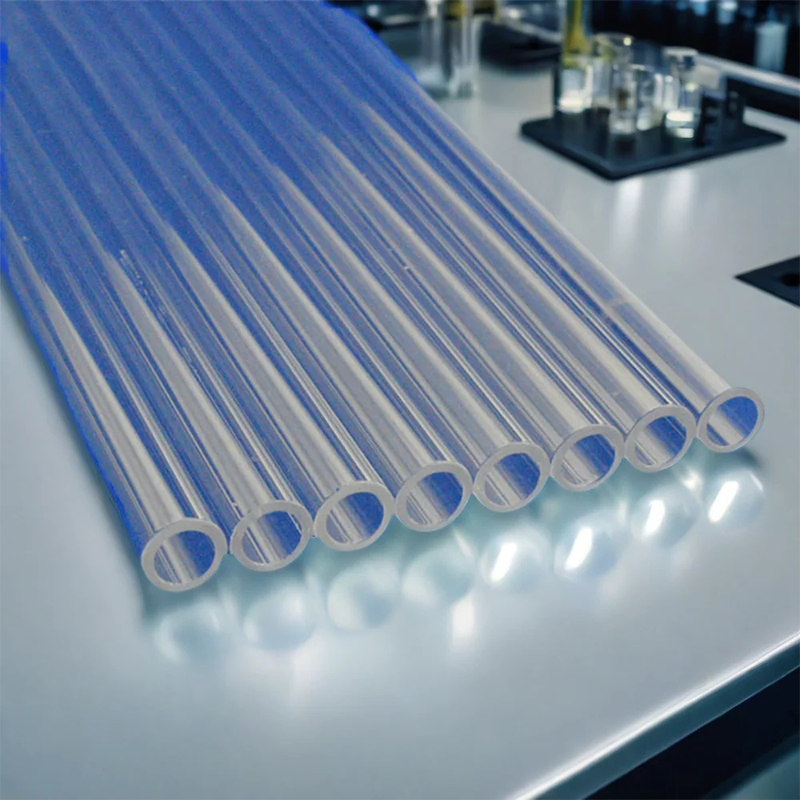 Transparent Quartz Tube for High-Temperature Furnace ServiceLow-hydroxyl transparent quartz tube with >99.9% SiO2 and tight dimensional tolerances, suited to furnace bores where creep and sealing endurance matter.View Product →
What happens to a quartz tube at temperature
At 1150 °C a transparent quartz tube is roughly 500 °C below softening yet still creeps under load. The mechanism is viscous flow at the support points and at any point where the wall carries weight. Practical countermeasures are unglamorous and effective: shorten the span between supports, rotate the tube between campaigns if the geometry allows, and specify heavy-wall sections where the tube must bridge a wide hot zone without intermediate support.
Above about 1150 °C, devitrification becomes the dominant ageing mode rather than sag. Surface contamination — fingerprints, alkaline dust, residues from cleaning agents, contact with certain refractory cements — catalyses cristobalite formation, and cristobalite grows as opaque white patches that eventually spall. Handling with clean gloves and storing tubes capped is not fussiness; it directly extends service life.
Rods, plates and machined parts
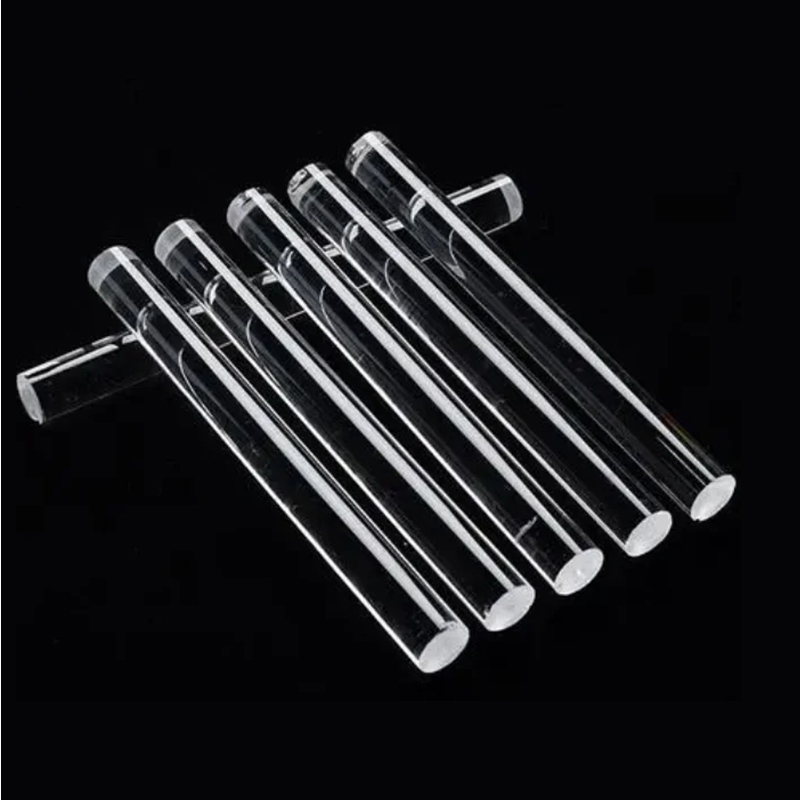
Solids behave differently from thin walls. A solid quartz rod used as a support or a fixture has more thermal mass and heats more slowly, which reduces the gradient across the part but increases the penalty for a badly controlled ramp. Quartz plates and discs used as windows, baffles or wafer carriers are usually limited by flatness rather than by strength, so the strain point becomes the operative ceiling: a plate that must stay flat should not be run above about 1075 °C for long holds.
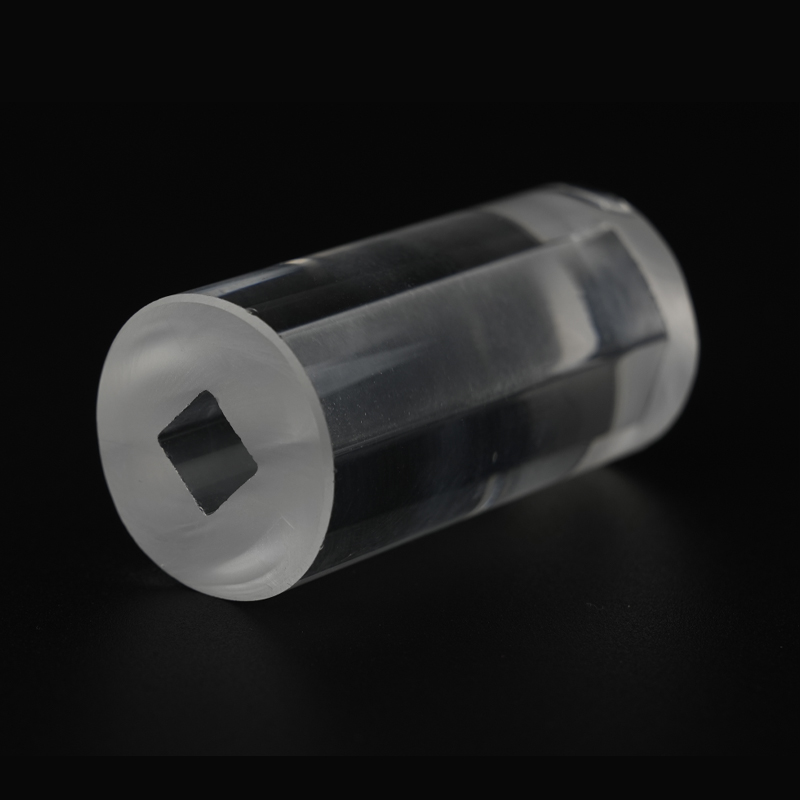
For parts that must hold tight tolerances, precision-ground quartz is normally specified with the temperature history in mind, because grinding a part and then running it hot can release stress that was locked in during fabrication. A supplier who knows the intended service temperature will normally recommend an annealing step before final grinding.
In tube, rod and plate service, the practical limits are creep, flatness and devitrification — all three appear hundreds of degrees below the melting point of quartz.
Quartz Crucibles: The Hottest Wall in the Whole Process
Crucibles are the one application where the service temperature genuinely crowds the melting point. In Czochralski crystal growth, the silicon melt sits around 1420 to 1450 °C, and the inner wall of the crucible, in contact with that melt, runs hotter still. The outer wall touches a graphite susceptor that is itself above 1400 °C. For a few hundred hours the quartz wall is the hottest structural ceramic in the machine.
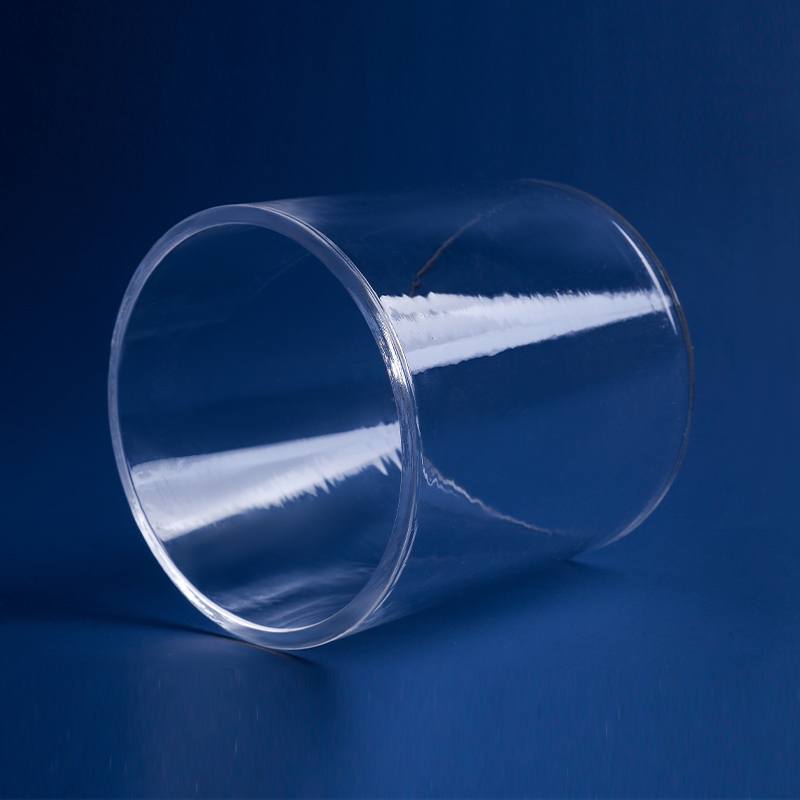
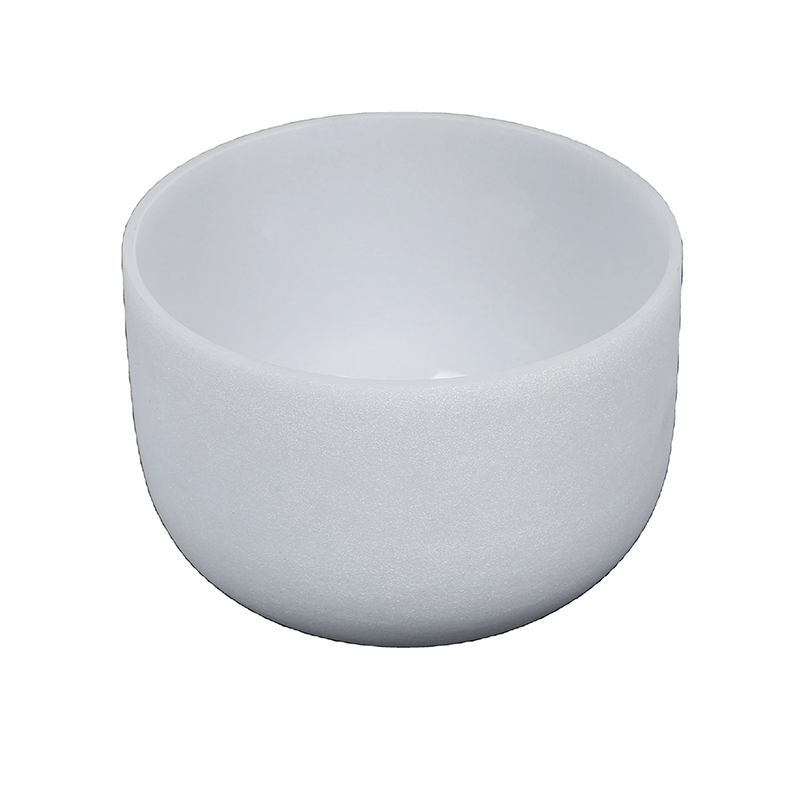 Semiconductor-Grade Quartz Crucible for Czochralski Crystal GrowthHigh-purity quartz crucible with SiO2 above 99.998% and 14–28 inch sizes, relevant where Czochralski melt contact and cristobalite progression limit service life.View Product →
Why a crucible is a consumable, not a component
At these temperatures the wall is above the strain point by several hundred degrees and it deforms. That is accepted, because a crucible is designed as a consumable with a known service window. What the industry manages instead is the progression: the inner surface slowly converts to cristobalite, the converted layer generates particles, and the mechanical strength of the wall falls as the conversion deepens. End of life is declared long before anything approaches melting.
Electronic-grade crucibles are built in layers for exactly this reason. A high-purity inner layer protects the melt from contamination, a bubble-containing intermediate layer provides thermal insulation and structural resilience, and an outer layer provides mechanical strength against the susceptor. Photovoltaic-grade crucibles follow the same logic with a shorter duty cycle, where cost per kilogram of silicon matters more than the last few percent of service life.
When buying, the questions that predict performance are not about the melting point of quartz. They are about bubble distribution, inner-surface purity, wall thickness tolerance and the specified thermal history the crucible has already seen during manufacture. A wholesaler or distributor handling large volumes will usually hold to a tighter wall tolerance than a general trader, because furnace operators index their susceptor geometry to that tolerance.
A quartz crucible is never judged on whether it melts; it is judged on how long it stays dimensionally stable and particle-free at 1500 °C.
Optical and UV Parts: Heat and Transmission Together
Optical quartz parts add a second constraint that most thermal parts do not have: whatever happens to the transmission curve after the part has been hot. A window that survives the temperature but loses deep-UV throughput is a failed specification.
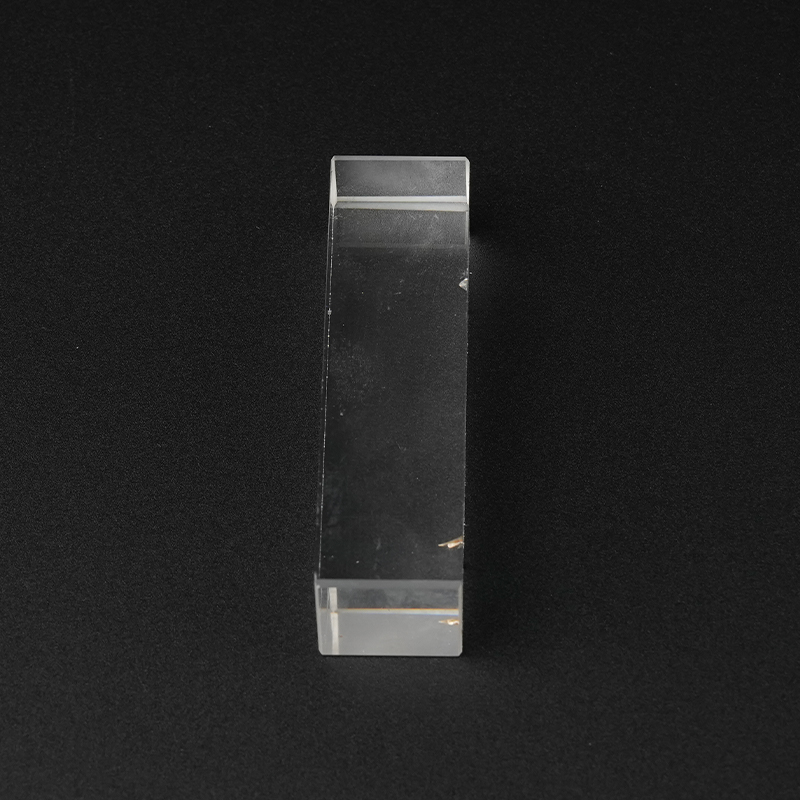 Far-UV Optical Quartz Glass JGS1JGS1 quartz glass transmits from 185–250 nm without absorption and is relevant when deep-UV throughput must survive high-temperature exposure.View Product →
Three optical grades, three behaviours
Far-UV optical quartz is the high-OH grade, transmitting well below 250 nm but with viscosity affected by that same hydroxyl content. UV-grade quartz sits in the middle, and infrared-grade quartz is deliberately low in OH so that the absorption band near 2.7 micrometres stays out of the working range. Each grade has essentially the same melting point; each behaves differently when a lamp housing reaches 800 °C.
Two thermal effects matter for optical parts. The first is stress birefringence: a window clamped between a hot flange and a cold frame develops a gradient, and the resulting stress changes polarisation. The second is more permanent — prolonged exposure to high temperature combined with UV flux can compact or solarise the material, shifting transmission slowly over a campaign. Neither is a melting problem, and neither will show up if a buyer only asks for the melting point.
For an optical quartz window, specify the wavelength band and the peak temperature together; ordering on melting point alone is how expensive windows end up as expensive spares.
Heating Elements and Laboratory Ware: The Everyday Side of a 1670 °C Material
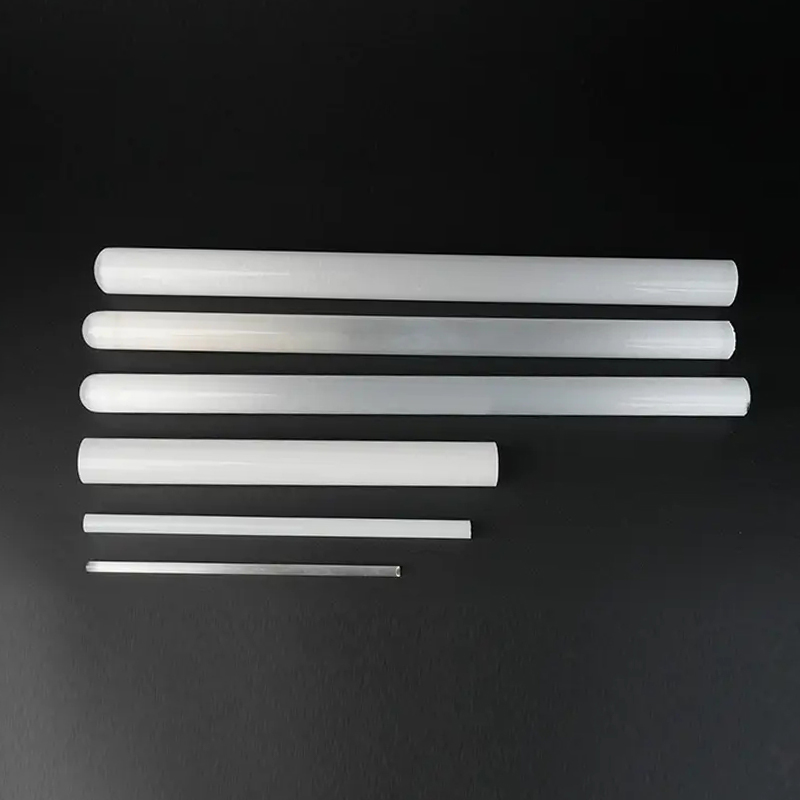
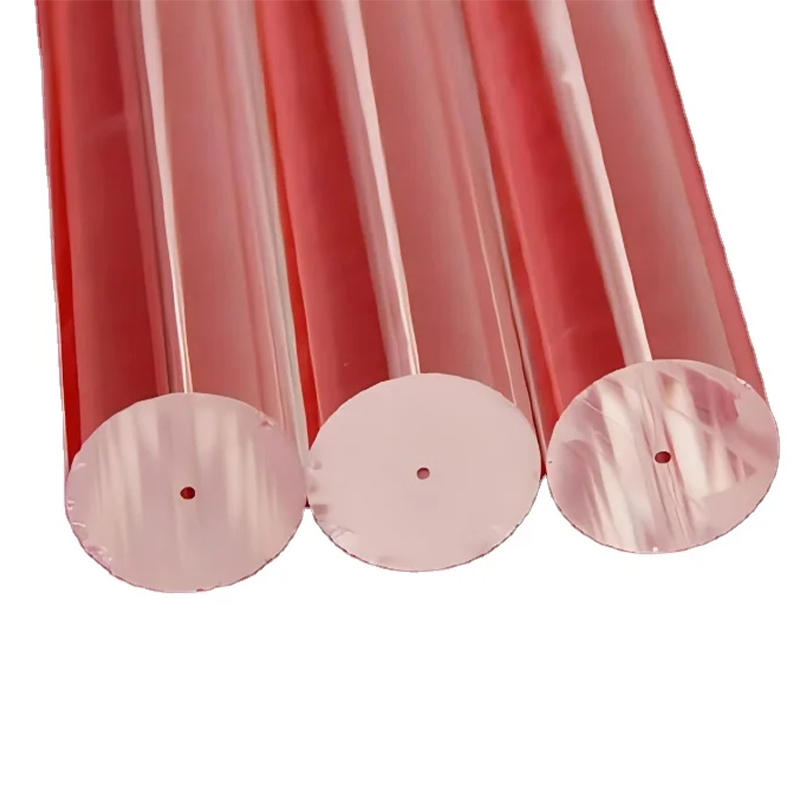
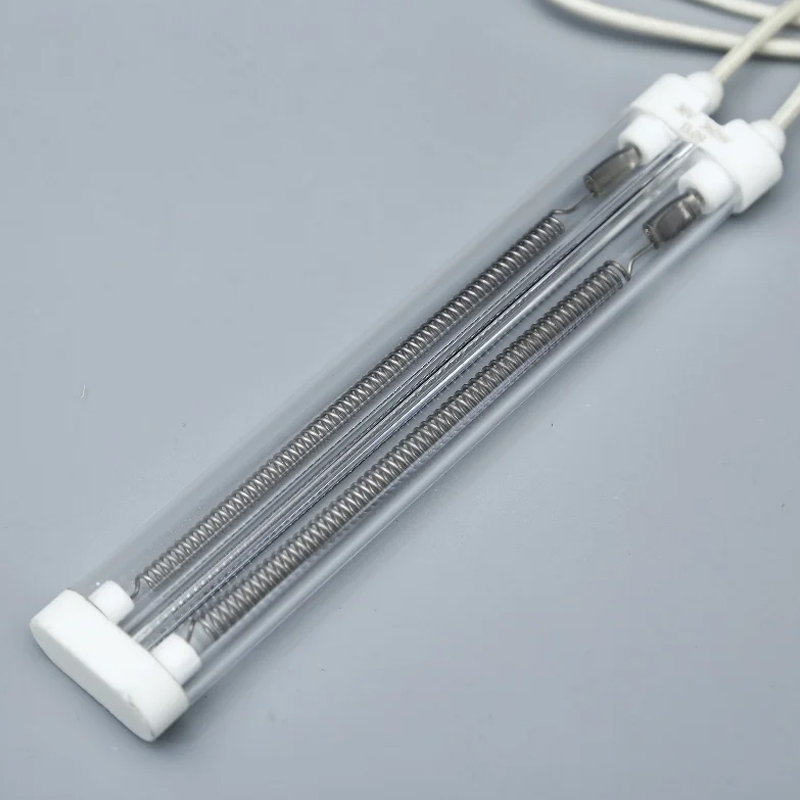
Most quartz in the world never gets close to its limit. A carbon-fibre infrared heating tube holds a filament around 1100 °C inside an envelope that runs far cooler, and the envelope's job is transmission and mechanical protection rather than heat resistance. Milky or opaque quartz is often preferred there because it diffuses the emission and hides the filament, even though its transmission is lower than clear material.
Laboratory quartz ware is the same story with a different twist. A quartz digestion tube working at 250 °C with hot acid is nowhere near any thermal limit; its enemy is thermal shock during rinsing and handling, plus attack by hydrofluoric acid or hot concentrated alkali. Quartz beakers, cuvettes and evaporation dishes fail from handling and chemistry far more often than from temperature.
That makes the melting point of quartz almost irrelevant in these product families — and it makes delivery consistency, wall tolerance and surface finish the things worth negotiating. For a distributor or a laboratory supply wholesaler, the practical value of a manufacturer who publishes bubble class and OH data is that fewer units come back cracked after the first wash.
In heaters and labware, quartz fails from thermal shock and chemical attack long before temperature becomes the limiting factor.
Six Rules for Working Between 1100 °C and 1400 °C
Everything below assumes transparent fused quartz of ordinary commercial grade. They are the checks that prevent most premature failures we see discussed in incoming enquiries.
- Set a design ceiling at the strain point for anything that must keep its dimensions, and treat 1100 °C as the working ceiling for long continuous holds in air.
- Control contamination on the surface. Alkali, fingerprints, talc and some refractory cements all accelerate cristobalite growth, so handle with gloves and store capped.
- Support hot tubes at closer intervals than cold ones. Shortening a span from 900 mm to 400 mm often doubles service life at 1200 °C.
- Ramp and cool with the gradient in mind rather than the average. Quartz tolerates a quench on thin walls but not a cold steel flange bolted to a hot tube.
- Watch contact materials. Some refractories and ceramics stick to silica at high temperature and generate stress points when the assembly cools.
- Keep the atmosphere clean of anything that attacks silica. Even trace hydrogen fluoride or alkali vapour shortens life dramatically, and no grade of quartz is immune.
Adding these six checks to a specification costs almost nothing at the drawing stage and can add months to a furnace campaign. The one that pays back fastest is usually the support spacing, because it is a geometry change rather than a material change.
Between 1100 °C and 1400 °C, cleanliness and support geometry extend quartz life far more than any upgrade in raw material grade.
Frequently Asked Questions About the Melting Point of Quartz
What is the melting point of quartz in Celsius and Fahrenheit?
Crystalline quartz melts between roughly 1670 °C and 1713 °C, which is about 3040 °F to 3115 °F. The range exists because different crystalline forms of SiO2 convert and melt at slightly different temperatures. Fused quartz glass does not have a true melting point; it softens around 1665 °C and flows gradually above that.
Does quartz glass melt or soften?
It softens. Because fused quartz is amorphous, it passes through a viscosity range rather than crossing a melting line. That is why a quartz tube can be bent at 2000 °C, drawn into capillary at similar temperatures, and still hold a load at 1100 °C.
Can a transparent quartz tube run continuously at 1400 °C?
Not reliably in air. Standard transparent grades are rated for roughly 1100 °C to 1200 °C continuous, with short excursions higher. Opaque and some specialty grades tolerate more, but sag and devitrification, not melting, set the limit. For sustained operation above 1200 °C, the support design and atmosphere usually need to change as well.
Why does my quartz tube turn milky white after a few weeks?
That is devitrification: amorphous silica converting to cristobalite, usually starting at a contaminated spot or at a bubble. It is accelerated by alkali, by handling residue and by higher temperature. Once a patch forms, it tends to grow and eventually spalls.
Does OH content change the melting point of quartz glass?
Only marginally, but it changes viscosity and therefore sag noticeably. Low-OH grades hold shape better in long hot holds, while high-OH grades are easier to work and transmit further into the deep UV.
Is quartz the same as fused silica?
Chemically yes, structurally no. Quartz is crystalline SiO2; fused silica or quartz glass is the same composition in an amorphous state, produced by melting and rapid cooling. Almost every transparent quartz window, tube and crucible in industrial use is the glass form.
What is the maximum working temperature of quartz glass?
For standard transparent material in air, plan on 1100 °C continuous and up to about 1300 °C for short excursions with good support and a clean surface. Low-OH grades and thicker walls shift those figures modestly, but they do not change the order of magnitude.
What should I tell a quartz manufacturer or supplier when I request a quotation?
Give the peak temperature, the continuous temperature, the dwell time, the atmosphere, the support or clamping geometry, and any optical transmission requirement. Those five answers determine grade, OH level and wall thickness far more than the melting point does, and they let a supplier quote a part that will still be in one piece at the end of the campaign.
The melting point of quartz is a fixed reference; service life is a design decision made from temperature, support geometry, cleanliness and atmosphere.
Checking a Specification Against Real Product Data
If a project sits anywhere between 1000 °C and 1300 °C, the sensible next step is to compare the intended duty against actual product pages rather than a generic materials table. The two most useful starting points are the tube range, where wall thickness and OH level drive everything, and the low-OH grades, where dimensional stability at temperature is the whole point.
Product references for high-temperature duty
A manufacturer working from its own furnace data will normally answer a temperature question with a grade recommendation rather than a single number, and that is the answer worth having. Melting points rarely lose a furnace campaign; a tube that sags two millimetres too far, or a window that goes cloudy in the wrong wavelength, does. Bring the peak temperature, the hold time and the atmosphere, and the number stops being trivia and starts being a specification.
Buy on service conditions, not on the melting point of quartz — temperature, dwell time, atmosphere and support geometry together decide whether a quartz part lasts a shift or a campaign.
Featured Products
Copyright © Yancheng Mingyang Quartz Products Co., Ltd. All Rights Reserved.
Wholesale Quartz Products Manufacturer Quartz Glass Factory