

 +86-0515-86223369
 0
 en
 English
 日本語
 Español

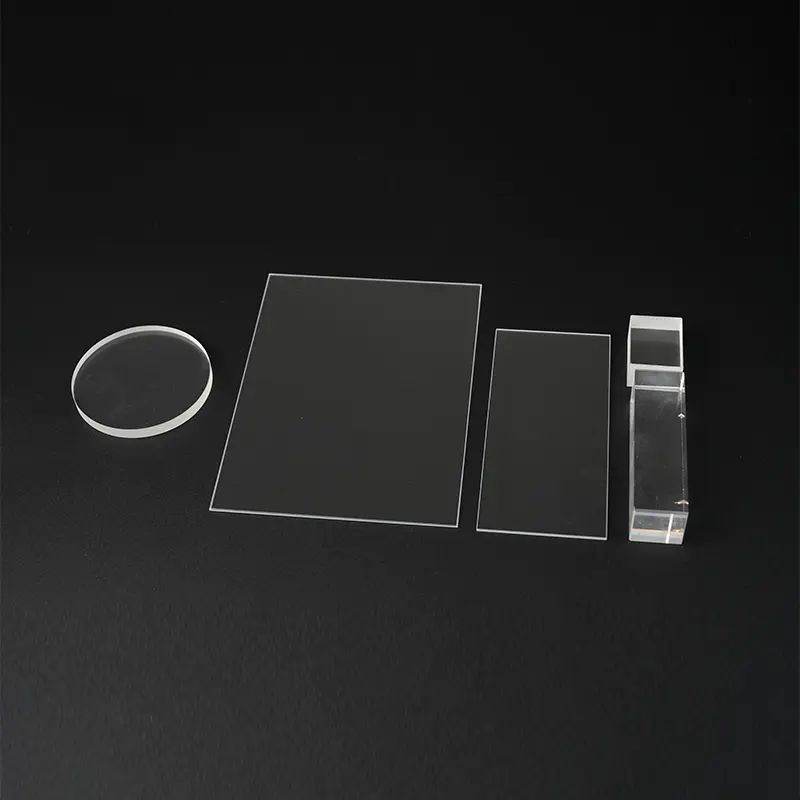
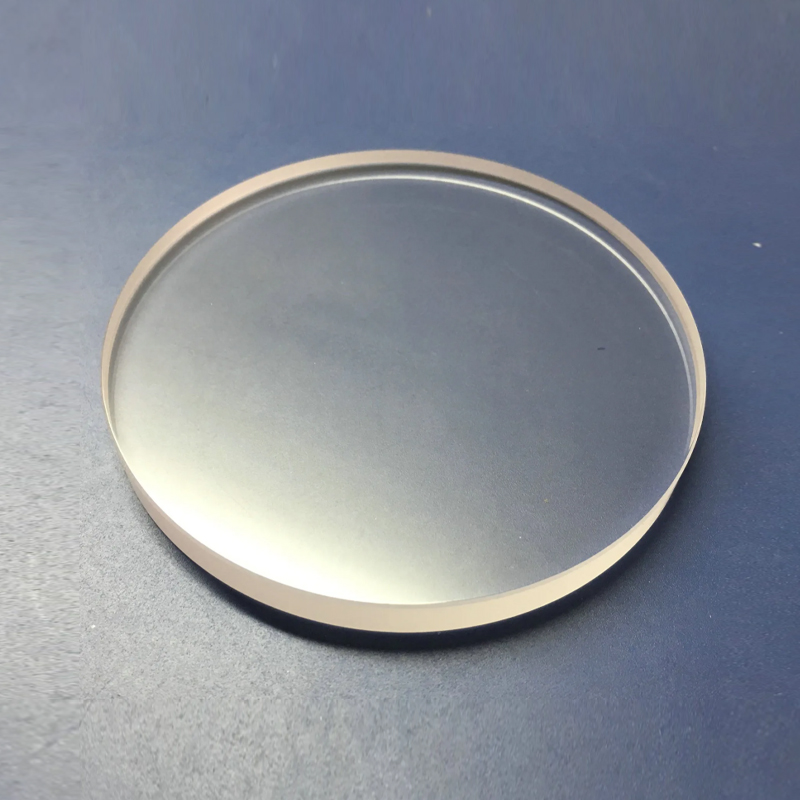
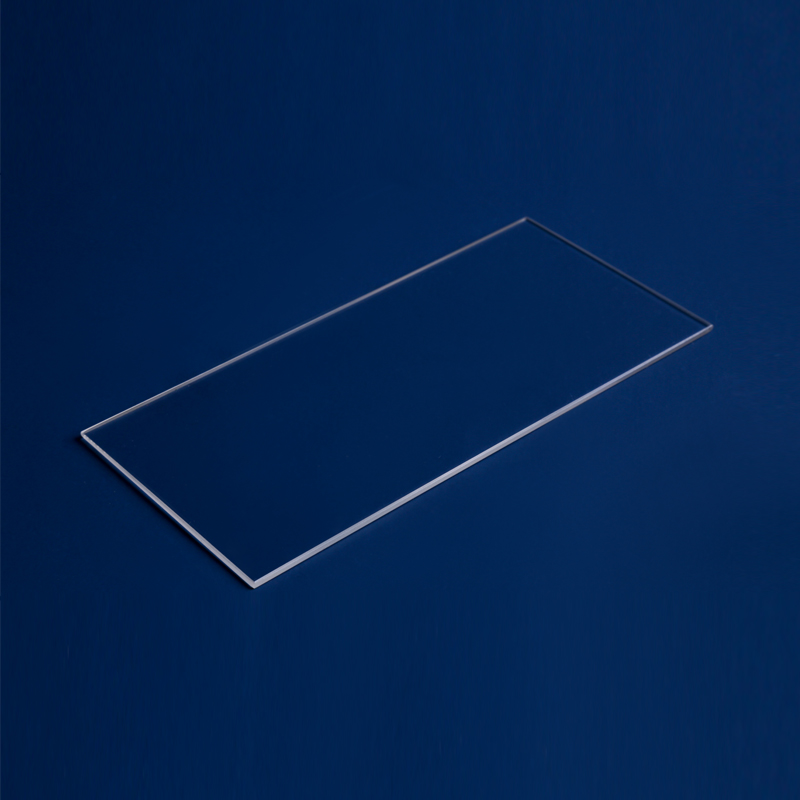
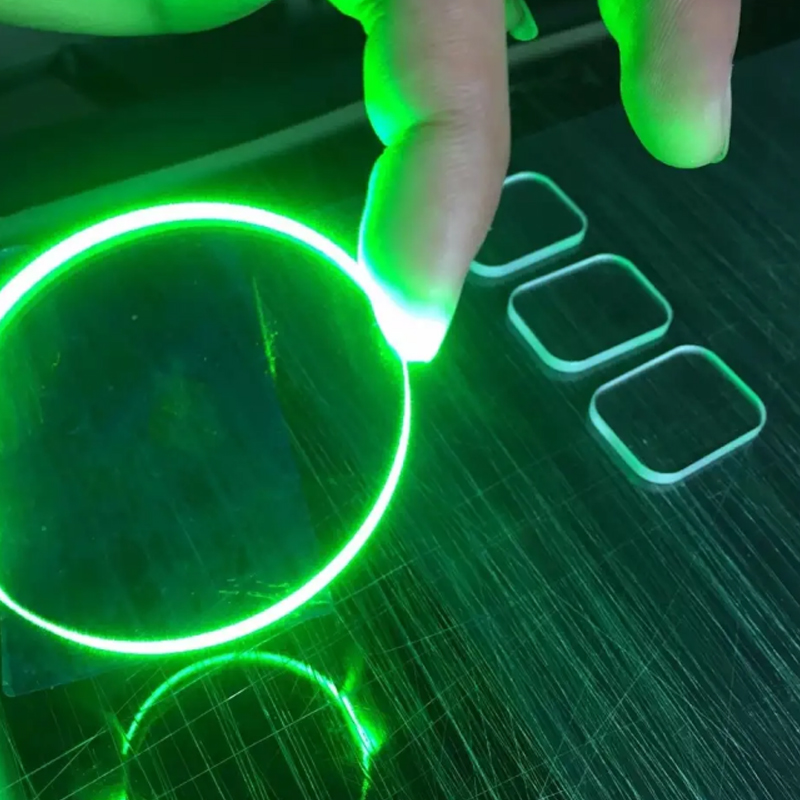

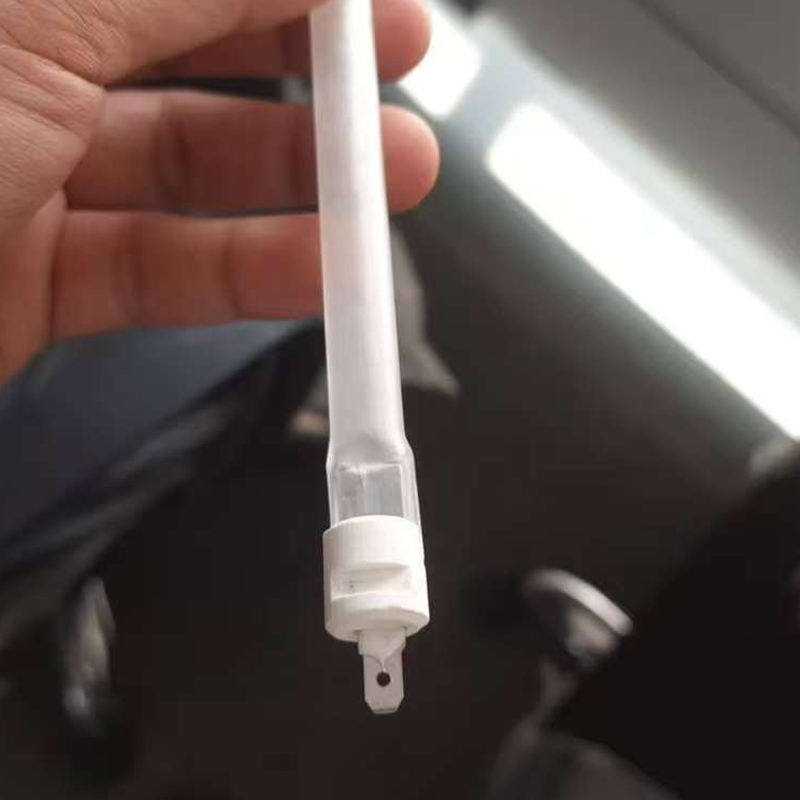
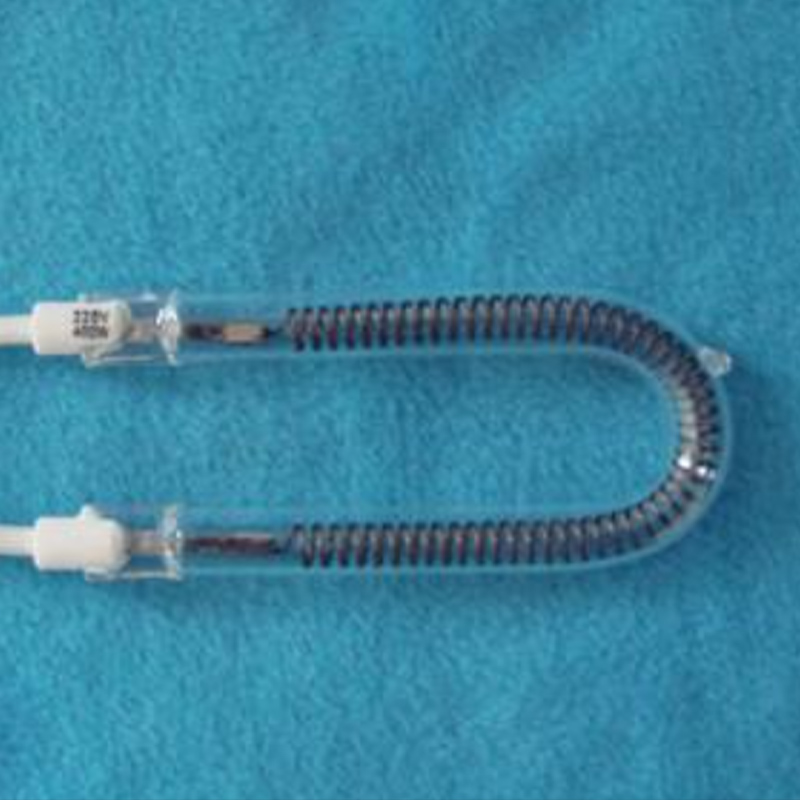
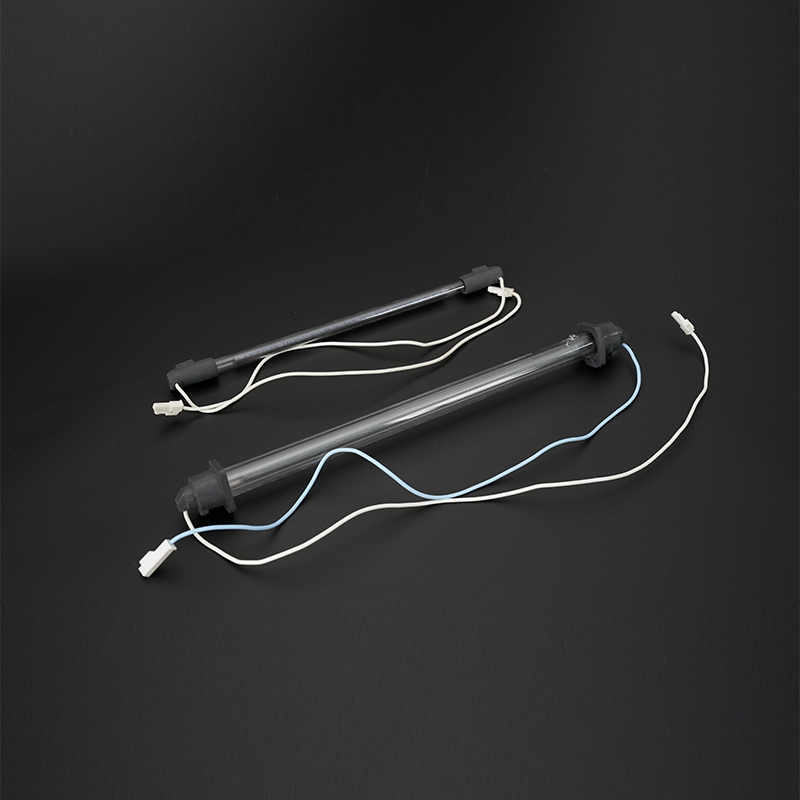

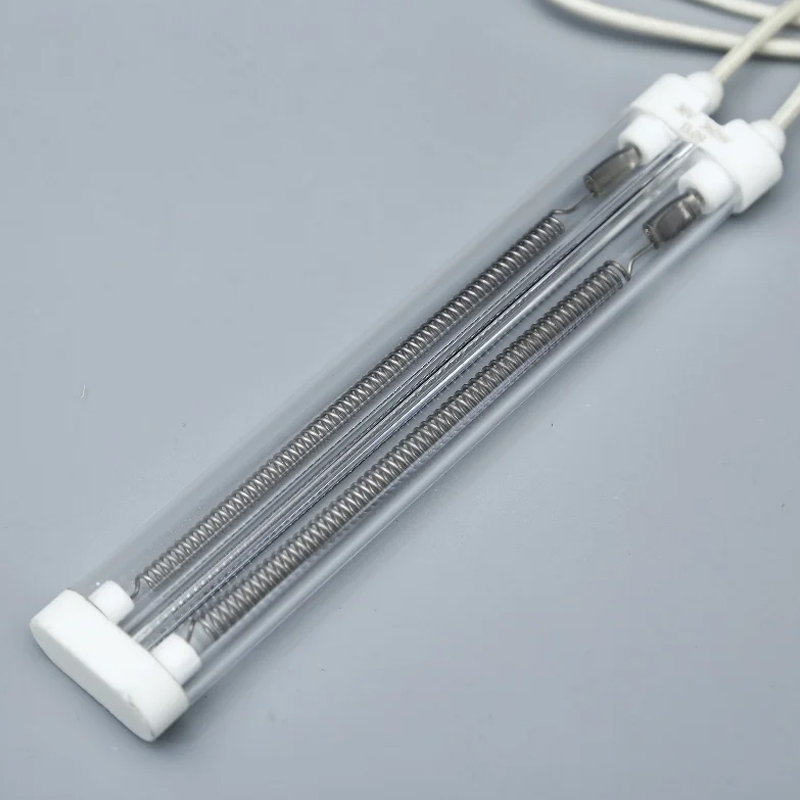
If you need any help, please feel free to contact us
 Products & Solutions
Home / News / Industry News / Infrared and Glass: Choosing the Right Quartz Grades for IR Windows and Heaters
Infrared and Glass: Choosing the Right Quartz Grades for IR Windows and Heaters
Content
- 1 The Short Version: Match the Glass to the Band
- 2 Why Silica Passes Near-Infrared but Blocks Thermal Infrared
- 3 A Comparison Table of Glass Families in the Infrared
- 4 Transmittance at 3 Micrometres: Where the Grades Separate
- 5 Infrared Heaters: Why the Quartz Envelope Is Not a Filter
- 6 Infrared Windows and Sight Glasses for Hot Processes
- 7 Infrared Optical Quartz: What JGS3 Buys You and What It Costs
- 8 When Glass Is the Wrong Answer: Thermal Imaging Through a Window
- 9 Specification Mistakes We See Repeatedly
- 10 How to Buy: What a Quartz Glass Manufacturer Should Tell You
- 11 Where These Products Sit in Our Range
- 12 FAQ: Infrared and Glass
- 12.1 Does infrared pass through glass?
- 12.2 Why can't a thermal camera see through a window?
- 12.3 Is quartz glass the same as infrared glass?
- 12.4 Which grade should I choose for a 2 to 3 micrometre process?
- 12.5 Does a thicker window block more infrared?
- 12.6 Can coatings improve infrared transmission?
- 12.7 What is the highest temperature a quartz window can take?
The relationship between infrared and glass is decided by wavelength, not by how clear the part looks on the bench. A few years ago a customer sent us a drawing for a fused silica disc, 60 mm across and 5 mm thick, to sit in front of a thermal imaging camera watching a 900 °C furnace chamber. Every dimension was correct. The material was wrong. At the 8 to 14 micrometre band that camera used, fused silica is not a window at all; it is a wall. The camera would have seen the disc's own surface emission plus a reflection of the workshop behind it, and the furnace would have stayed invisible behind a perfectly machined blank.
That quote request sums up infrared and glass better than any textbook chapter. Glass is not categorically transparent or opaque to infrared. It is transparent across a defined range, blind outside that range, and the edges of the range move with composition, hydroxyl content and thickness. Choose correctly and quartz glass becomes one of the most useful materials in an infrared system: it survives 1,100 °C in continuous service, shrugs off thermal shock, and passes most of what a medium-wave heater emits. Choose wrongly and you own an expensive decorative disc.
This article is written for the people who actually have to make that call: process engineers specifying a heater envelope, instrument designers choosing a window, maintenance teams troubleshooting a pyrometer, and purchasing staff comparing quotes from a quartz glass manufacturer. We build quartz tubes, rods, plates, windows, crucibles and infrared heating elements every week, so the examples below come from real purchase orders rather than from a physics syllabus.
The Short Version: Match the Glass to the Band
If you only remember one thing, remember this: quartz glass is a near-infrared and short-wave infrared material. High-purity fused silica passes light from roughly 180 nanometres in the ultraviolet out to about 2.5 micrometres, and low-hydroxyl grades push usable transmission to roughly 3.5 micrometres. Beyond about 4 micrometres, absorption climbs steeply. Between roughly 8 and 10 micrometres, the silicon-oxygen network absorbs so strongly that a 3 mm window is effectively black.
That single fact sorts almost every enquiry we receive into one of three buckets:
- 1 to 3 micrometres. Quartz glass is the default choice. Infrared lamps, carbon fibre emitters, 2 micrometre fibre lasers, gas sensing, moisture measurement, plastic preform reheating and most industrial drying processes live here.
- 3 to 5 micrometres. You are on the shoulder of the curve. Low-OH fused silica still works, but thickness matters enormously, hydroxyl content must be specified rather than assumed, and every extra millimetre costs real signal.
- 8 to 14 micrometres. Quartz cannot help you. Thermal imaging, most pyrometers and long-wave radiometry need germanium, zinc selenide, zinc sulphide, silicon for the shorter end, or a chalcogenide glass. A quartz window in a long-wave camera is a filter, not a window.
Everything else in this article is detail hanging on that framework: how hydroxyl absorbs, how thickness compounds the problem, how coatings shift the numbers, and how to write a purchase specification that a supplier can actually meet.
Match the glass to the wavelength band first and to the drawing second; a perfect part in the wrong grade is still a failed project.
Why Silica Passes Near-Infrared but Blocks Thermal Infrared
Transparency is not a property of a material in the abstract; it is a gap between two absorption mechanisms. On the short-wavelength side, photons eventually carry enough energy to lift electrons across the band gap of the glass, which is why fused silica turns opaque below about 180 nanometres. On the long-wavelength side, photons eventually carry the right energy to excite vibrations of the silicon-oxygen network itself. Those vibrational absorptions sit in the thermal infrared, and they are strong.
The practical consequence is a transmission window with a soft edge rather than a hard one. Fused silica is excellent at 1 micrometre, good at 2 micrometres, usable at 3 micrometres in the right grade, marginal at 4 micrometres and hopeless at 9 micrometres. Ordinary soda-lime float glass reaches its limit much earlier because iron oxide impurities absorb heavily in the near-infrared, which is exactly why thick window glass feels warm in summer sun: the visible light gets in and the near-infrared energy is converted to heat inside the pane.
The three infrared bands in plain terms
Near and short-wave infrared, roughly 0.7 to 2.5 micrometres. This is the band of lamp-based heating, fibre optic communication, spectroscopic moisture measurement and short-wave infrared inspection cameras. Quartz glass dominates here and needs little explanation.
Mid-wave infrared, roughly 3 to 5 micrometres. This is the band of hot-object thermometry, combustion gas analysis, some military optics and a growing number of gas sensors. Low-OH fused silica can serve the lower half of this band if the optical path is short. Above 4 micrometres you should be evaluating other materials honestly.
Long-wave infrared, roughly 8 to 14 micrometres. This is where thermal cameras work, because room-temperature objects radiate strongly there. Glass is opaque across almost the whole band, which is why a thermal camera pointed at a window sees the window's surface temperature and a reflection of whatever is behind the camera.
What hydroxyl does inside the glass
Water incorporated into the silica network during melting leaves hydroxyl groups behind, and those groups have their own vibrational absorptions at approximately 1.38, 2.22 and 2.73 micrometres. A UV-grade fused silica with 800 to 1,200 parts per million hydroxyl is superb below 2 micrometres and quite ordinary at 2.7 micrometres. An infrared-grade material with hydroxyl below 10 parts per million removes most of that absorption and buys you the extra micrometre of working range.
This is the single most common specification gap we see. A buyer requests "quartz glass, 3 mm thick, high transmission" and receives a competently made UV-grade window that loses nearly half its signal at 2.7 micrometres. Nothing was defective. The grade was simply never stated.
If your process sits beyond 2.5 micrometres, hydroxyl content is not a detail on the data sheet; it is the design decision.
A Comparison Table of Glass Families in the Infrared
The table below compresses the behaviour of the glass families we are asked about most often. Ranges are typical usable transmission figures for ordinary thicknesses, not guaranteed limits for every melt, because dopants, iron content and hydroxyl level all shift the edges.
| Glass family | Typical usable range | Hydroxyl content | Infrared behaviour | Where it fits |
|---|---|---|---|---|
| Soda-lime float glass | About 380 nm to 2,500 nm | Not controlled | Iron absorption in the near-infrared, opaque in the thermal band | Architectural glazing, containers, low-cost protective covers |
| Borosilicate 3.3 | About 320 nm to 2,500 nm | Low but rarely certified | Good visible and near-infrared, falls away after 2.5 micrometres | Laboratory ware, visible sight glasses on hot vessels |
| UV fused silica, JGS1 and JGS2 types | About 185 to 250 nm up to 2,500 nm | Roughly 200 to 1,200 ppm | Excellent deep UV, hydroxyl bands limit the 2.7 micrometre region | UV lamps, spectroscopy, photolithography optics |
| Infrared fused silica, JGS3 type | About 260 nm to 3,500 nm | Below 10 ppm | Extends usable transmission past the hydroxyl bands | IR windows, 2 to 3 micrometre laser optics, gas cells |
| Low-OH synthetic fused silica | About 170 nm to 4,000 nm in thin sections | Below 1 to 10 ppm | Best infrared reach available in a glass, still opaque past about 4.5 micrometres | Mid-wave sensors, high-power IR windows, demanding metrology |
Read the table as a filter, not a ranking. JGS1 is not better than JGS3; it is optimised for a different end of the spectrum. A supplier who quotes a single grade for every infrared job has either misunderstood the request or is hoping you will not notice.
Two practical notes sit underneath the numbers. First, visible transparency tells you almost nothing about infrared performance, so a visual inspection of a delivered window proves very little. Second, a glass that looks slightly grey or green in thick sections is usually revealing iron content, which is harmless in a sight glass and unacceptable in a near-infrared window.
Grade selection is application selection: ultraviolet, near-infrared and infrared grades solve different problems and are not interchangeable.
Transmittance at 3 Micrometres: Where the Grades Separate
The chart below compares indicative internal transmittance at 3 micrometres through a 10 mm path for four common materials. It is deliberately focused on that wavelength because 3 micrometres is where hydroxyl content, not thickness or polish, dominates the result.
Indicative transmittance at 3 micrometres, 10 mm path
Low-OH fused silica, IR grade
88%
High-OH fused silica, UV grade
45%
Borosilicate 3.3 glass
25%
Soda-lime float glass
8%
Indicative values for comparison only; request a measured transmission curve for your specific melt and thickness.
Three things stand out. The gap between the two silica grades is the width of the hydroxyl band, not a difference in purity or craftsmanship, which is why the fix is a grade change rather than a polishing change. Borosilicate is not simply "a bit worse" in this region; it is a different material class and should not be substituted during a supply shortage without a fresh optical review. And the soda-lime figure explains why ordinary glass is useless as an infrared window even when it looks perfectly clear.
For our own infrared work, this is why we keep low-hydroxyl plate and tube stock separate from UV-grade stock and mark melting batch numbers on the packing list. It is also why we ask customers for a target wavelength before quoting rather than after. If the application sits at 2 micrometres, a standard UV-grade window will perform well and save money. If it sits at 3.2 micrometres, that same window will halve the signal and the customer will blame the coating, the polish or the alignment before anyone suspects the glass.
Thickness compounds the effect exponentially rather than linearly, so a 5 mm window is not simply "a bit dimmer" than a 3 mm window at the edge of the band. In practice, if you must work close to the cut-off, specify the thinnest window the mechanical design will tolerate and spend the saving on a better grade.
Near the edge of the transmission window, grade and thickness act together; reducing thickness is often cheaper than upgrading grade.
Infrared Heaters: Why the Quartz Envelope Is Not a Filter
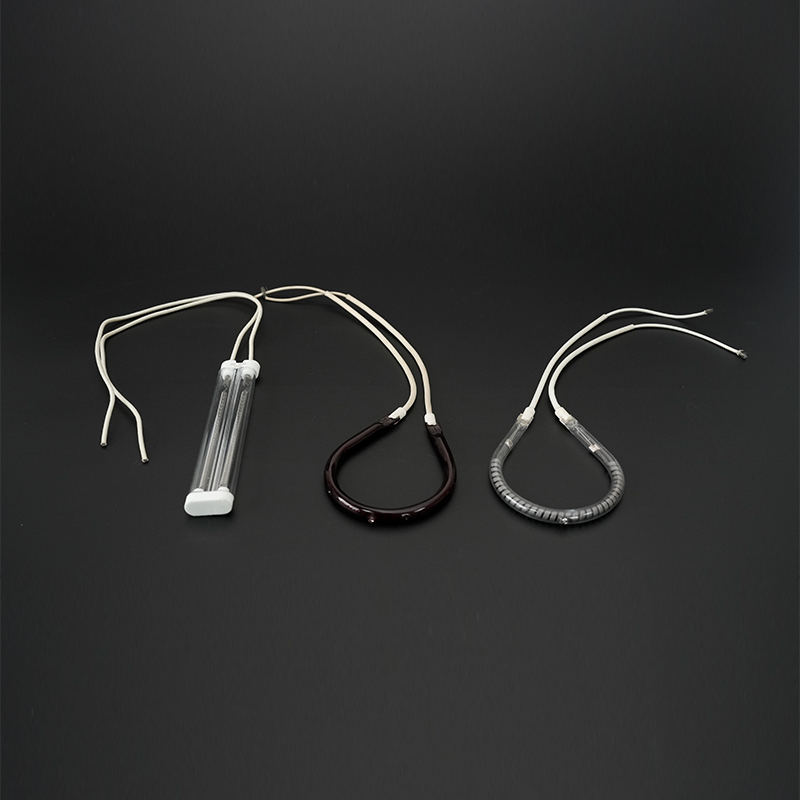
The largest industrial use of the infrared and glass pairing is the quartz infrared heating tube, and it works because the envelope is transparent to the radiation it encloses. A carbon fibre filament running at around 1,200 K radiates most strongly near 2.4 micrometres by Wien's displacement law. A nickel-chromium element at a similar temperature behaves comparably. A tungsten filament in a halogen-filled tube runs hotter, near 2,800 K, and peaks closer to 1 micrometre. All three sit comfortably inside the transmission window of the quartz envelope, so the tube wall absorbs very little of the energy it is generating.
That is not a trivial detail. If the envelope absorbed its own output, the tube would heat itself rather than the workpiece, efficiency would collapse and the wall would soften. Quartz avoids all three failure modes at once, and it adds a softening point above 1,600 °C and a coefficient of thermal expansion around 0.55 × 10⁻⁶ per kelvin, which is why a heater can be splashed with cold water in a production line without shattering.
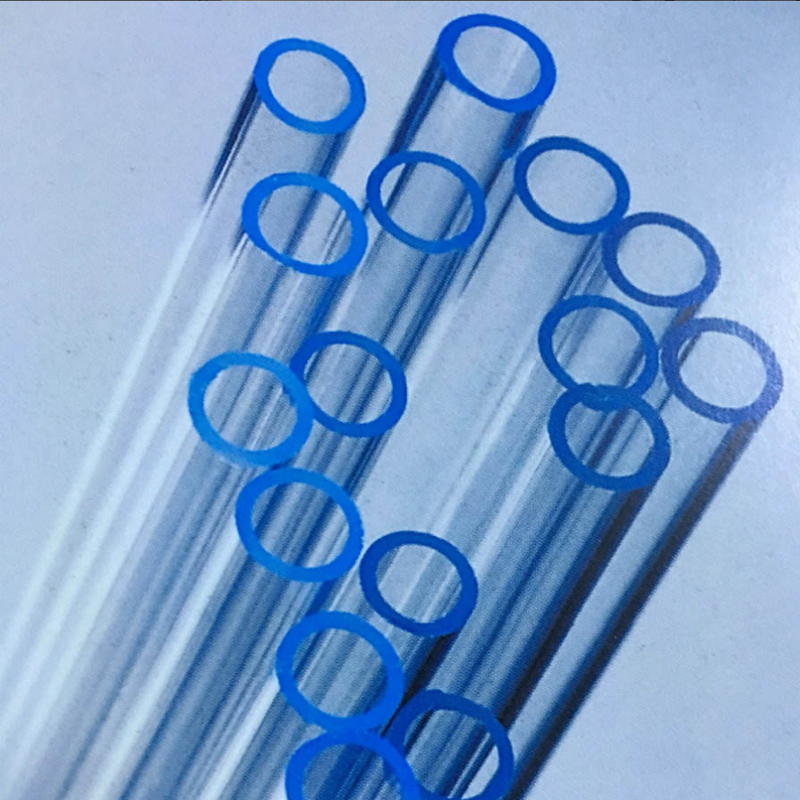
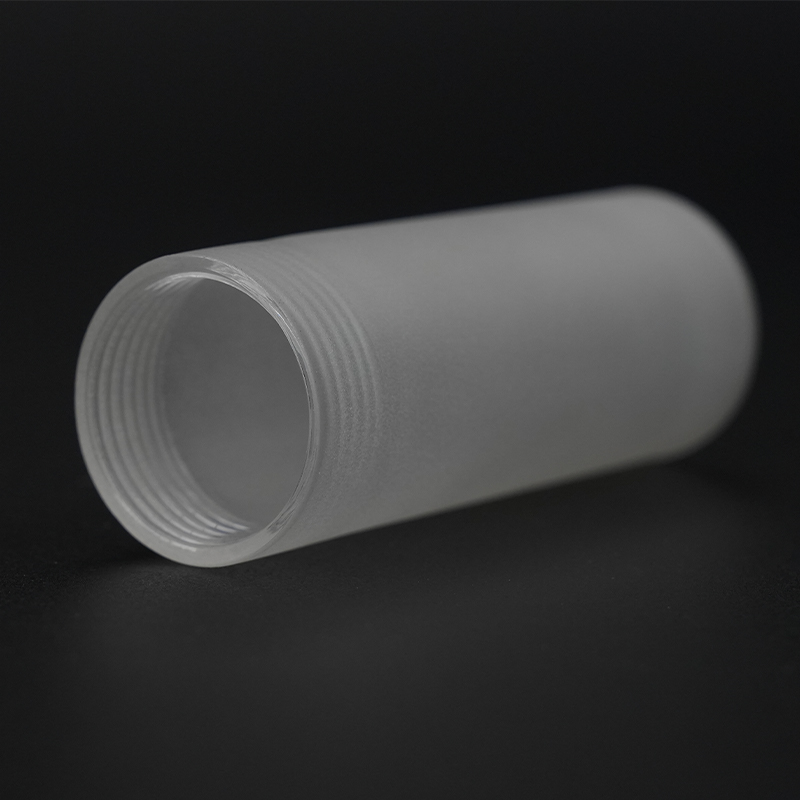
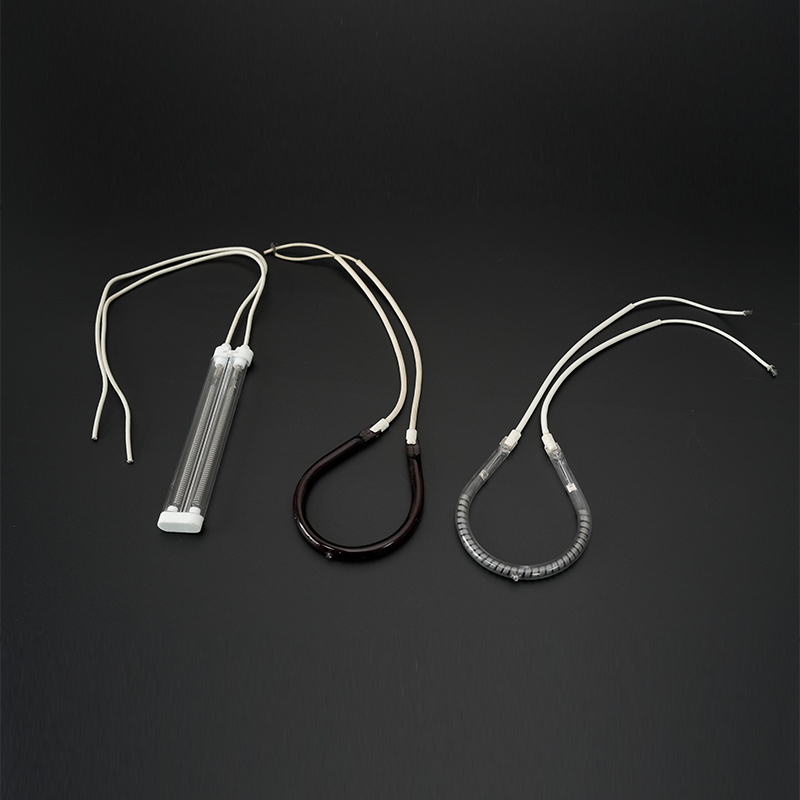 Transparent Quartz Infrared Heating TubesTransparent quartz tube offers direct infrared transmission for focused heating, fast response and thermal-shock resistance; useful where tight filament image and high efficiency matter.View Product →
Transparent, milky and doped envelopes
Transparent quartz gives the highest direct transmission and a tight filament image, which suits focused heating, thermoforming and semiconductor rapid thermal processing. Milky or opaque quartz scatters the radiation, softening hot spots and producing a more even distribution across a wide target, which is usually preferable for drying ovens, paint curing and food warming.
Doped quartz tubing adds a third option by shifting where the envelope absorbs. A tube doped to cut ultraviolet emission reduces ozone generation and protects heat-sensitive products, while the familiar red or ruby tubing visibly filters short wavelengths without blocking the infrared output. For lamp makers, this is often the difference between passing and failing an emissions specification.
Matching emitter to load
Wavelength matching matters more than most buyers expect. Water-based coatings, paper and textiles absorb strongly around 3 micrometres, so medium-wave carbon emitters transfer heat efficiently. Thin polymer films and PET preforms absorb well in the 1 to 2 micrometre region, which favours short-wave halogen lamps. Clear plastics that look transparent to the eye can still absorb strongly in the near-infrared, which is exactly why infrared welding and shrink fitting work at all.
We usually ask three questions before recommending an envelope: what is the target material, what temperature must it reach, and how uniform must the result be. Those three answers narrow the choice of emitter, tube diameter, wall thickness and surface finish far faster than a data sheet will.
The quartz envelope works because it is transparent to its own filament's emission; choose transparent or milky finish by how evenly the heat must land.
Infrared Windows and Sight Glasses for Hot Processes
A window looking into a 1,000 °C chamber has to do three jobs at once: stay transparent at the operating wavelength, survive the thermal gradient, and keep the process atmosphere where it belongs. Quartz handles all three better than most alternatives, but only if the mechanical design supports it.
Consider a typical furnace sight glass. The process side sits at 900 °C, the outside face at 60 °C, and the camera or pyrometer looks through at 1.5 micrometres. A 5 mm low-OH quartz disc handles the optical requirement easily. The failure mode is almost never transmission; it is mounting. If the window is clamped rigidly at both faces, the differential expansion between the quartz and a stainless steel flange will crack it, because quartz expands far less than the metal around it. We recommend a soft gasket, a floating seat, and a clear specification of which face is hot.
Purging is the second design decision. A quartz window in a soot-laden or condensing atmosphere loses transmission from surface deposits long before the glass itself degrades. A tangential air or nitrogen purge across the process face keeps the surface clear and, as a bonus, cools it. Where purge gas is unavailable, a slight positive pressure inside the enclosure often achieves the same result.
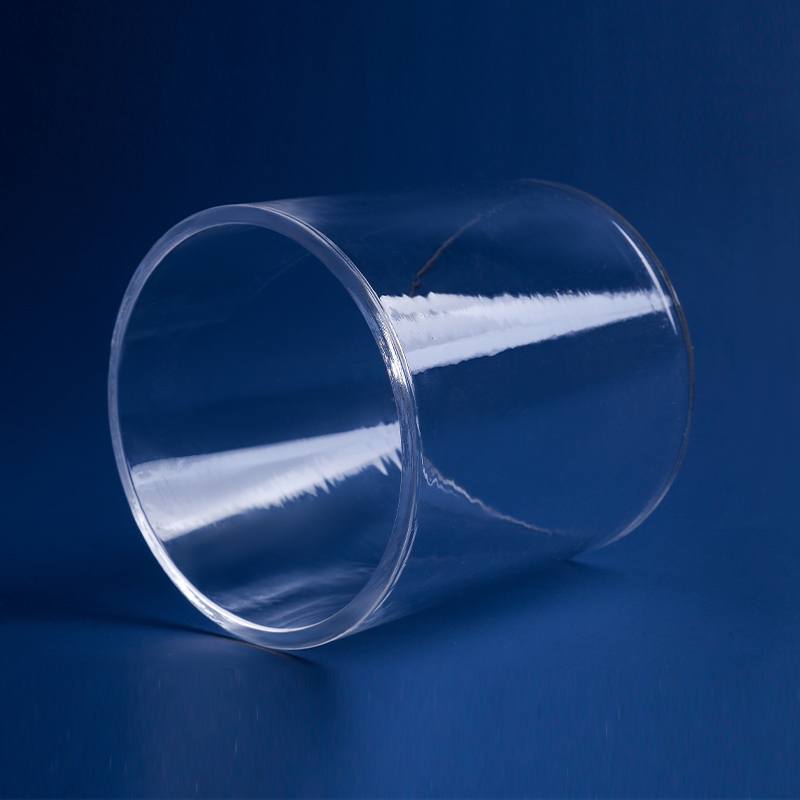
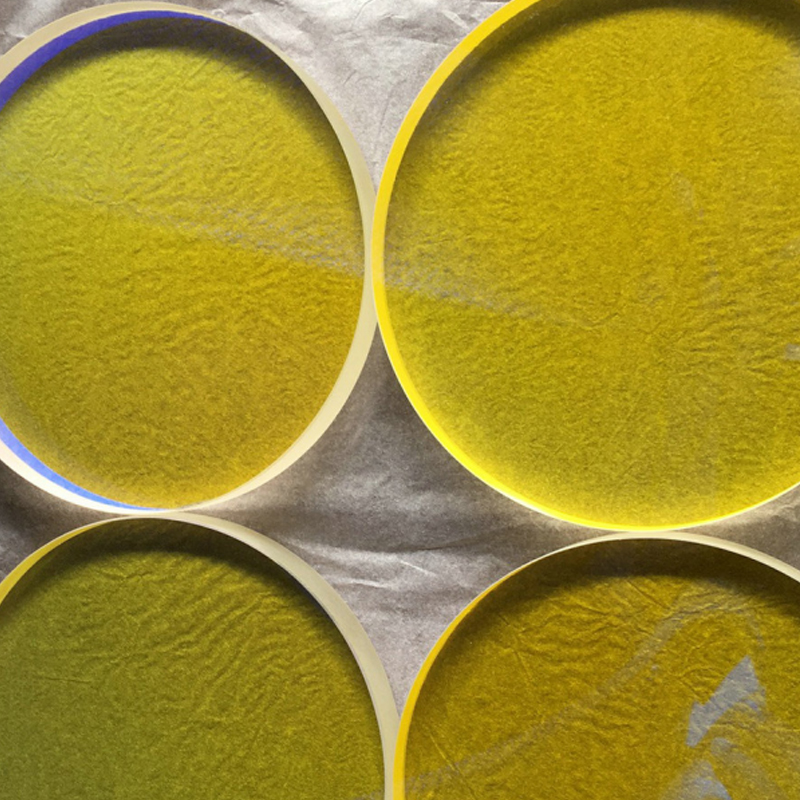
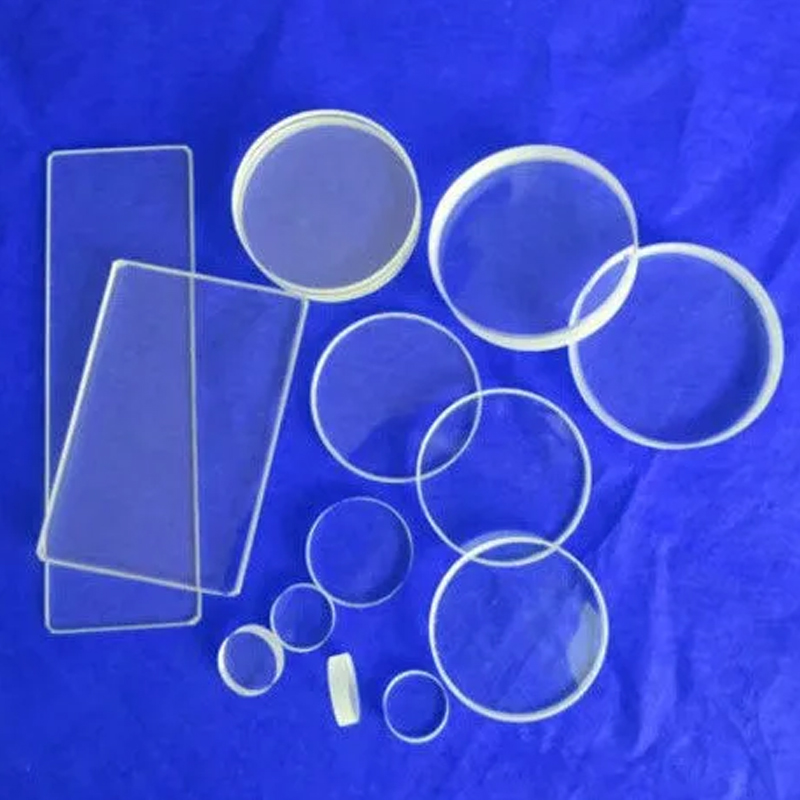 High-Purity Quartz Windows for Optical and Thermal UseHigh-purity quartz window suits high-temperature, thermally stable optical viewing; consider purge and broadband anti-reflection needs where transmission losses matter.View Product →
Thickness, coatings and surface quality
Uncoated fused silica loses about 3 to 4 percent per surface to Fresnel reflection in the near-infrared. Two surfaces, four percent, and a further loss inside the material: a nominally excellent window can deliver 90 percent rather than 96 percent before the process even begins. Anti-reflection coatings recover most of that, but only across the band they were designed for, so a broadband specification matters when the sensor sweeps wavelength.
Dimensional tolerances are worth stating explicitly as well. A window specified at ±0.05 mm on thickness and 40/20 scratch-dig on surface quality costs more than a general-purpose blank at ±0.2 mm, and most sight glass applications do not need the tighter grade. Conversely, a laser window that quietly substitutes a commercial polish for a laser-grade finish will suffer from scatter and, at high power, from local heating.
Edge quality deserves a mention because it is where most breakages start. A ground and bevelled edge resists chipping during handling and reduces the chance of a crack propagating into the aperture under thermal cycling.
Quartz windows rarely fail from transmission loss; they fail from rigid mountings, surface deposits and unprepared edges.
Infrared Optical Quartz: What JGS3 Buys You and What It Costs
Infrared-grade fused silica, commonly referenced under the JGS3 designation, is what we supply when a customer needs usable transmission out to roughly 3.5 micrometres. Hydroxyl content is held below about 10 parts per million, which removes the 2.73 micrometre absorption band that limits UV-grade material.
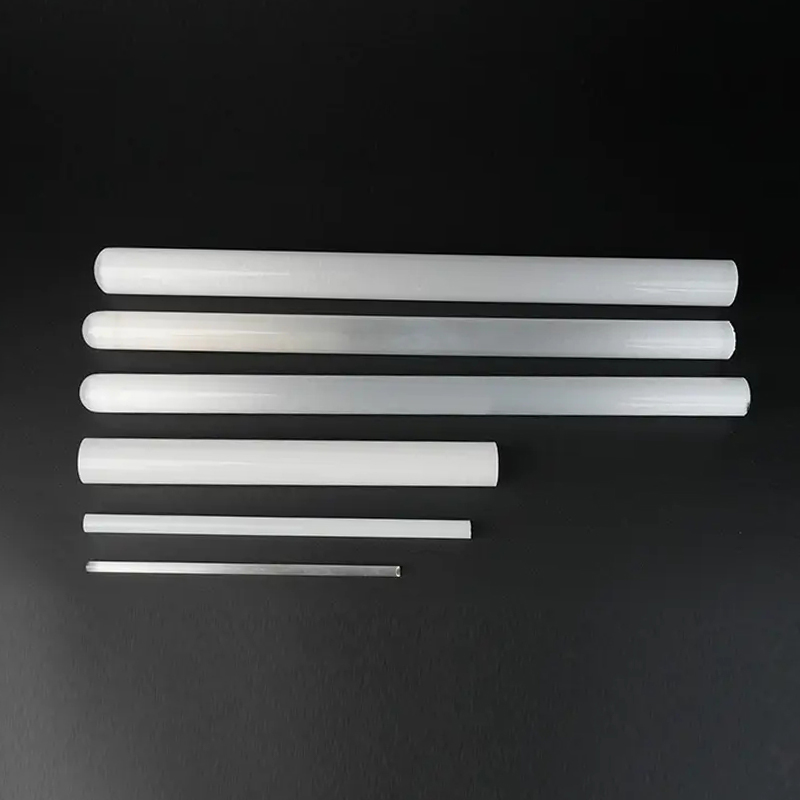
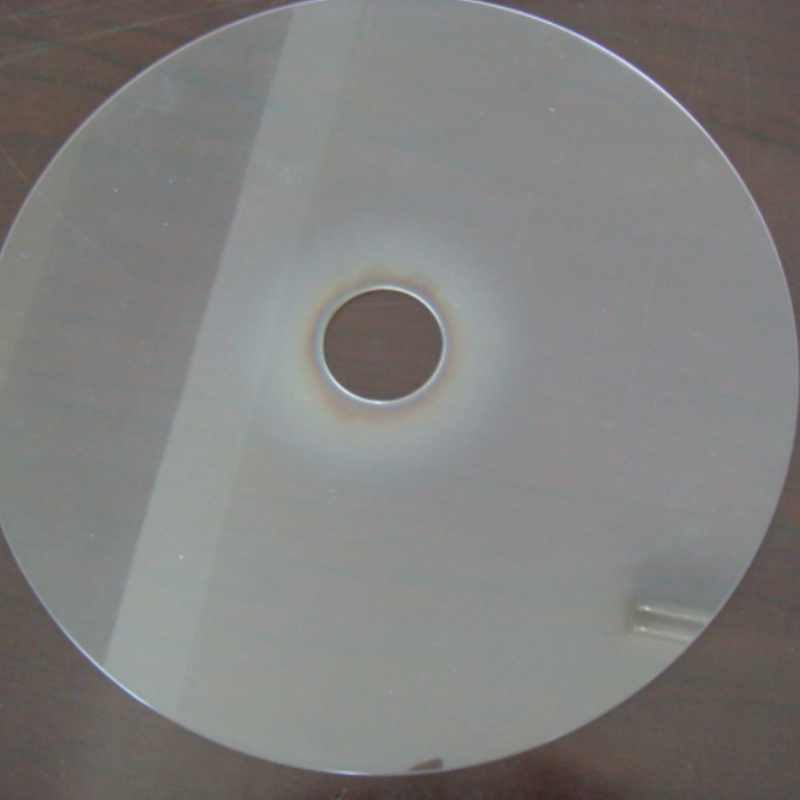
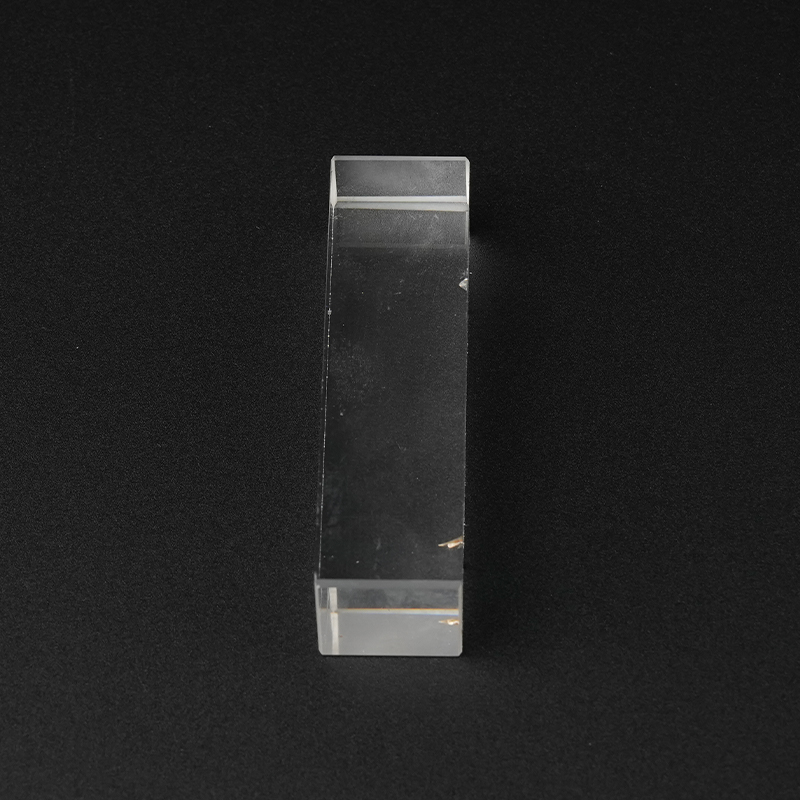 JGS3 Infrared-Grade Optical Quartz PlatesJGS3 optical quartz plate covers 0.26–3.5 µm and avoids the 2.7 µm hydroxyl absorption band; useful for infrared transmission where UV range is less critical.View Product →
The trade-offs are worth understanding before you specify it. Removing hydroxyl shifts the ultraviolet cut-off to longer wavelengths, typically beyond 250 nanometres, so an infrared grade is a poor choice for a UV lamp envelope. It also costs more than UV-grade material because the melting and consolidation process is more demanding, and it is more sensitive in the sense that a supplier must actually measure hydroxyl rather than assume it.
Where we see JGS3 earning its price: optical windows for 2 to 3 micrometre fibre lasers, gas absorption cells for methane and water vapour sensing, protective windows over cooled mid-wave detectors, and reference optics that must not drift with moisture uptake. Where it is wasted: visible-light windows, UV curing equipment, and general furnace observation at 1 micrometre, where a cheaper grade performs identically.
Quality attributes that matter as much as transmission
An infrared optical path is affected by more than the transmission curve. Bubbles and solid inclusions scatter light and, under high power, act as hot spots that can seed damage. Striae, the faint compositional banding left by melting, distort wavefronts and matter enormously for imaging or interferometry but hardly at all for a simple radiative transfer measurement. Index homogeneity matters for large apertures and barely for a 10 mm disc.
Our advice is to state the application rather than a generic "best quality" requirement. A supplier can then propose a bubble class, striae class and surface specification that match the job, and you avoid paying for interferometric-grade homogeneity in a part that only needs to pass heat into a chamber.
Infrared-grade quartz is the right answer between roughly 2.5 and 3.5 micrometres, and an expensive mistake at every other wavelength.
When Glass Is the Wrong Answer: Thermal Imaging Through a Window
Thermal cameras are the most frequent source of infrared and glass confusion, and the honest answer is that quartz cannot solve the problem. A long-wave thermal camera operating between 8 and 14 micrometres sees glass as an opaque surface with an emissivity around 0.9, so it reports the temperature of the glass, corrected by whatever the glass is reflecting. In a workshop, that reflection is people and lighting, which is why thermal images of windows look like mirrors.
The usual fixes are all legitimate, and none of them involve quartz:
- Open a clear aperture and measure through the hole, accepting the airflow that comes with it.
- Use a window material that genuinely transmits in the 8 to 14 micrometre band, such as germanium, zinc selenide or a chalcogenide glass, and accept its cost and its thermal limitations.
- Use a short-wave infrared camera instead, operating between roughly 0.9 and 1.7 micrometres, where quartz is transparent and high-temperature measurements are still possible.
- Measure the exterior surface with a contact sensor or a properly emissivity-corrected pyrometer working at a shorter wavelength.
The short-wave option is the one most often overlooked. For furnace and kiln work above 700 °C, a short-wave camera behind a quartz window can be a better engineering answer than an expensive long-wave camera behind an exotic window, because the shorter wavelength also reduces sensitivity to emissivity error and to surface contamination.
Glass in front of a camera is not automatically a bad idea; glass chosen for the wrong band is. When you describe the measurement to a quartz glass supplier, give the camera's spectral band rather than the word "thermal", because "thermal" alone points a responsible supplier toward the wrong material.
State the camera's wavelength band, not the phrase thermal imaging; that one word can send an order in the wrong direction.
Specification Mistakes We See Repeatedly
Most infrared glass problems are decided on the purchase order, months before anything is delivered. These are the recurring ones, in rough order of frequency.
- Specifying a grade by name without a wavelength. "Quartz glass" describes a family, not a performance level. Give the operating band and the acceptable transmission at that band.
- Forgetting hydroxyl content. Any requirement beyond 2.5 micrometres should state an OH limit, for example below 10 parts per million, and should ask how it is verified.
- Ignoring thickness. Transmission near the band edge is exponential in thickness. Two suppliers quoting the same grade at different thicknesses are quoting different performance.
- Assuming coating always helps. An anti-reflection coating optimised for 1 micrometre will hurt at 3 micrometres. Specify the coating band or leave it off.
- Designing a rigid mount. Quartz expands at roughly a fifth of the rate of stainless steel; the difference has to go somewhere. Use compliant seating.
- Overlooking the purge. A perfectly specified window in a dirty atmosphere becomes useless in a shift. Plan the gas flow at the design stage.
- Judging quality by eye. A part that looks flawless may be the wrong grade, and a part with a visible bubble may be perfectly acceptable for a radiative heating application. Inspect against the specification, not against intuition.
Each of these is cheap to fix at the quotation stage and expensive to fix after delivery. A five-minute conversation about wavelength, thickness, temperature and atmosphere prevents almost all of them.
Give the wavelength, the thickness, the temperature and the atmosphere, and most infrared glass specification errors disappear before the quote is issued.
How to Buy: What a Quartz Glass Manufacturer Should Tell You
Buying infrared quartz is not complicated, but it rewards a supplier who answers questions with measurements rather than adjectives. Whether you are dealing with a manufacturer directly, a regional supplier or a wholesaler handling several product lines, the same ten items should appear in the technical response.
- A measured transmission curve for the offered grade at the offered thickness, not a catalogue figure copied from a generic data sheet. An Fourier transform infrared measurement takes minutes and settles most arguments.
- A stated hydroxyl value and the method used to obtain it, usually from the absorption band near 2.73 micrometres.
- Bubble and inclusion class expressed in a recognised grading scheme rather than as "high quality".
- Striae and homogeneity information where imaging or interferometry is involved.
- Dimensional tolerances for thickness, diameter, flatness and parallelism, plus the measurement method.
- Surface specification in scratch-dig terms, with the polish grade named.
- Coating details, including design wavelength, bandwidth, incidence angle and expected transmission gain.
- Thermal limits and recommended ramp rates, including the maximum gradient across the part.
- Packing and traceability, because a 300 mm window that arrives chipped is a total loss regardless of its optical quality.
- Sample and lead time policy, especially for a first article that must be tested in the actual fixture.
It also helps to know what a supplier should ask you. If a quotation arrives without a single question about wavelength, thickness or temperature, the price is probably based on a guess. Our own enquiry form deliberately asks for the operating band first, because it determines whether we quote a UV-grade tube, an infrared-grade plate or a milky envelope.
Custom sizes, small batches and repeat orders
Most infrared projects start as a one-off and become a scheduled part. Ask early whether the supplier can hold a melting batch for repeat orders, whether the drawing will be kept on file with the measured transmission attached, and how a change of grade would be communicated. Those answers matter more than a few percent on the first invoice when you are six months into production and a new batch behaves slightly differently.
For custom fabrication, whether that means a stepped window, a drilled aperture plate, a domed envelope or a flanged sight port, the practical route is to send a drawing with the optical requirement marked on it. Dimensions alone rarely convey what the part must actually do.
A serious supplier answers an infrared enquiry with a measured curve, a stated hydroxyl value and at least one question about your wavelength.
Where These Products Sit in Our Range
Two entry points cover most of the infrared work described above. The first is our custom window fabrication service, which handles apertures, drilled plates, stepped profiles and anti-reflection coating coordination for sight glasses and instrument windows. The second is the infrared heater range, which covers transparent, milky and carbon fibre element constructions for industrial heating equipment.
Custom quartz windows and sight glasses: custom quartz windows and sight glasses for furnace observation, sensor protection and instrument apertures.
Infrared quartz heaters: infrared quartz heaters with transparent or milky envelopes for drying, curing and thermoforming lines.
Both pages sit alongside the wider catalogue of tubes, rods, plates, crucibles and laboratory ware, so a single enquiry can usually cover an entire assembly rather than a single component.
Start from the application page closest to your process; the material grade follows from the wavelength rather than the other way around.
FAQ: Infrared and Glass
Does infrared pass through glass?
Some of it does, and the amount depends entirely on wavelength. Ordinary window glass passes near-infrared light below about 2.5 micrometres reasonably well and blocks almost everything beyond 5 micrometres. Fused quartz extends usable transmission to roughly 3.5 micrometres in low-hydroxyl grades. In the 8 to 14 micrometre thermal band, conventional glass is effectively opaque.
Why can't a thermal camera see through a window?
Because the camera works in the long-wave infrared, where glass absorbs rather than transmits. The camera therefore reads the glass surface itself, which emits strongly and also reflects the surroundings. Pointing a thermal camera at a window usually produces an image of the camera operator's own heat reflected back.
Is quartz glass the same as infrared glass?
Not exactly. Quartz glass is a family of fused silica products, and only some members of that family are optimised for infrared work. Infrared-grade material is characterised by very low hydroxyl content, which removes absorption bands that limit UV-grade silica beyond 2.5 micrometres.
Which grade should I choose for a 2 to 3 micrometre process?
Below 2.5 micrometres, a standard UV-grade fused silica generally performs well and costs less. Between 2.5 and 3.5 micrometres, specify a low-hydroxyl infrared grade with hydroxyl below about 10 parts per million, and keep the window as thin as the mechanical design allows.
Does a thicker window block more infrared?
Yes, and the effect is exponential rather than proportional, especially near the edge of the transmission window. A window that performs acceptably at 3 mm can lose a large fraction of its signal at 8 mm at the same wavelength. Thickness is an optical variable, not only a mechanical one.
Can coatings improve infrared transmission?
Anti-reflection coatings can recover most of the roughly 3 to 4 percent lost at each uncoated surface, but only within the band they were designed for. A coating optimised for visible light will usually degrade performance at 3 micrometres, so the design wavelength must be stated on the drawing.
What is the highest temperature a quartz window can take?
Fused quartz softens above 1,600 °C and is routinely used continuously around 1,100 °C, but the practical limit for a window is usually the thermal gradient across it and the mounting method rather than the material's softening point. Gradual heating, compliant seating and even clamping matter more than the headline figure.
Every question about infrared and glass reduces to two numbers: the operating wavelength and the hydroxyl content of the glass in the beam.
Infrared and glass is one of those topics where a little precision early saves a great deal of expense later. The physics is stable, the material options are well understood, and the failure modes are almost all predictable: a grade chosen by habit rather than by wavelength, a window designed without a compliant mount, a heater envelope specified without considering how evenly the heat must land, or a thermal camera asked to look through a material that absorbs exactly the band it depends on.
If you are at the stage of sketching a part rather than ordering one, the most useful thing you can do is describe the process in plain terms: what is being heated or measured, at what temperature, at what wavelength, through what atmosphere, and for how long the part must last. Those five answers narrow the choice of grade, thickness, surface finish and coating faster than any specification table, and they give a manufacturer enough to quote something that will still work on the shop floor a year from now.
Describe the process, not just the part; wavelength, temperature and atmosphere decide the glass, and the drawing only decides the shape.
Featured Products
Copyright © Yancheng Mingyang Quartz Products Co., Ltd. All Rights Reserved.
Wholesale Quartz Products Manufacturer Quartz Glass Factory