

 +86-0515-86223369
 0
 en
 English
 日本語
 Español

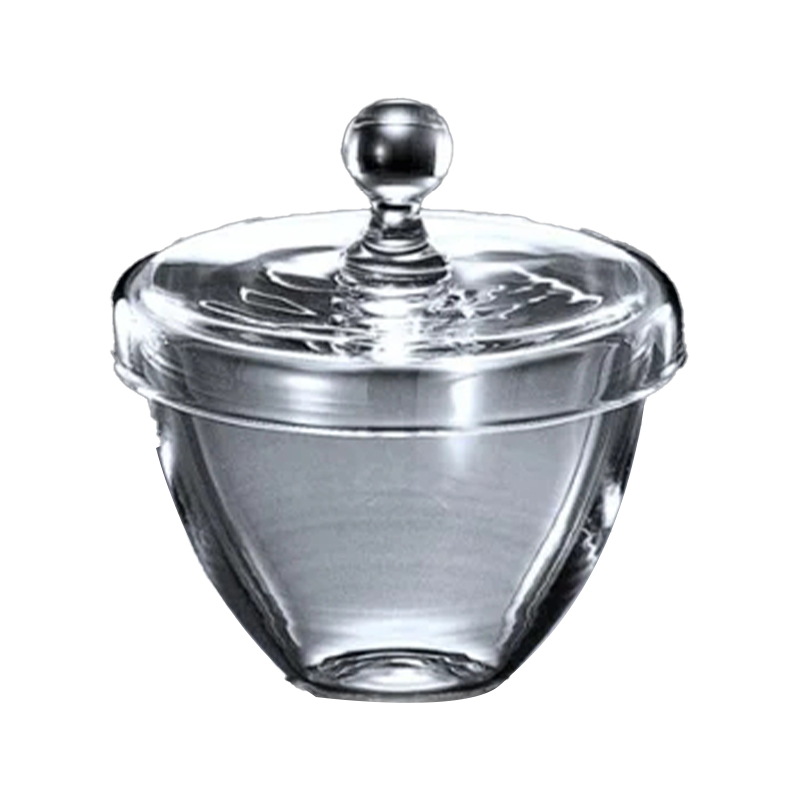
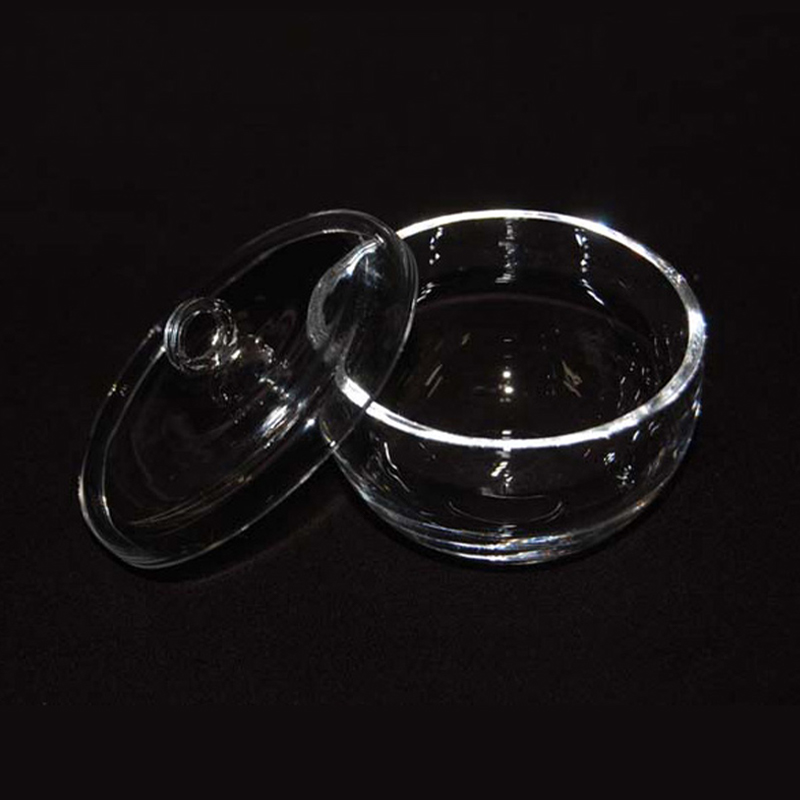
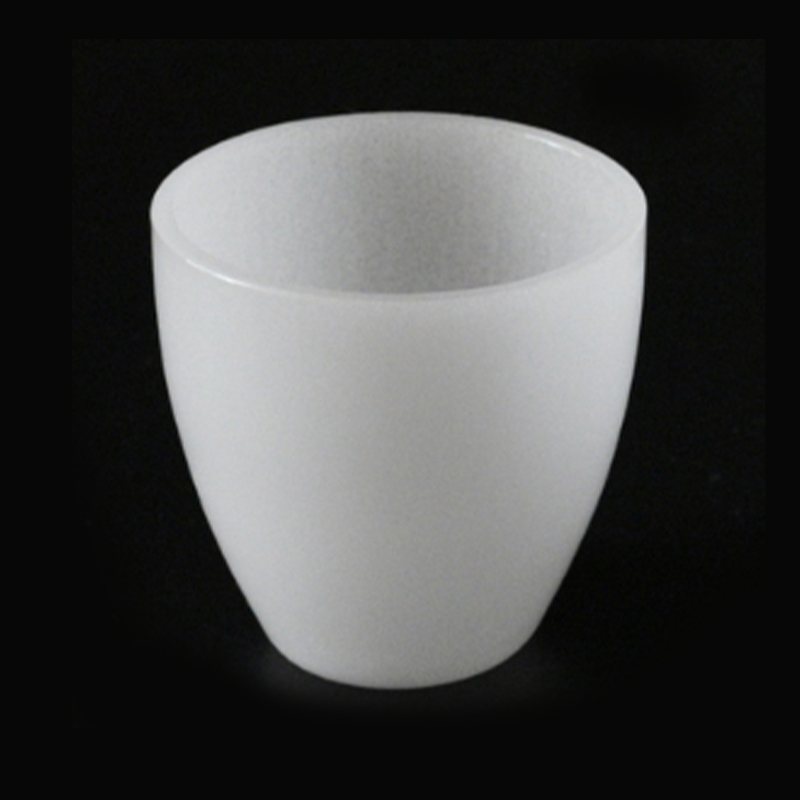
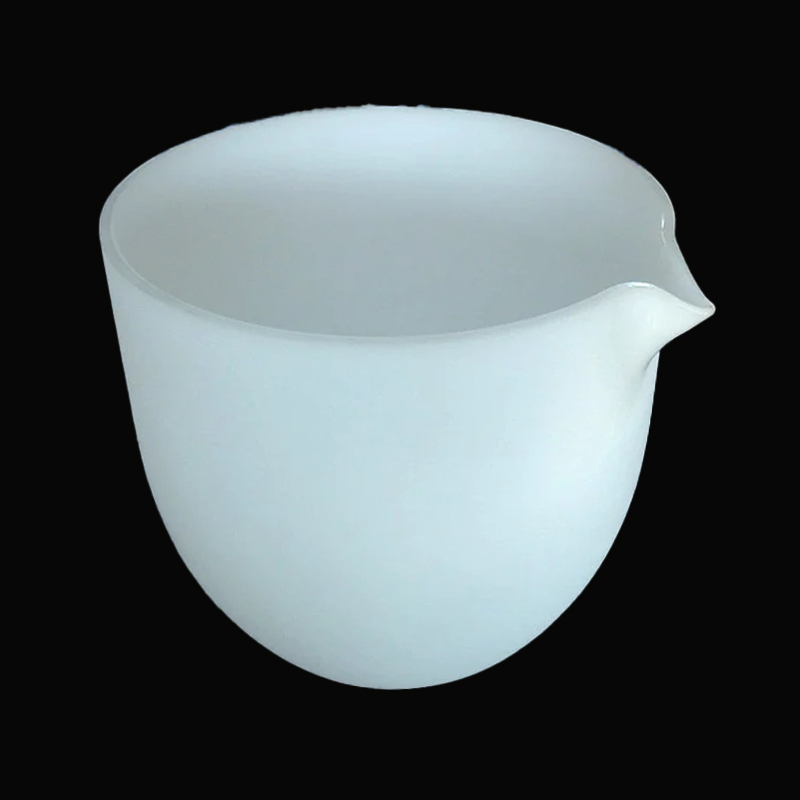

If you need any help, please feel free to contact us
 Products & Solutions
Home / News / Industry News / Fused Silica vs Fused Quartz: A Practical Buyer’s Guide for Optical and Thermal Grades
Fused Silica vs Fused Quartz: A Practical Buyer’s Guide for Optical and Thermal Grades
Content
- 1 Fused Silica vs Fused Quartz: The Short Answer Buyers Need
- 2 Why the Names Get Mixed Up, and Why Your RFQ Should Not
- 3 Raw Material and Manufacturing Route: Where the Real Differences Begin
- 4 Optical Performance: UV, IR, and Laser Work
- 5 Thermal, Mechanical, and Chemical Behavior in Real Equipment
- 6 Applications: Matching the Grade to Semiconductor, PV, Lab, and Optical Duty
- 7 Specification Checklist for a Clean Fused Silica vs Fused Quartz Quote
- 8 Purchasing Risks: What Usually Goes Wrong Between Sample and Mass Production
- 9 Cost, Lead Time, and Volume: How to Compare Offers Fairly
- 10 Quality Control and Incoming Inspection
- 11 FAQ: Fused Silica vs Fused Quartz Questions We Hear from Buyers
- 11.1 Are fused silica and fused quartz the same material?
- 11.2 Which one is better for UV transmission?
- 11.3 Which one handles higher temperature?
- 11.4 Is fused quartz always cheaper than fused silica?
- 11.5 How do I specify OH content?
- 11.6 Can both materials be custom fabricated?
- 11.7 What is the difference between fused quartz and crystalline quartz?
- 11.8 Which grade should I choose for semiconductor or PV work?
- 12 A Practical Decision Path for Your Next Quartz Project
An engineer sends a drawing for a 50 mm UV window, and the purchase order says fused silica. The supplier catalog calls the same family of material fused quartz. Both parts may arrive looking identical, both may pass a visual check, and yet one may fail at 193 nm while the other performs as expected. That is why fused silica vs fused quartz is not just a naming debate; it is a specification, sourcing, and quality-control question that can affect yield, tool uptime, and total cost.
The short answer is that both materials are high-purity amorphous silica glass with SiO2 as the main component. In commercial use, “fused quartz” usually points to material made by melting natural quartz crystal or high-purity silica grain, while “fused silica” often points to synthetic or highly refined silica routes. The real differences sit in raw material source, hydroxyl content, trace impurities, bubble and inclusion control, transmission range, lot consistency, and price. A buyer who treats the two names as interchangeable without fixing those variables is leaving the result to chance.
For a reliable purchase, do not specify only “fused silica” or “fused quartz”; specify the grade, OH level, impurity limits, transmission requirement, bubble class, dimensions, and inspection method.
Fused Silica vs Fused Quartz: The Short Answer Buyers Need
If you need a quick decision rule, start with the application rather than the label. For deep UV optics, laser windows, high-purity semiconductor parts, or applications where lot-to-lot optical consistency matters, a synthetic fused silica grade is often the safer starting point. For general high-temperature tubes, rods, plates, sleeves, and industrial parts where cost and thermal performance matter more than deep UV transmission, natural fused quartz grades can be a practical choice. Neither route is automatically better; the grade must match the duty.
The table below compares the commercial realities that tend to matter in an RFQ. The values are not universal constants. They are typical ranges used to frame a technical conversation with a quartz glass manufacturer or supplier, and they should be converted into measurable limits before mass production begins.
| Selection point | Fused quartz, typical commercial view | Fused silica, typical commercial view |
|---|---|---|
| Chemical basis | Amorphous SiO2 after melting | Amorphous SiO2 after melting or synthetic consolidation |
| Raw material route | Natural quartz crystal, quartz grain, or high-purity silica sand | Purified silica feedstock; synthetic routes are common for critical optics |
| OH content | Can be low to medium depending on melting and vacuum treatment | Available as low-OH or high-OH grades, depending on the process |
| Trace impurities | Depends on deposit and beneficiation; good suppliers control metals tightly | Often very low and consistent, but process control still matters |
| Bubbles and inclusions | Grade dependent; visual and dimensional standards must be agreed | Often supplied with tighter bubble and inclusion classes for optics |
| Deep UV transmission | Varies by raw material and OH level; not safe to assume | High-OH synthetic grades are often selected for deep UV work |
| IR transmission | Low-OH grades are preferred where OH absorption near 2.7 µm is a concern | Low-OH fused silica grades are also available for IR duty |
| Thermal expansion | Typically near 0.5 ppm/K, making thermal shock resistance good | Typically similar; exact value depends on grade and thermal history |
| Continuous use temperature | Often quoted around 1000 to 1200 °C, grade dependent | Often quoted in the same range; verify with the supplier for the exact grade |
| Typical forms | Tubes, rods, plates, sleeves, crucibles, labware | Windows, substrates, optical plates, rods, tubes, precision parts |
| Cost pattern | Often more economical in larger industrial volumes | Usually higher for ultra-low impurity and tight optical grades |
| Best first fit | High-temperature industrial parts, general labware, heating elements | UV optics, laser windows, semiconductor-critical parts, high-consistency optical lots |
One practical warning: a quotation that says “quartz glass” without naming the route is not enough. In the same way that stainless steel covers many alloys, fused silica and fused quartz cover many commercial grades. The buyer must ask whether the material is natural-source or synthetic, what OH range is expected, what metal impurity limits apply, and how bubbles, striae, and dimensions will be inspected.
The material name is only a category; the purchase specification is what actually controls optical transmission, thermal life, and production yield.
Why the Names Get Mixed Up, and Why Your RFQ Should Not
Part of the confusion comes from history. “Quartz glass” has long been used as a workshop term for any high-silica transparent material, even when the finished part is no longer crystalline. Natural quartz crystal is crystalline before melting. Once it is melted and cooled into a glass, it becomes amorphous. That is why a fused quartz tube is not the same as a crystal quartz plate, even though both may start from quartz-related feedstock.
The other part of the confusion comes from translation and catalog language. Many suppliers use “fused silica,” “fused quartz,” “quartz glass,” and “silica glass” in overlapping ways. In a fast quotation, the difference may be hidden behind a generic product name. In a critical application, that overlap is dangerous because the same drawing can be quoted against very different raw materials, OH levels, and bubble classes.
Crystalline quartz is not the same as fused quartz
Crystalline quartz has an ordered lattice and anisotropic properties. Fused quartz and fused silica are amorphous, isotropic glasses. They do not have a sharp melting point in the same way a crystal does; they soften over a temperature range. For an engineer, the practical consequence is that data from crystal quartz should not be copied into a fused quartz drawing without checking transmission, thermal expansion, and mechanical behavior.
When writing an RFQ, use the material name as a heading, not as the whole requirement. State the application wavelength, the expected peak temperature, the thermal cycling profile, the cleaning chemistry, the dimensional tolerance, and the inspection standard. If the part will be used in a semiconductor furnace, a UV reactor, a laboratory analyzer, or an infrared heater, say so. That context helps a serious supplier choose between natural fused quartz, synthetic fused silica, low-OH material, or a doped grade.
Write the RFQ around the function of the part, not only the material name, so the supplier can propose the correct fused silica or fused quartz grade.
Raw Material and Manufacturing Route: Where the Real Differences Begin
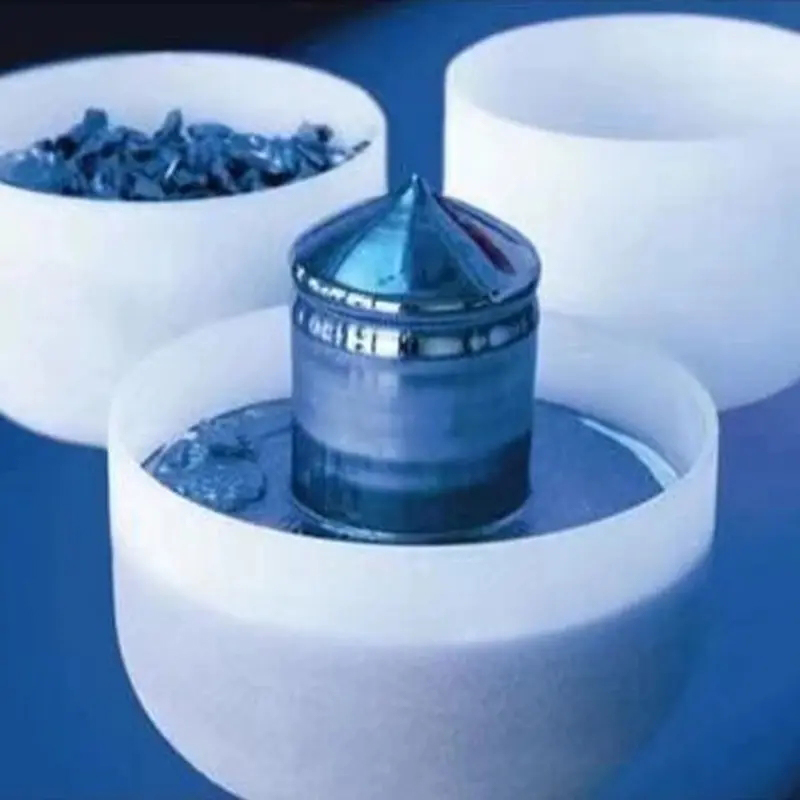
Natural fused quartz production starts with quartz crystal, quartz grain, or a carefully selected silica source. The material is crushed, cleaned, and melted at high temperature, often in an electric or flame fusion process. The quality of the deposit, the beneficiation method, and the melting atmosphere all influence trace metals, bubbles, and OH content. A good natural quartz grade can be excellent for high-temperature industrial work, but the buyer should not assume that every natural-source lot will have the same UV performance.
Synthetic fused silica usually starts from a purified silicon chemical route, such as a hydrolysis or soot-deposition process, followed by consolidation. This route can produce very low metal contamination and tight optical consistency, which is why synthetic fused silica is often chosen for deep UV windows, laser optics, and semiconductor-critical parts. However, “synthetic” does not automatically mean “high-OH” or “low-OH.” Both types exist, and the OH level must be specified for the wavelength range that matters.
OH content is one of the most practical differentiators. High-OH fused silica often transmits well in the deep UV, which is useful for 193 nm and other short-wavelength work. Low-OH fused silica is often preferred when infrared transmission matters, because OH absorption near 2.7 µm can be a problem. For a buyer, the lesson is simple: ask for the OH range and the transmission curve, not just the trade name.
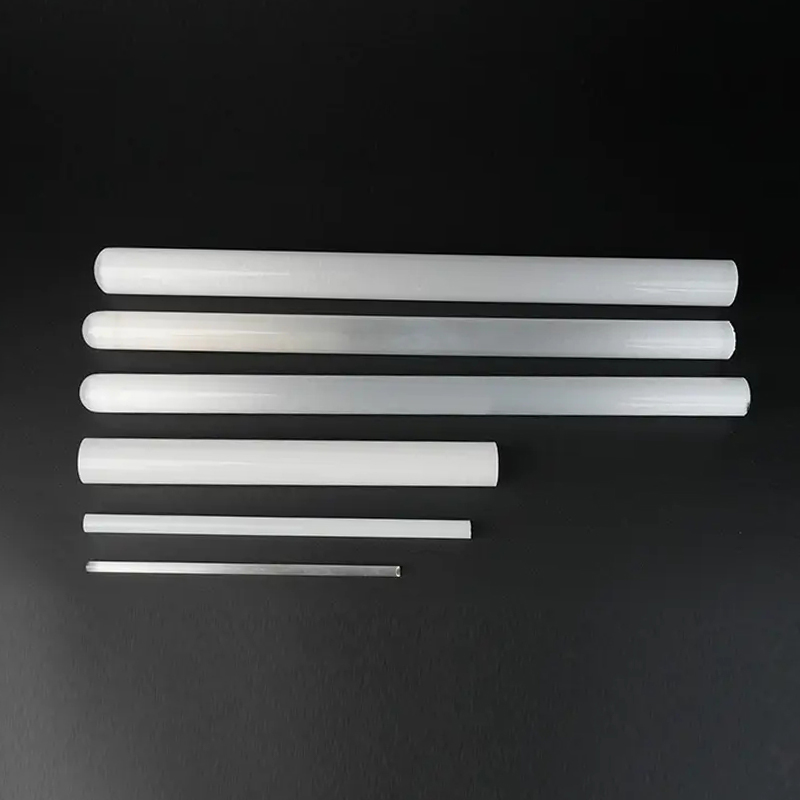
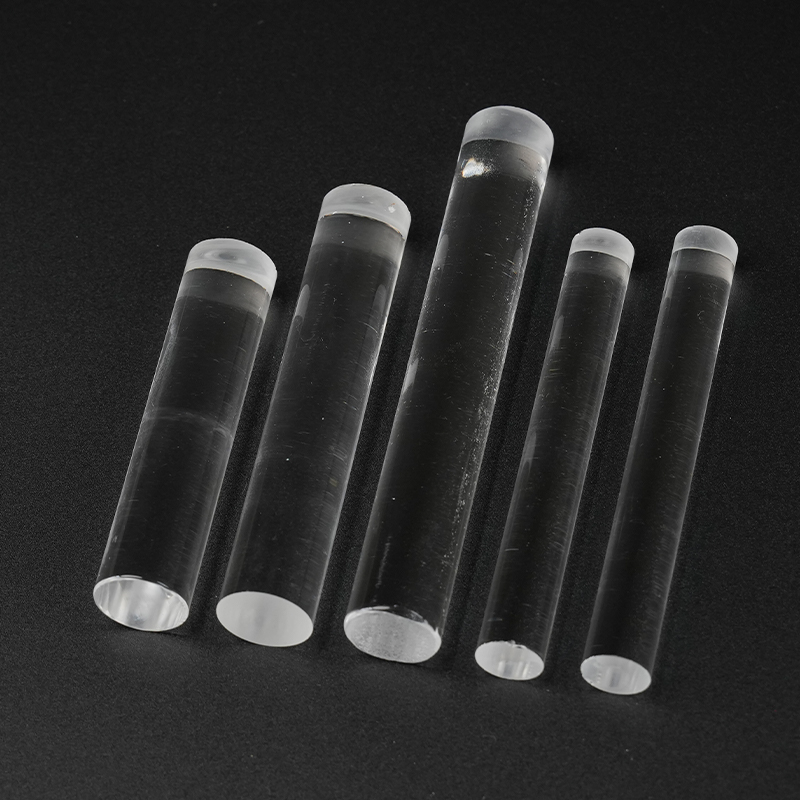
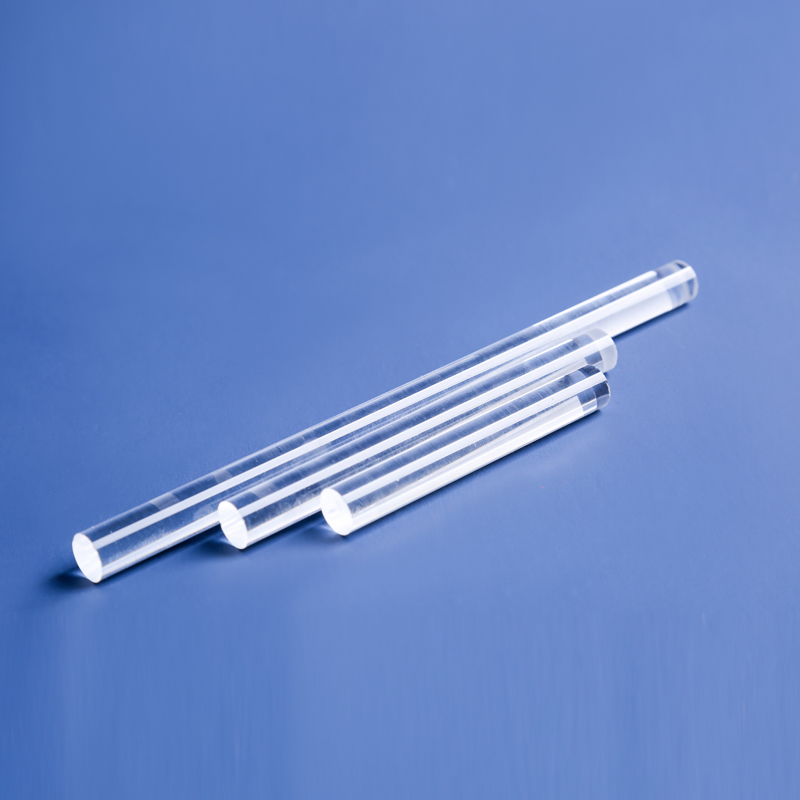
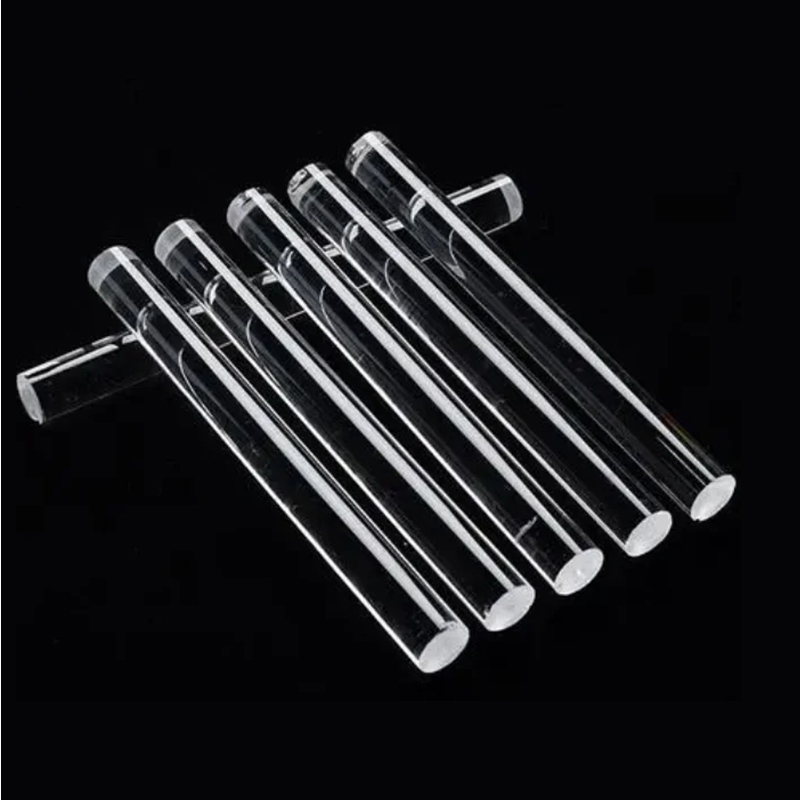
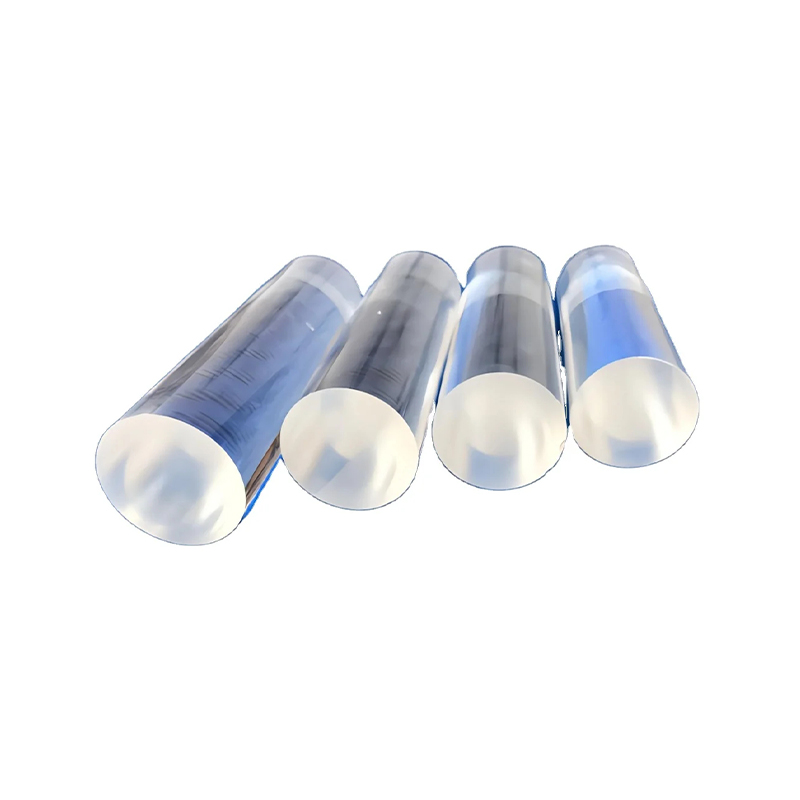 Fused Silica Rods for Optical and Thermal AssembliesTransparent quartz rods from 2–50 mm diameter, with high-purity SiO2 and thermal resistance; confirm grade, OH level, and certificates for optical or precision assemblies.View Product →
For solid rod forms used in optical, thermal, or precision mechanical assemblies, the same grade logic applies. A rod can be clear and round and still be the wrong material if the OH level or impurity profile does not match the process. Buyers should request the grade data sheet, a sample, and a transmission or impurity certificate before releasing a production order.
The chart is a selection aid, not a datasheet. It shows why a deep UV program may lean toward synthetic fused silica, while a high-volume thermal part may lean toward natural fused quartz on cost. It also shows the trade-off that buyers often miss: the cheapest material may be expensive if the optical yield falls or if bubbles force extra inspection and rework.
In our production planning, the material route is tied to the part form. A clear rod, a large tube, a window plate, and a crucible do not all favor the same grade. The supplier should be able to explain why a given grade suits the forming method, the thermal cycle, and the final inspection. That explanation is more valuable than a generic statement that one material is “better” than the other.
The raw material route sets the ceiling for optical purity and consistency, but the selected grade and inspection plan determine whether that ceiling is reached in production.
Optical Performance: UV, IR, and Laser Work
Optical buyers usually care about three things: where the material transmits, how stable that transmission is from lot to lot, and whether the part can survive the process environment. High-OH synthetic fused silica is often chosen for deep UV because it can transmit well at short wavelengths, but the exact cutoff and internal transmission must be checked against the grade data. Natural fused quartz can also be used in UV applications, but the risk profile is different because trace impurities and OH content may vary more unless the supplier has tight source control.
In infrared work, low-OH fused silica and low-OH fused quartz are both relevant. The OH absorption band near 2.7 µm is a practical limit for many IR windows and lenses. If the application runs beyond that band, the buyer should ask for an IR transmission curve rather than relying on a catalog claim. For laser optics, bubble class, striae, surface finish, and coating compatibility matter as much as the base transmission.
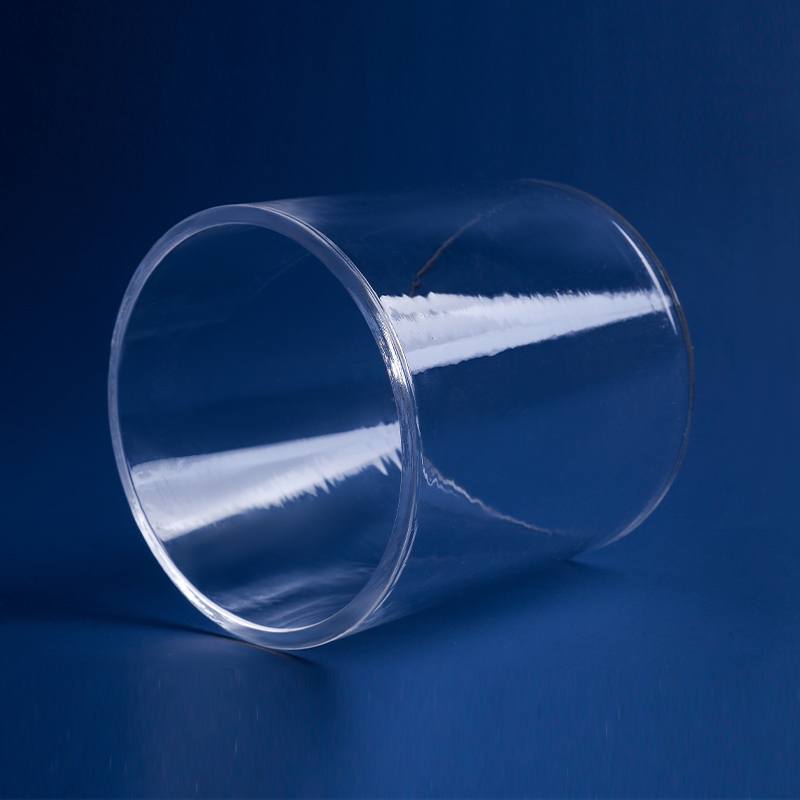
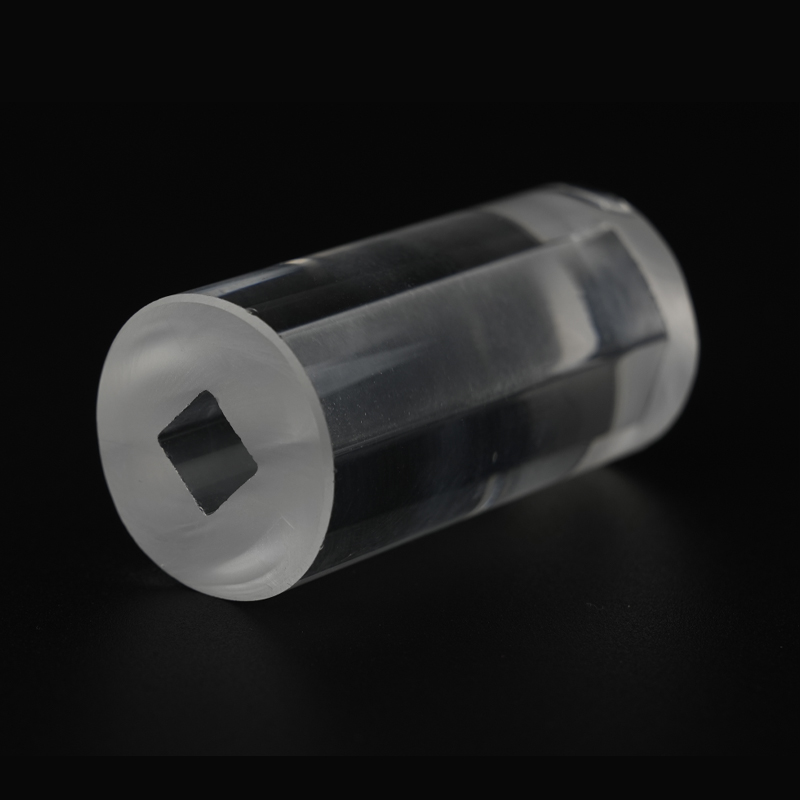
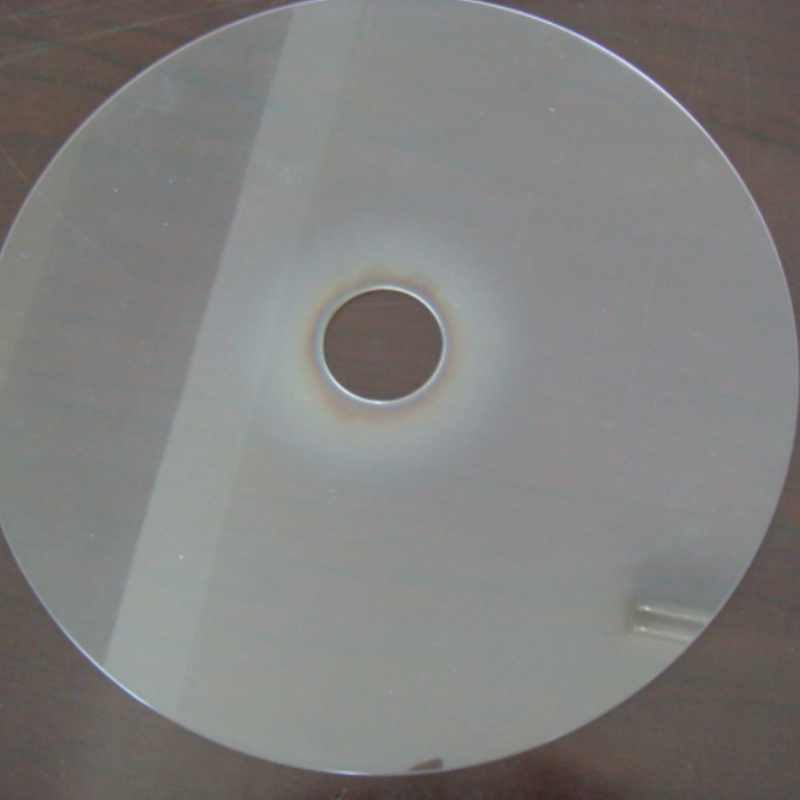
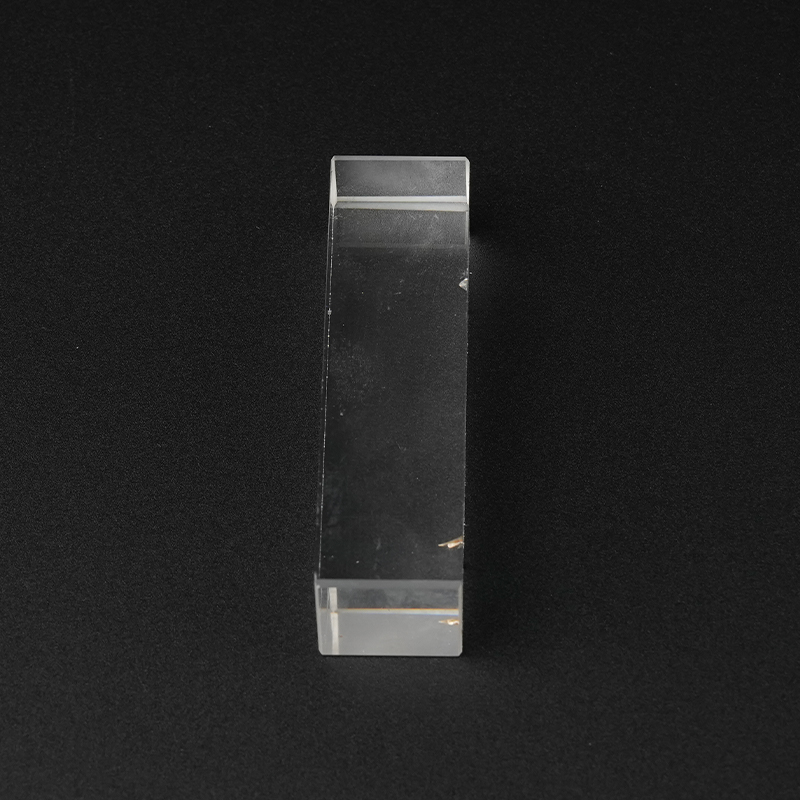 Far UV Optical Quartz Glass JGS1JGS1 quartz glass for 185–250 nm UV transmission, available in ingots, plates, and discs; verify grade, OH range, thickness, and measured transmission curve.View Product →
Chinese optical quartz grades are often discussed using JGS1, JGS2, and JGS3 designations. JGS1 is commonly associated with deep UV work, JGS2 with UV and visible transmission, and JGS3 with infrared transmission. These are useful shorthand, but they are not a substitute for a measured transmission curve. A buyer should confirm the grade, the OH range, the sample thickness, and the measurement method because a curve for 1 mm material does not automatically describe a 10 mm window.
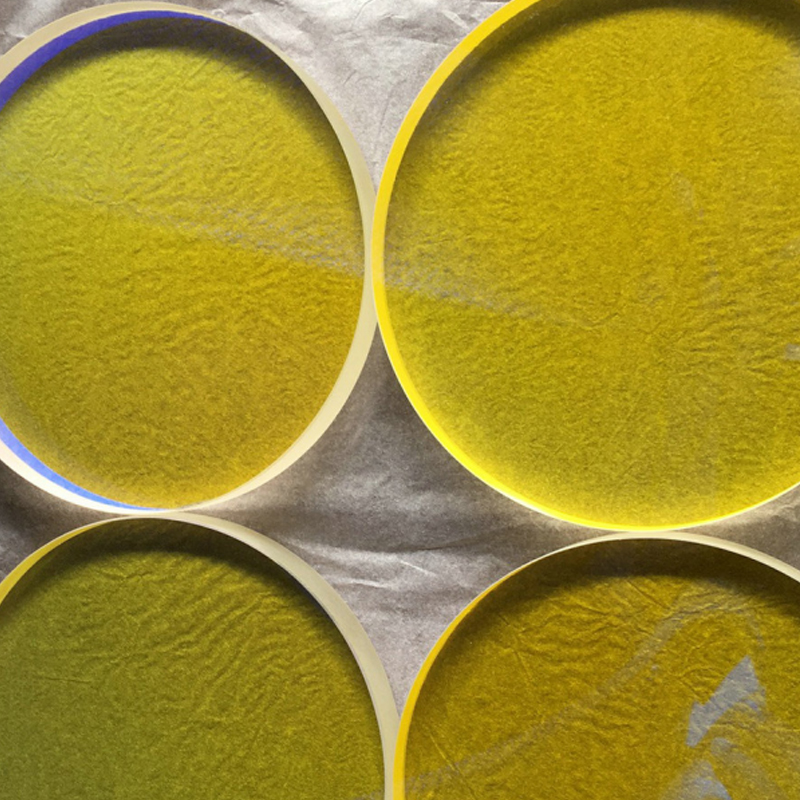
For custom quartz windows, the optical requirement should be written with the application wavelength and the acceptable transmission loss. If the window will be coated, ask how the coating affects the transmission and whether the coating process can introduce contamination or thermal stress. If the part will be used in a vacuum or a reactive gas environment, the cleaning and packaging method also belongs in the specification.
For optical parts, request a transmission curve at the actual thickness and wavelength, plus a bubble and inclusion standard; the material name alone cannot protect the optical yield.
Thermal, Mechanical, and Chemical Behavior in Real Equipment
Fused silica and fused quartz both have low thermal expansion, typically near 0.5 ppm/K, which gives them good resistance to thermal shock when the part is well made and free of severe surface flaws. Continuous use temperatures are often quoted around 1000 to 1200 °C for commercial grades, with softening occurring at much higher temperatures, often above 1600 °C. Those numbers should not be used interchangeably: continuous service, short excursions, and softening point describe different conditions.
Mechanical behavior is dominated by surface condition. These materials are brittle, and a small edge chip or grinding scratch can become a crack origin under thermal cycling or clamping load. Compressive strength is high, but tensile strength is sensitive to flaws. That is why edge quality, annealing history, and packaging are not cosmetic details. A tube that looks clear can still fail if the cut edge is poorly finished or if the part is over-constrained in a hot fixture.
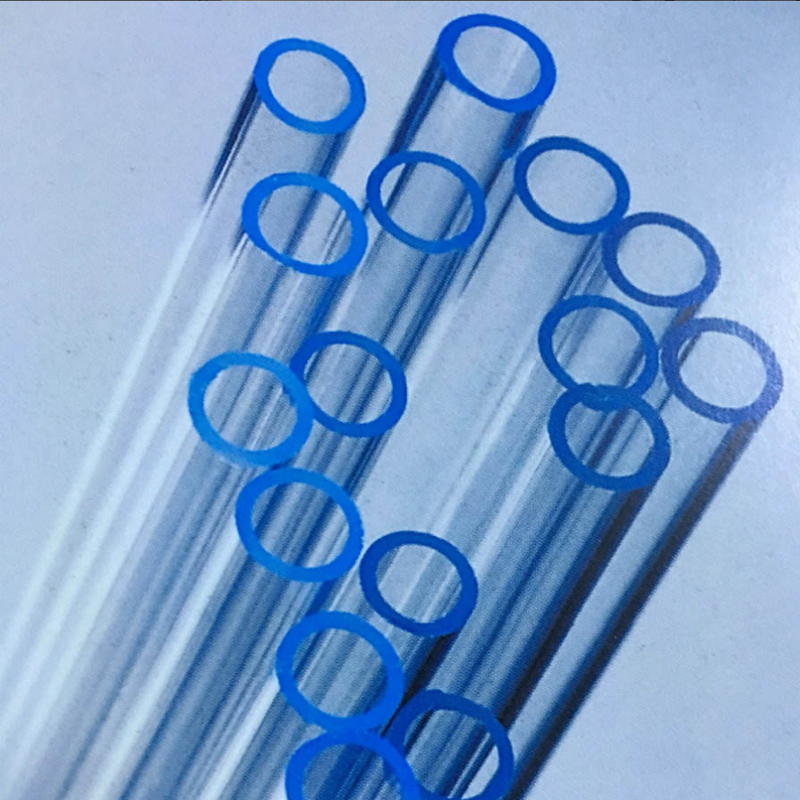
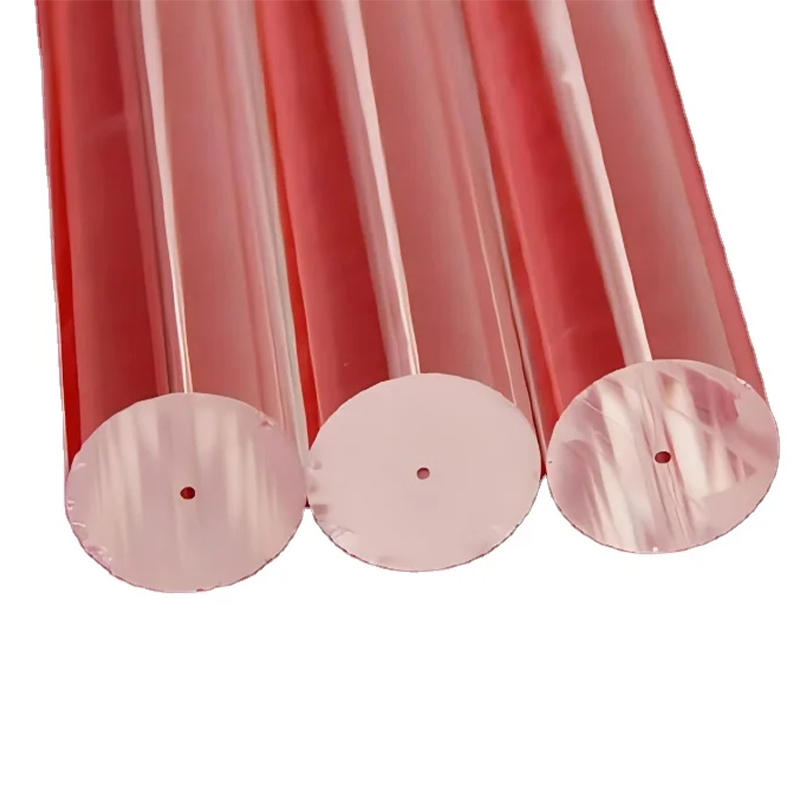
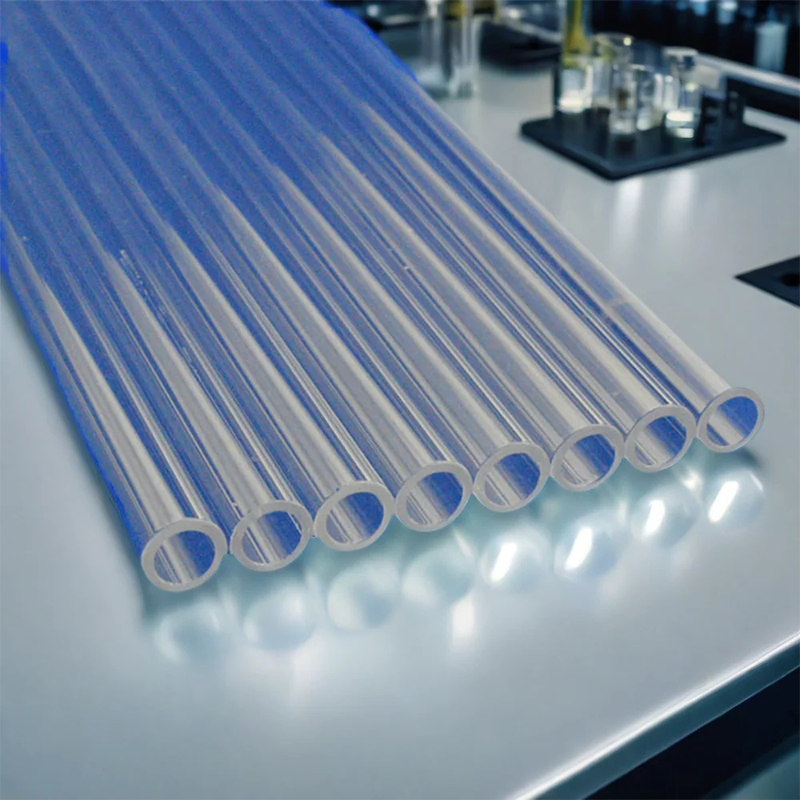 Transparent Fused Quartz Tubes for Lamp and Lab UseHigh-purity transparent quartz tubing with low-hydroxyl options and tight dimensional tolerances; specify edge finish, cleaning, and handling for critical thermal or chemical service.View Product →
Chemical durability is generally good, but hydrofluoric acid and some fluoride-containing chemistries attack silica glass. Strong alkaline conditions at high temperature can also cause etching or devitrification. In semiconductor and laboratory work, sodium and other metal contamination can matter even when the bulk material is high purity. Cleaning, handling, and storage should be specified for critical parts because surface contamination can defeat a good base material.
Devitrification is another practical risk. When a fused quartz or fused silica part is held at high temperature, surface contamination from dust, fingerprints, or fixture materials can promote crystal growth. The result can be a cloudy surface, local stress, and reduced service life. Buyers who run furnace tubes, crucibles, or high-temperature windows should ask the supplier for handling guidance and for a cleaning method that matches the process.
Thermal performance is only as good as the finished part: edge finish, annealing, contamination control, and fixture design can decide whether a good grade survives real service.
Applications: Matching the Grade to Semiconductor, PV, Lab, and Optical Duty
Semiconductor applications often push toward low-metal, low-bubble, high-purity fused silica or premium fused quartz. Furnace tubes, process windows, boats, and components near the wafer need tight contamination control and repeatable dimensions. In this setting, a supplier that only sells generic quartz glass may not be enough; the buyer benefits from a manufacturer that can connect material grade, fabrication, cleaning, and inspection.
Photovoltaic production uses large quartz crucibles, tubes, and related parts under severe thermal load. The duty cycle, the coating, and the handling method influence life. A solar-grade fused quartz part may be more economical than a synthetic optical grade, but the buyer still needs to control bubbles, dimensions, and thermal history. The same logic applies to industrial heating elements, infrared emitter tubes, and high-temperature sleeves.
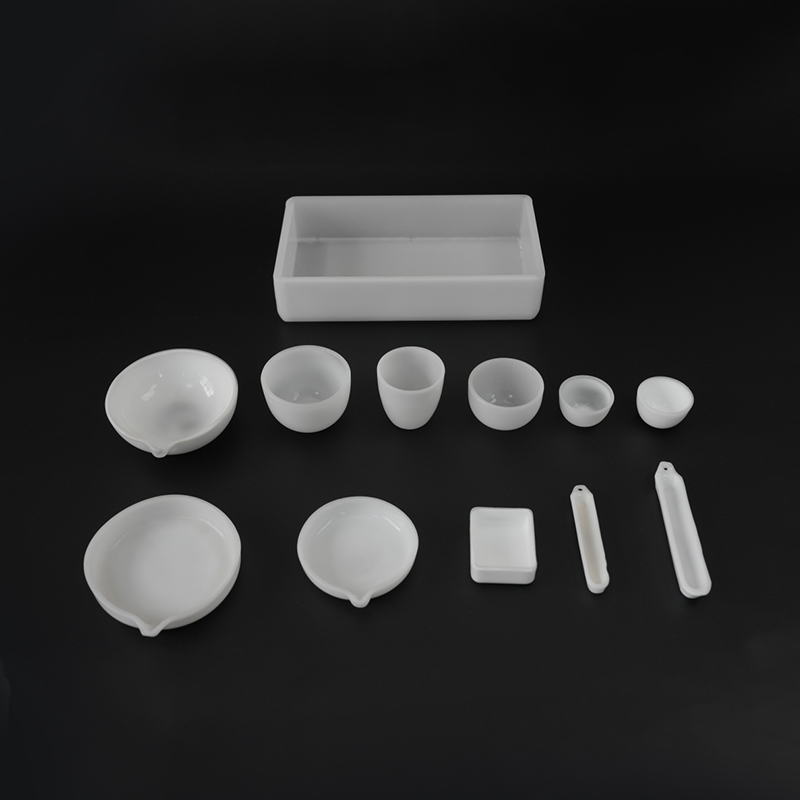
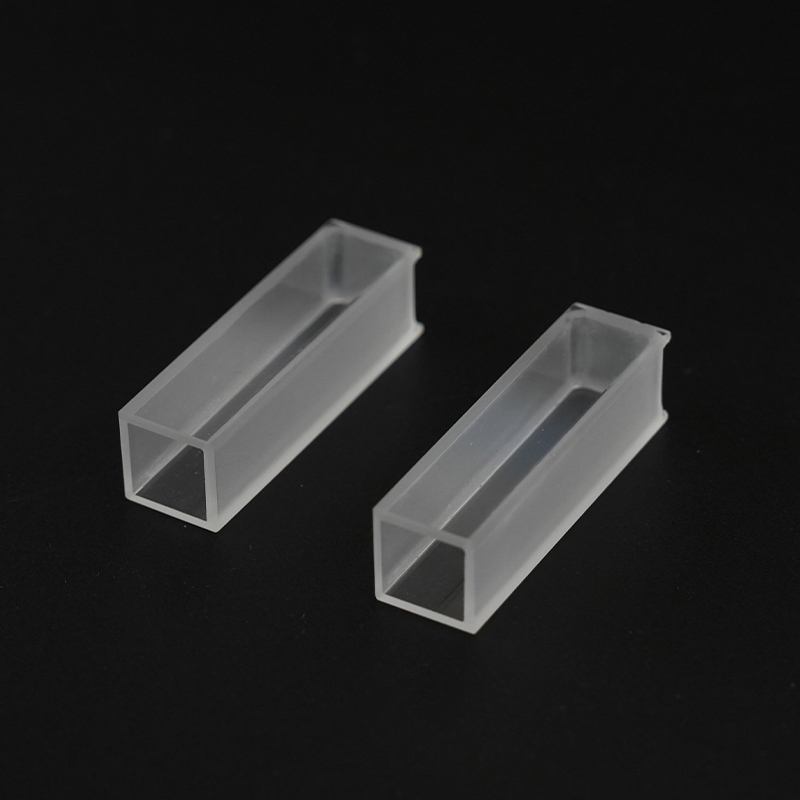
Laboratory work covers a wide range. Quartz cuvettes, digestion tubes, beakers, crucibles, and manifolds may need optical clarity, chemical inertness, or thermal shock resistance. A lab may not need the lowest metal impurity level in the world, but it does need a repeatable grade and a cleaning method that does not leave residue. For UV analysis, the cuvette transmission and path length matter; for high-temperature digestion, the thermal and chemical limits matter more.
Optical applications include windows, domes, plates, substrates, and viewports. Here the buyer should separate the base material requirement from the fabrication requirement. A JGS1 plate with excellent transmission can still fail if the surface is scratched, the edge is chipped, or the coating is not compatible with the cleaning chemistry. For custom quartz windows, the drawing should include edge finish, chamfer, flatness, parallelism, and the inspection method.
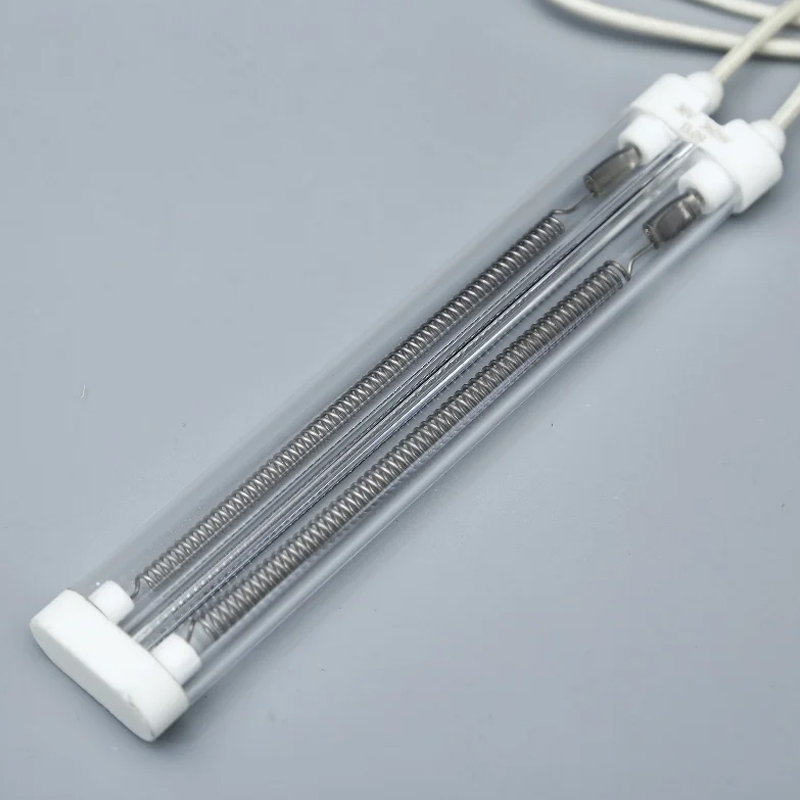
Heating and UV disinfection are different again. Infrared quartz heaters depend on the emitter design, tube material, and coating or reflective layer. UV germicidal lamps and doped quartz tubes depend on transmission in the UV-C range and on the stability of the doped layer. A wholesaler or distributor may stock common sizes, but critical applications usually need a quartz glass manufacturer that can control the grade and the fabrication together.
Match the grade to the dominant risk: contamination in semiconductor work, transmission in optics, thermal cycling in PV and heating, and chemical cleanliness in the laboratory.
Specification Checklist for a Clean Fused Silica vs Fused Quartz Quote
A good RFQ reduces the chance that two suppliers quote different materials under the same name. Use the following checklist as a starting point, and delete only the items that truly do not affect the part. For a simple industrial sleeve, the list can be short. For a semiconductor window or a deep UV plate, the list should be detailed.
- Base material route: state whether natural fused quartz, synthetic fused silica, or an equivalent grade is required. If the route is open, ask the supplier to declare what was quoted.
- OH content: give a range or a target, especially for UV or IR transmission. High-OH and low-OH grades are not interchangeable in optical work.
- Trace impurity limits: specify the metals that matter for the process, such as sodium, potassium, iron, and copper. Ask for a certificate or test report.
- Transmission requirement: give the wavelength, the sample thickness, and the acceptable internal transmission. For UV parts, include the deep UV wavelength; for IR parts, include the OH absorption region.
- Bubble and inclusion class: define the maximum bubble size, count per area or volume, and whether striae are acceptable.
- Dimensions and tolerances: show outer diameter, inner diameter, wall thickness, length, flatness, parallelism, and critical features. State the measurement method.
- Edge and surface finish: define chamfer, edge polish, scratch and dig limits, and whether the part will be flame polished, ground, or lapped.
- Annealing and stress: ask for stress-relief annealing where thermal cycling or optical stress matters. A polariscope inspection can be required.
- Cleaning and packaging: specify particle-free cleaning, gloves, individual wrapping, and clean-room packaging for critical parts.
- Documentation: request a certificate of analysis, dimensional report, transmission curve, and lot traceability. For repeat orders, keep a retained sample.
- Sample approval: for a new grade or a new fabrication route, approve a sample under the same inspection method used for mass production.
- Change control: require written approval before the supplier changes raw material source, melting route, or fabrication process.
This checklist also helps compare quotes fairly. A lower price may reflect a different OH level, a looser bubble class, a less precise tolerance, or a simpler cleaning step. If the RFQ does not define those differences, the buyer may compare two offers that are not actually for the same part.
A detailed RFQ turns “fused silica vs fused quartz” from a vague material debate into a measurable purchase requirement that suppliers can quote against.
Purchasing Risks: What Usually Goes Wrong Between Sample and Mass Production
The sample passed, the first production lot arrived, and then the problem appeared. This is a common story in quartz purchasing, and it usually comes from a variable that was not fixed in the specification. The most frequent issues are not dramatic; they are small shifts that become expensive in a critical process.
- OH mismatch: a sample with the right UV transmission is replaced by a production lot with a different OH level, shifting the deep UV or IR performance.
- Bubble class drift: a cosmetic standard is used instead of a measured bubble and inclusion limit, so yield falls in optical or high-voltage applications.
- Trace metal variation: a natural-source lot changes deposit or beneficiation, and metal contamination rises beyond the process limit.
- Edge and surface damage: parts are packed without edge protection, and small chips become crack origins during thermal cycling.
- Over-tight tolerances without a method: the drawing gives a tolerance but not the measurement condition, so supplier and buyer inspect differently.
- Cleaning residue: a part is dimensionally correct but carries particles or handling marks that affect coating, bonding, or wafer contact.
- Undocumented process change: the supplier changes a forming or annealing step without notice, and the next lot behaves differently.
These risks are manageable when the buyer treats the material and the fabrication as one system. Ask for lot traceability, keep a golden sample, and define a change-control clause. If the application is optical, include a transmission check at the actual wavelength. If the application is thermal, include a stress and edge inspection. If the application is semiconductor-related, include the contamination limits that matter to the process.
It is also wise to separate the material specification from the fabrication specification. The material specification controls grade, OH, impurities, and bubbles. The fabrication specification controls dimensions, edges, annealing, cleaning, and packaging. When a problem appears, this separation makes it easier to find the cause instead of blaming the whole part.
Most production surprises come from uncontrolled grade changes, loose visual standards, or edge and cleaning damage, not from the basic SiO2 chemistry.
Cost, Lead Time, and Volume: How to Compare Offers Fairly
Price comparisons are misleading when the grades are different. Synthetic fused silica with tight impurity limits, low bubble counts, and a measured UV curve usually costs more than a general industrial fused quartz grade. Large natural quartz tubes or crucibles may be more economical at volume, but the buyer still pays for inspection, packaging, and yield. A low piece price can hide a high total cost if the incoming inspection rejects a large share of the lot.
Lead time depends on the form and the process. Standard tubes and rods may be available from stock, while custom windows, domes, flanges, and precision-ground parts require fabrication, annealing, and inspection. A wholesaler may shorten the delivery time for common sizes, but a custom project usually needs direct communication with the manufacturer. For critical parts, ask for the production flow and the inspection points, not only the ship date.
Volume changes the economics in two ways. First, larger orders can improve material utilization and reduce setup cost per part. Second, larger orders increase the cost of a bad specification because more parts are affected. That is why sample approval and change control matter more, not less, as volume rises. A buyer should also ask how the supplier handles breakage, rework, and replacement on custom quartz parts.
When comparing quotes, normalize the following: material route, OH range, impurity report, bubble class, dimensional tolerance, edge finish, cleaning, packaging, documentation, and lead time. If one quote omits an item, ask for it in writing. A supplier that can explain the trade-offs is usually easier to work with than one that only sends a price.
Compare total cost of ownership, not piece price alone: grade, yield, inspection, and delivery reliability usually matter more than a small unit-price difference.
Quality Control and Incoming Inspection
Incoming inspection should match the risk of the part. For a simple thermal sleeve, a dimensional check, visual inspection, and a material certificate may be enough. For an optical window or a semiconductor component, the inspection plan should include transmission, bubble count, stress, and contamination checks. The key is to define the method before the first lot arrives so that both sides measure the same way.
Useful checks include UV-Vis or FTIR transmission for optical grade, OH content estimation by infrared absorption, visual bubble and inclusion counting against a standard, dimensional measurement with calibrated tools, edge inspection under magnification, and polariscope inspection for residual stress. For high-purity parts, request trace metal data from the material lot. For custom parts, keep a first-article inspection report and a golden sample.
Incoming inspection is not a substitute for supplier control. It is a safety net. A good quartz glass manufacturer should already control raw material, melting, forming, annealing, cleaning, and packaging. The buyer’s inspection plan should confirm that the controls worked, not try to sort out every lot after the fact. If incoming inspection finds a recurring issue, the corrective action should reach the process, not just the rejected parts.
Define inspection methods before production, keep a golden sample, and use incoming checks to confirm supplier control rather than to replace it.
FAQ: Fused Silica vs Fused Quartz Questions We Hear from Buyers
Are fused silica and fused quartz the same material?
They are both amorphous silica glass with SiO2 as the main component, so they share many properties. In commercial language, fused quartz usually refers to material melted from natural quartz crystal or silica grain, while fused silica often refers to synthetic or highly refined silica routes. The practical answer is that they can be similar in chemistry but different in OH content, trace impurities, bubble class, and lot consistency. For a critical part, specify the grade rather than relying on the name alone.
Which one is better for UV transmission?
High-OH synthetic fused silica is often the first choice for deep UV work because it can provide strong transmission at short wavelengths. Some natural fused quartz grades can also perform well, but the result depends on the deposit, the melting process, and the OH level. Ask for a transmission curve at the actual wavelength and thickness. Do not accept a generic “UV grade” statement without data.
Which one handles higher temperature?
Both materials have low thermal expansion and high softening temperatures, and commercial continuous-use ratings often fall in the same broad range, around 1000 to 1200 °C depending on grade. The finished part often matters more than the name: edge quality, annealing, fixture design, and contamination control can decide service life. For a high-temperature project, give the supplier the cycle profile and ask for a grade-specific recommendation.
Is fused quartz always cheaper than fused silica?
Not always. Natural fused quartz is often more economical for general industrial parts, but synthetic fused silica can be competitive when the required grade is not extremely tight. Price also depends on form, size, tolerance, bubble class, inspection, and volume. A low quote may reflect a different OH level or a looser standard. Compare the specification before comparing the price.
How do I specify OH content?
Give a target range and explain the reason. For deep UV transmission, a high-OH grade may be needed. For IR transmission, a low-OH grade may be better because OH absorption near 2.7 µm can reduce performance. If you do not know the exact limit, ask the supplier to recommend a range based on the wavelength and thickness, then confirm it with a transmission measurement.
Can both materials be custom fabricated?
Yes. Both fused silica and fused quartz can be cut, ground, drilled, polished, flame worked, and assembled into custom parts, but the fabrication process must suit the grade. A material that is good for a flat window may not be the best choice for a large deep-formed crucible. For custom quartzware fabrication, share the drawing, the application, and the inspection requirements so the manufacturer can choose the right route.
What is the difference between fused quartz and crystalline quartz?
Crystalline quartz has an ordered lattice and anisotropic properties. Fused quartz is made by melting quartz-bearing material and cooling it into an amorphous glass. The finished fused quartz is isotropic and no longer crystalline. This matters because optical, thermal, and mechanical data for crystal quartz should not be applied directly to a fused quartz part.
Which grade should I choose for semiconductor or PV work?
Semiconductor work usually demands tighter control of metals, bubbles, and dimensions, so a high-purity fused silica or premium fused quartz grade is often appropriate. PV work may prioritize thermal load, size, and cost, but it still needs controlled bubbles and dimensions. In both cases, the buyer should state the process environment, cleaning method, and inspection standard. The supplier should be able to trace the material lot and explain the fabrication controls.
The safest FAQ answer is also the best purchasing rule: define the application, the grade, and the inspection method, then ask the supplier to prove the match with data.
A Practical Decision Path for Your Next Quartz Project
Start with the application, not the catalog name. If the part must transmit deep UV, control OH and bubbles first. If it must transmit IR, control OH absorption and thickness. If it must survive thermal cycling, control edge quality, annealing, and fixture design. If it must contact wafers or high-purity chemicals, control trace metals, cleaning, and packaging. Once those risks are clear, the choice between fused silica and fused quartz becomes a grade decision rather than a guess.
At Yancheng Mingyang Quartz Products Co., Ltd., the practical approach is to connect the material grade with the finished part. A tube, rod, plate, window, crucible, or custom component should be quoted against the same set of requirements that will be inspected on arrival. That is how a buyer avoids the common trap of approving a sample that does not represent the production lot.
Choose the material by function and control it by specification; that is the most reliable way to get consistent results from either fused silica or fused quartz.
Featured Products
Copyright © Yancheng Mingyang Quartz Products Co., Ltd. All Rights Reserved.
Wholesale Quartz Products Manufacturer Quartz Glass Factory