

 +86-0515-86223369
  0
0 en
en English
 日本語
日本語 Español





If you need any help, please feel free to contact us
 Products & Solutions
Home / News / Industry News / The Ultimate Guide to Quartz Tubes: Performance, Applications, and Advantages
The Ultimate Guide to Quartz Tubes: Performance, Applications, and Advantages
Content
- 1 I. Surpassing Ordinary Glass: The Unique Physical and Chemical Properties of Quartz Tubes
- 2 II. Core Technological Advantages: Optical Transparency and Shock Resistance
- 3 III. Applications in High-Tech Fields: From Semiconductors to Aerospace
- 4 IV. Manufacturing Processes: Diverse Customizations of Flame Fusion and Electrofusion
- 5 V. Practical Advice: How to Choose the Right Quartz Tube for Industrial Needs?
Key Conclusion: Why are quartz tubes an irreplaceable material in industry?
With its near 100% silica purity, Quartz Tubes exhibit superior performance unmatched by ordinary glass in extreme environments. It is currently the only industrial material that can simultaneously meet the requirements of extremely high operating temperatures (above 1100°C), extremely low coefficient of thermal expansion, and extremely wide spectral transmittance. In fields such as semiconductors, laboratory instruments, and aerospace, where precision and durability are paramount, quartz tubes are absolutely essential components.
I. Surpassing Ordinary Glass: The Unique Physical and Chemical Properties of Quartz Tubes
Although quartz tubes may appear similar to ordinary glass, their molecular structure determines their fundamental differences.
Extreme Thermal Stability
Quartz tubes have an extremely low coefficient of thermal expansion. This means that you can heat a quartz tube to a red-hot state and then quickly immerse it in cold water; it will remain intact and will not shatter like ordinary glass.
Excellent Chemical Inertness
Quartz tubes are resistant to almost all acids, alkalis, and organic solvents, except for hydrofluoric acid and hot phosphoric acid, making them ideal containers for high-purity chemical reactions.
High Temperature Limit
Its softening point is approximately 1730°C, with a long-term continuous operating temperature up to 1100°C and even 1450°C for short-term use.

II. Core Technological Advantages: Optical Transparency and Shock Resistance
Quartz tubes are not only robust containers but also precision optical components.
Broad Spectral Transmission
Quartz tubes possess extremely high transparency across a wide wavelength range, from ultraviolet (UV) to infrared (IR). This characteristic makes them the preferred choice for ultraviolet germicidal lamps, lasers, and optical analytical instruments.
Thermal Shock Resistance
Due to its extremely low coefficient of thermal expansion, quartz tubes can withstand sudden and drastic temperature changes (i.e., thermal shock), which is crucial in semiconductor diffusion furnaces requiring frequent heating and cooling.
Electrical Insulation Properties
Quartz tubes maintain excellent insulation strength even at high temperatures, making them excellent high-frequency electrical insulation materials.
III. Applications in High-Tech Fields: From Semiconductors to Aerospace
The unique properties of quartz tubes enable them to play a crucial role in the following cutting-edge industries:
Semiconductor Manufacturing: Used in diffusion furnace tubes, cleaning tanks, and epitaxial growth processes. Their high purity ensures that wafers are not contaminated by metallic impurities during processing.
Aerospace: Utilizing their lightweight, high-temperature resistance, and radar transmittance, they are used to manufacture aircraft nose radomes and engine monitoring windows.
Medical and Life Sciences: Used in high-precision laboratory glassware, blood analysis instruments, and ultraviolet sterilization equipment.
IV. Manufacturing Processes: Diverse Customizations of Flame Fusion and Electrofusion
Depending on different purity requirements and application scenarios, quartz tubes are mainly produced through the following two methods:
Flame Fusion
Melting natural quartz ore using an oxyhydrogen flame. Quartz tubes produced by this process have good optical uniformity and are commonly used in general laboratories and the lighting industry.
Electric Fusion
Melting quartz tubes using electric heating in a vacuum or inert gas environment. This method more effectively reduces the hydroxyl (-OH) content, improving the material's high-temperature creep resistance, making it particularly suitable for semiconductor thermal processing.
Customized Processing
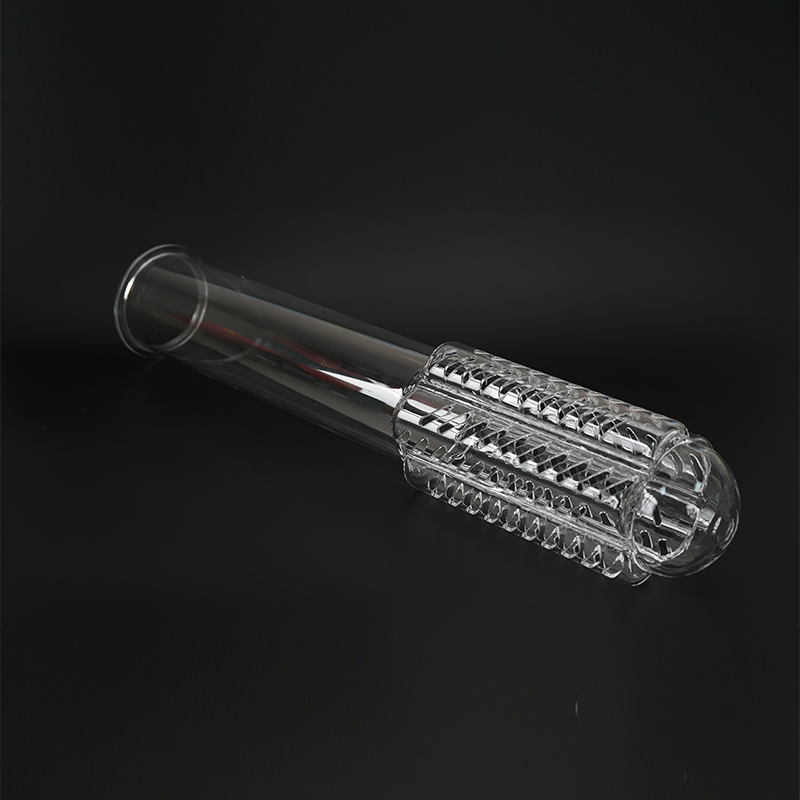
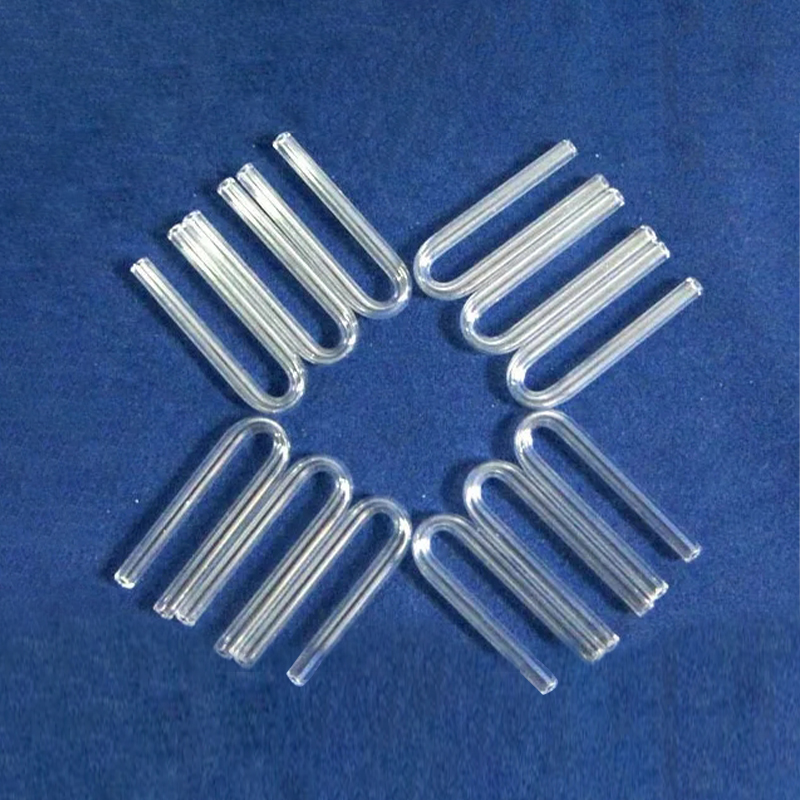
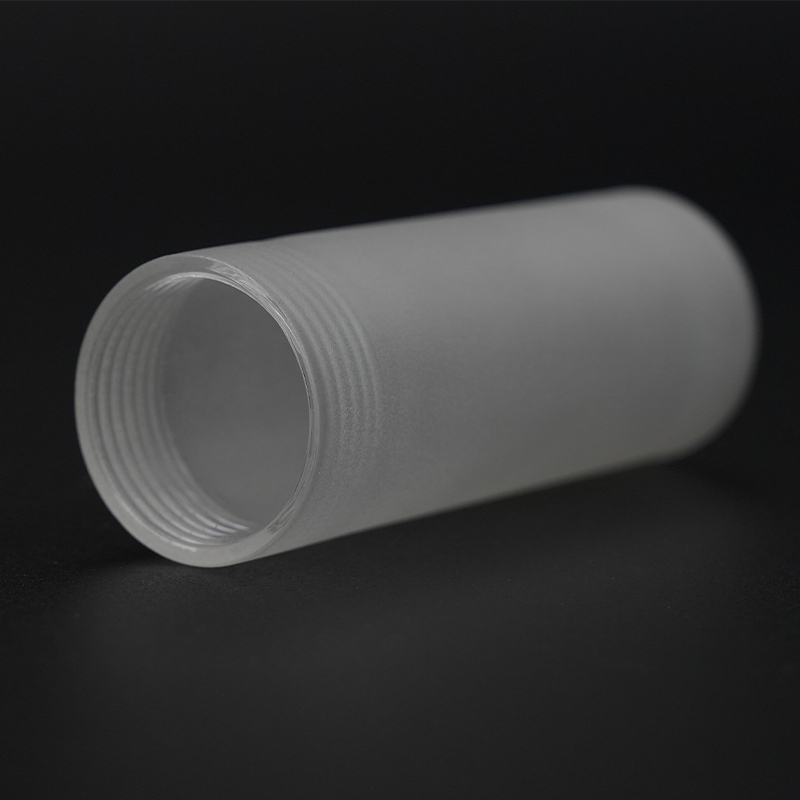
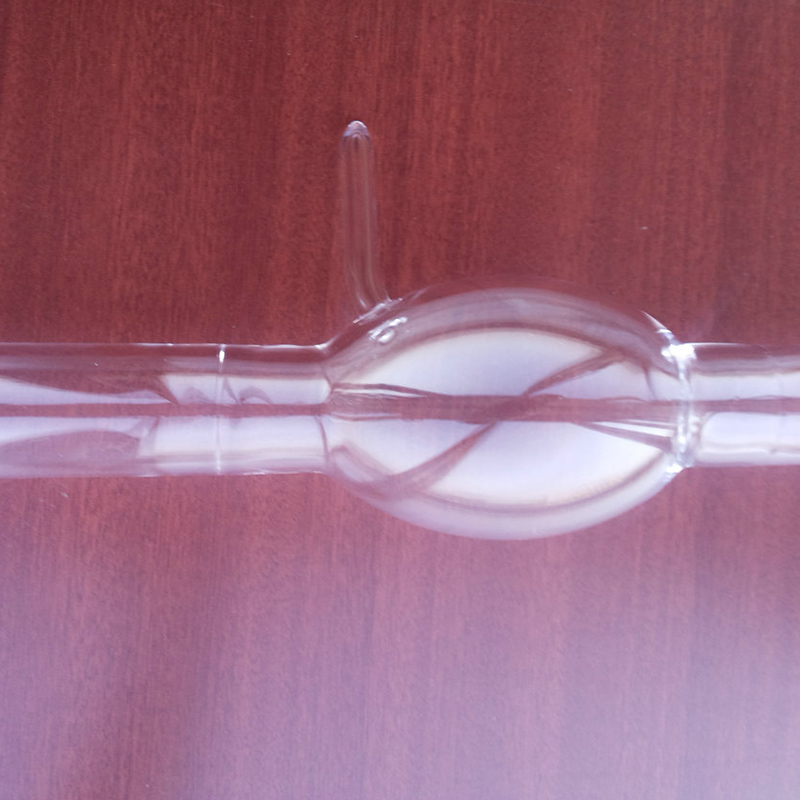
Current processing technologies support flaring, sealing, sanding, scale coating, and welding of complex geometries on quartz tubes to meet the adaptation needs of various industrial equipment.
V. Practical Advice: How to Choose the Right Quartz Tube for Industrial Needs?
When selecting a quartz tube, price should not be the sole focus. The following factors should be considered:
Operating Temperature: If the application environment exceeds 1100°C, high-purity fused quartz tubes must be selected to prevent crystallization (devitrification).
Spectral Requirements: For ultraviolet sterilization, "far-ultraviolet" grade quartz should be specified; for infrared heating, its absorption rate in the infrared band must be considered.
Impurity Levels: Semiconductor-grade applications have extremely stringent ppm limits for metallic elements (such as aluminum, sodium, and calcium). The supplier's purity analysis report must be consulted.
Dimensional Tolerances: Automated production lines have very high requirements for the outer diameter, wall thickness, and straightness of the tubing. It is essential to confirm the manufacturer's precision machining capabilities.
Featured Products
Copyright © Yancheng Mingyang Quartz Products Co., Ltd. All Rights Reserved.
Wholesale Quartz Products Manufacturer Quartz Glass Factory