

 +86-0515-86223369
  0
0 en
en English
 日本語
日本語 Español



If you need any help, please feel free to contact us
 Products & Solutions
What are the uses of quartz cuvettes?
Content
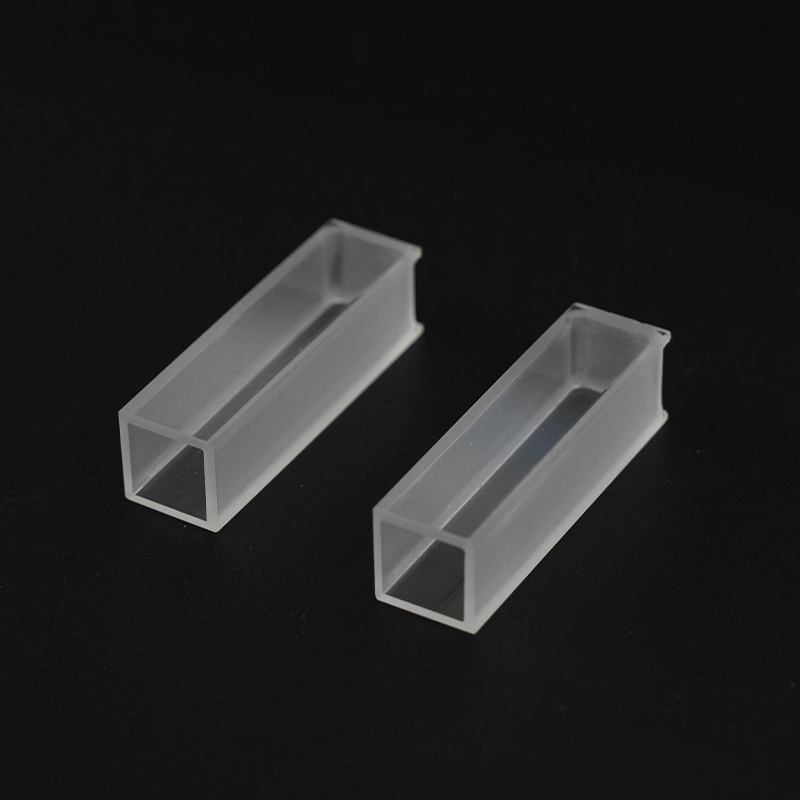
Quartz cuvettes are key components widely used in spectroscopic analysis experiments. Their primary purpose is as sample containers, holding the liquid to be analyzed in optical instruments such as UV-Vis spectrophotometers, ensuring accurate light transmission through the sample, thereby enabling quantitative or qualitative analysis of the substance's concentration, purity, and chemical properties. Thanks to the high light transmittance and chemical stability of quartz, quartz cuvettes play an indispensable role in scientific research, medicine, environmental protection, and industrial testing.
Core Features and Advantages of Quartz Cuvettes
Quartz cuvettes are typically made of high-purity fused silica. This material possesses excellent optical properties, especially exhibiting extremely high transmittance in the ultraviolet region (wavelengths down to 190 nm) to the visible light region, far superior to ordinary glass cuvettes. Furthermore, quartz is heat-resistant, corrosion-resistant, and can withstand strong acid and alkali environments, making it suitable for diverse experimental conditions. Its precise optical surface design ensures the stability of the optical path, reduces measurement errors, and improves data reliability.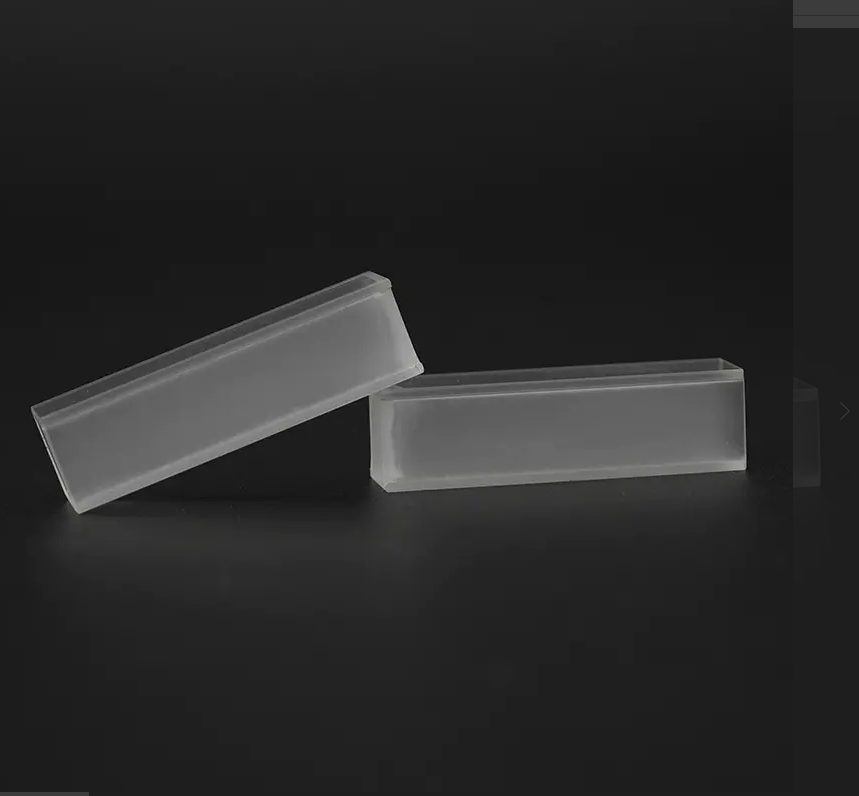
Main Application Scenarios Analysis
- Biochemical and Pharmaceutical Research: In protein concentration determination, DNA/RNA analysis, and enzyme kinetic experiments, quartz cuvettes are used to accurately measure the absorbance of samples, assisting researchers in exploring life science mechanisms.
- Environmental Monitoring: When detecting heavy metals and pollutants in water using spectrophotometry, the chemical inertness of quartz cuvettes prevents sample contamination, ensuring the accuracy of monitoring results.
- Food and Chemical Industry: In quality control processes, quartz cuvettes are used to analyze the content of pigments, additives, or chemical components, ensuring products meet safety standards.
- Materials Science: When characterizing the optical properties of nanomaterials and polymer solutions, the high light transmittance of quartz cuvettes provides reliable assurance for experiments.
Purchase and Usage Precautions
When selecting quartz cuvettes, it is necessary to match the appropriate model according to the experimental wavelength range (such as the ultraviolet or visible light region), and pay attention to the optical path length (commonly 10 mm) and volume specifications. Thorough cleaning should be performed before and after use to avoid scratching the optical surface. Dust and impact protection should be used during storage. Regularly calibrating their light transmittance can extend their lifespan and maintain measurement accuracy.
Future Development Trends
With the increasing intelligence and miniaturization of analytical technologies, quartz cuvettes are evolving towards higher precision and greater durability. The combination of novel quartz materials and coating technologies is expected to further expand their application potential in extreme environments, providing stronger support for scientific research and industrial innovation.
As a core tool for spectral analysis, quartz cuvettes have applications across multiple key fields, contributing to scientific exploration and technological progress with their superior performance. Proper selection and maintenance of quartz cuvettes will lay a solid foundation for the accuracy and reproducibility of experimental data.
Featured Products
Copyright © Yancheng Mingyang Quartz Products Co., Ltd. All Rights Reserved.
Wholesale Quartz Products Manufacturer Quartz Glass Factory