

 +86-0515-86223369
  0
0 en
en English
 日本語
日本語 Español



If you need any help, please feel free to contact us
 Products & Solutions
Home / News / Industry News / High Borosilicate Glass Handicraft Series: Heat Resistance, Design, and Sourcing Guide
High Borosilicate Glass Handicraft Series: Heat Resistance, Design, and Sourcing Guide
Content
- 1 What Is High Borosilicate Glass and Why Does It Matter for Handicraft Glassware?
- 2 The Composition of High Borosilicate Glass: What Makes It Different
- 3 Thermal Shock Resistance: Withstanding Hot-to-Cold Extremes
- 4 Double Wall Glass Cup Design: Insulation Through Air-Gap Construction
- 5 Borosilicate Glass Decanter and Borosilicate Glass Pot: Everyday Chemical Stability
- 6 High Borosilicate Glass Cover: Functional Lid Design
- 7 Borosilicate Glass Jar: Storage, Transparency, and Everyday Use
- 8 High Borosilicate Glass Teapot With Lid: Heat Resistance Meets Elegant Form
- 9 French Press Pot: Brewing Performance and Material Considerations
- 10 Growing Global Demand for Borosilicate Glass Handicraft Products
- 11 Manufacturing Standards and Quality Control
- 12 About Yancheng Mingyang: A High Borosilicate Glass Handicraft Series Supplier
- 13 Care and Maintenance Tips for Borosilicate Glass Handicrafts
- 14 Frequently Asked Questions
- 14.1 Q1: What is the main difference between high borosilicate glass and ordinary soda-lime glass?
- 14.2 Q2: How does a Double Wall Glass Cup keep drinks hot while staying comfortable to hold?
- 14.3 Q3: Can a High Borosilicate Glass Teapot With Lid go directly from the refrigerator to boiling water?
- 14.4 Q4: Is a Borosilicate Glass Jar safe for storing acidic foods, such as citrus-infused liquids?
- 14.5 Q5: What should a buyer check when sourcing from a High Borosilicate Glass Handicraft Series Supplier?
What Is High Borosilicate Glass and Why Does It Matter for Handicraft Glassware?
High borosilicate glass is a special type of glass whose main components are silicon dioxide (SiO2) and boron trioxide (B2O3), combined in a higher proportion of boron and silicon than ordinary soda-lime glass. This composition gives it a low thermal expansion coefficient, strong resistance to acids and alkalis, good optical transparency, and a harder, more wear-resistant surface than standard glassware. In direct terms, this is why a High Borosilicate Glass Handicraft Series, covering items such as a Double Wall Glass Cup, a Borosilicate Glass Decanter, a Borosilicate Glass Pot, a Borosilicate Glass Jar, a High Borosilicate Glass Teapot With Lid, and a French Press Pot, can move safely between a refrigerator, a stovetop, and a microwave without the cracking risk associated with ordinary glass. Each of these product types shares the same underlying material advantage, but each also has its own specific design considerations, from insulation in a double wall cup to lid fit in a teapot, which this article covers in turn.
This guide is written for buyers, distributors, and sourcing teams evaluating a High Borosilicate Glass Handicraft Series Supplier for household, hospitality, or gifting product lines. It walks through the material science behind heat resistance and chemical stability, practical design differences across cups, decanters, pots, jars, teapots, and French press pots, and the manufacturing standards that separate a reliable borosilicate product from an inconsistent one. Data referenced on composition, thermal expansion, and thermal shock resistance is drawn from published technical and industry sources, with the relevant reference noted in the text, and market context is drawn from public glassware industry research publications.
The Composition of High Borosilicate Glass: What Makes It Different
Every property that makes high borosilicate glass suitable for a handicraft series traces back to its chemical makeup, so it helps to look at the composition directly before discussing performance. Compared with ordinary soda-lime glass, which relies heavily on sodium and calcium modifiers, high borosilicate glass replaces much of that content with boron trioxide, a component that stiffens the glass network and reduces how much it expands when heated. According to technical glass composition literature, including patent filings on borosilicate glass formulation, a typical high borosilicate mixture contains roughly 70 to 85 percent silicon dioxide by weight, with common commercial glassware formulations sitting closer to 80 percent. Boron trioxide typically makes up around 7 to 13 percent of the mixture, with small remaining percentages of sodium oxide, potassium oxide, and aluminum oxide rounding out the composition and contributing to workability and chemical durability. The donut chart below illustrates a representative composition for a household-grade high borosilicate glass formulation used in cups, pots, and teapots.
The chart shows silicon dioxide as the dominant network former, which is expected since silica is the backbone of nearly all glass types, but the key difference from ordinary soda-lime glass lies in the boron trioxide share, shown here at roughly 13 percent. This boron content is the single largest factor separating high borosilicate glass from standard glassware, because boron atoms integrate into the glass network in a way that resists expansion when the material is heated or cooled. Sodium and potassium oxides, shown in the lighter blue segment, are included in smaller amounts to keep the glass workable during forming, since a composition that is too rigid becomes difficult to shape into cups, jars, and pots during production. Aluminum oxide, the smallest segment, contributes to chemical durability and helps prevent a defect called devitrification, where unwanted crystals form in the glass during cooling. Understanding this composition also explains why not all glass labeled as heat-resistant performs the same way: a formulation with a lower boron content will behave closer to standard glass under thermal stress, even if it is marketed under a similar name. For a High Borosilicate Glass Handicraft Series, maintaining boron content within the proven 7 to 13 percent range is one of the most important quality control checkpoints during raw material batching. This composition also directly supports the chemical stability that borosilicate glassware is known for, since the tightly bonded silica-boron network resists attack from most acids, alkalis, and organic solvents, with only hydrofluoric acid and hot phosphoric acid posing a significant risk. This chemical stability is one reason borosilicate glass jars and pots are considered suitable for storing a wide range of food items and household liquids without concern about the glass reacting with its contents. The composition is also directly linked to optical transparency, since a well-formed borosilicate network transmits visible light cleanly, giving finished cups, decanters, and teapots the clear, bright appearance associated with the category. Buyers comparing suppliers can reasonably ask for composition or material specification sheets, since a supplier who can state approximate SiO2 and B2O3 content with confidence is generally demonstrating a higher level of process control than one who cannot. Finally, this composition forms the technical foundation for the thermal shock resistance discussed in the next section, since the physical performance of any finished piece traces directly back to the chemistry described here.
Thermal Shock Resistance: Withstanding Hot-to-Cold Extremes
One of the most practical questions a buyer can ask about any borosilicate item, whether a Borosilicate Glass Decanter, a Borosilicate Glass Pot, or a High Borosilicate Glass Teapot With Lid, is simply how much temperature change the glass can survive without cracking. This property is called thermal shock resistance, and it is determined mainly by a material's coefficient of thermal expansion, meaning how much the glass physically grows or shrinks as its temperature changes. According to technical glass references, standard soda-lime glass has a thermal expansion coefficient of roughly 9 times 10 to the negative sixth per degree Celsius, while high borosilicate glass measures roughly 3 to 3.3 times 10 to the negative sixth per degree Celsius, about one-third as much. Because expansion is the root cause of thermal shock cracking, this threefold difference in expansion translates into a much larger safe temperature swing for borosilicate glass compared with ordinary glass. The gauge chart below illustrates the typical temperature differential, or delta-T, that high borosilicate glass can generally withstand before cracking, based on this published expansion data.
The needle position on this gauge reflects a range consistently reported across glass engineering references, where high borosilicate glass typically tolerates a temperature differential of approximately 160 to 170 degrees Celsius, compared with a much narrower range of roughly 40 to 60 degrees Celsius for standard soda-lime glass. In practical terms, this means a Borosilicate Glass Decanter can generally accept hot liquid straight from a stovetop kettle without the sudden shock that would risk cracking a soda-lime glass equivalent. The same principle applies to a High Borosilicate Glass Teapot With Lid, where boiling water is poured directly into a vessel that may have been sitting at room temperature moments before, a scenario that places real thermal stress on the glass wall. For a Borosilicate Glass Pot used for stovetop reheating or a French Press Pot used with freshly boiled water, this expanded safe temperature range is what allows the product to move between refrigerator storage, room temperature use, and hot liquid contact within a single use cycle. It is worth noting that thermal shock resistance describes the glass material's tolerance to rapid, uneven heating or cooling, and it is a separate property from continuous heat resistance, which describes how much sustained temperature a material can handle over time; borosilicate performs strongly on both measures, but they are tested and rated differently in technical literature. Wall thickness and shape also interact with this base material property, since a very thick-walled piece can still experience localized stress if only part of the surface is exposed to a temperature change at once, which is why quality manufacturing keeps wall thickness reasonably even across a finished piece. This is also why manufacturing discipline matters as much as raw material selection: two products made from the same borosilicate formulation can behave differently under thermal stress if one has significant internal stress left over from an inconsistent annealing process. Buyers sourcing a High Borosilicate Glass Handicraft Series for commercial or hospitality use, where products face repeated hot-and-cold cycles daily, should treat thermal shock performance as a core specification rather than an assumed feature of anything labeled borosilicate. It is also useful context that fused quartz, a related but distinct high-purity material, can exceed even borosilicate glass in thermal shock resistance, though at a different cost and production profile that makes it more common in laboratory and industrial settings than household glassware. For everyday kitchen and tableware items such as cups, decanters, pots, and teapots, borosilicate glass represents a practical, well-established balance between heat resistance, workability, and clarity. Finally, this thermal shock performance is a direct, measurable consequence of the composition discussed in the previous section, reinforcing why composition control during manufacturing is the starting point for reliable thermal performance in the finished product.
Double Wall Glass Cup Design: Insulation Through Air-Gap Construction
A Double Wall Glass Cup takes the same high borosilicate glass base material and adds a design layer on top of it: an inner wall and an outer wall separated by a sealed air gap, rather than a single solid wall of glass. This air gap functions as an insulating layer because air conducts heat far more slowly than solid glass, which means less heat from a hot beverage reaches the outer surface that a person's hand actually touches. The practical benefit is a cup that keeps a hot drink hotter for longer while remaining comfortable to hold without a separate sleeve, handle, or insulating wrap, which is why the design has become a popular format within borosilicate handicraft glassware lines. Because both walls are still made from the same heat-resistant borosilicate material, a double wall cup retains the same thermal shock resistance discussed in the previous section while adding this additional comfort and heat-retention benefit. The bar chart below illustrates a general, representative comparison of exterior surface temperature over time between a single-wall cup and a double-wall cup holding the same hot liquid, based on the well-established physical principle that a sealed air gap slows heat transfer compared with a solid glass wall.
As the chart illustrates, the single-wall cup, shown in the lighter blue bars, starts noticeably hotter at the exterior surface immediately after a hot liquid is poured and cools somewhat over the following minutes as heat escapes both outward and into the surrounding air. The double-wall cup, shown in the deep navy bars, stays meaningfully cooler at the exterior surface across all three time points, since the sealed air gap slows the rate at which heat reaches the outer glass wall in the first place. This pattern holds across the full time window shown, from the moment liquid is poured through the fifteen-minute mark, which reflects the sustained nature of an air-gap insulation design rather than a temporary effect. The practical implication for everyday use is that a double-wall cup can generally be held comfortably by its outer wall much sooner after pouring a hot beverage than an equivalent single-wall cup, without needing a sleeve, handle, or cloth wrap. This comfort benefit is a leading reason double wall cups have become a popular product format within borosilicate handicraft glassware collections for both home and hospitality use. It is worth noting that the specific temperature values shown here are illustrative and intended to demonstrate the general insulation principle rather than to represent a single laboratory-measured result for one exact product, since actual values vary with liquid volume, ambient temperature, and cup wall thickness. The underlying physical principle, however, that a sealed air gap conducts heat far more slowly than solid glass, is a well-established concept in materials science and applies consistently regardless of the exact cup dimensions involved. For manufacturers, producing a reliable double-wall cup requires precise control during the glassblowing or forming process to create a consistent, properly sealed air gap between the two walls, since an uneven gap or a poorly sealed joint can reduce the intended insulation benefit or introduce a structural weak point. Buyers sourcing double-wall cups in volume should ask about the sealing method used at the rim, since this joint is typically the most technically demanding part of the manufacturing process and the area most likely to show inconsistency between a well-made batch and a poorly made one. Finally, because the double-wall design relies on the same borosilicate base material discussed earlier, it inherits the full thermal shock resistance of the material while adding this additional insulation benefit, making it a practical combination of two independent design advantages rather than a tradeoff between them.
Borosilicate Glass Decanter and Borosilicate Glass Pot: Everyday Chemical Stability
A Borosilicate Glass Decanter is typically used to hold, pour, and sometimes briefly warm liquids such as water, tea, or juice, and its chemical stability is what allows it to hold a wide range of liquids over time without the glass reacting with or absorbing flavors from its contents. Because high borosilicate glass strongly resists most acids, alkalis, and organic solvents, a decanter made from this material is well suited to acidic liquids such as citrus-infused water or vinegar-based dressings without the concern of gradual surface degradation that can affect lower-grade glass over repeated use. A Borosilicate Glass Pot extends this same chemical stability to direct stovetop or hot-plate use, where the glass is exposed not only to liquid contents but also to sustained heat from below, a combination that requires both the thermal resistance and the chemical durability described earlier in this article.
Because borosilicate glass contains no lead and does not leach detectable amounts of its own components into food or beverages under normal use, decanters and pots made from this material are commonly chosen by households and hospitality venues seeking a transparent, easy-to-clean alternative to metal or plastic serving vessels. The clarity of the glass also serves a practical purpose beyond appearance, allowing users to see liquid levels, monitor brewing progress, or check for residue during cleaning, which is harder to do with opaque materials. For commercial kitchens and cafes, a borosilicate decanter or pot also tends to hold up well under repeated dishwasher cycles, since the same chemical stability that resists acids and alkalis also resists the detergents and mineral content found in typical dishwashing environments.
High Borosilicate Glass Cover: Functional Lid Design
A High Borosilicate Glass Cover serves a purpose that is easy to overlook: it must expand and contract at a compatible rate with the vessel it seals, whether that is a pot, a jar, or a teapot, so that the lid continues to fit properly across repeated heating and cooling cycles. Using the same borosilicate formulation for both the lid and the main vessel body is the most reliable way to achieve this compatibility, since mismatched materials with different expansion rates can develop fit problems or stress cracks at the contact points over time. A well-made glass cover also needs a rim or lip design that seats securely without excessive force, since a cover that must be forced onto a hot vessel introduces unnecessary risk of chipping at exactly the moment the glass is most thermally stressed.
| Product Type | Typical Cover Function | Key Design Point |
|---|---|---|
| Borosilicate Glass Pot | Retain heat and moisture during cooking | Vented or fitted rim for steam control |
| Borosilicate Glass Jar | Seal contents for storage | Consistent rim diameter for an even seal |
| High Borosilicate Glass Teapot With Lid | Retain heat during steeping | Secure, stable fit during pouring |
Manufacturers producing a coordinated set of pots, jars, and teapots within a single High Borosilicate Glass Handicraft Series generally test lids and covers directly against their matching vessel bodies rather than assuming standardized dimensions will align across separate production batches, since even small variances in rim diameter can affect fit quality. This attention to lid and cover fit is one of the less visible but more important quality indicators buyers can ask about when evaluating a potential supplier for a coordinated glassware collection.
Borosilicate Glass Jar: Storage, Transparency, and Everyday Use
A Borosilicate Glass Jar is generally chosen over plastic or lower-grade glass storage containers for the same combination of reasons already discussed in this article: chemical stability that avoids interaction with stored contents, high optical transparency that makes checking freshness and quantity straightforward, and a harder, more scratch-resistant surface that holds up well to repeated washing and handling. These properties make borosilicate jars a practical choice for kitchen pantry storage, bulk dry goods, infused liquids, and homemade preserves, where consumers and commercial kitchens alike value being able to see the contents clearly without opening the container. Because the material does not absorb odors or flavors from previous contents the way some plastics can, a borosilicate jar can also be repurposed for a different type of food item without carrying over unwanted taste or smell from its previous use. For handicraft glassware lines, jars are often produced in coordinated sizes alongside pots and decanters, allowing retailers to offer a complete kitchen storage and serving set built around the same consistent material and finish quality.
High Borosilicate Glass Teapot With Lid: Heat Resistance Meets Elegant Form
A High Borosilicate Glass Teapot With Lid combines several of the properties discussed throughout this article into a single product: it must accept freshly boiled water without thermal shock cracking, hold its shape and clarity through repeated steeping cycles, and pair with a lid that continues to fit securely as the vessel heats and cools. The transparency of borosilicate glass is particularly valued in teapot design because it allows the user to visually track tea color and steeping progress, a functional benefit that opaque ceramic or metal teapots cannot offer in the same direct way. Handle and spout design also matter in a teapot beyond the glass body itself, since these elements are frequently the thinnest and most stressed points on the vessel, and manufacturers producing borosilicate teapots typically pay close attention to wall thickness consistency at the handle and spout junctions to avoid weak points. Because tea brewing often involves multiple pours over an extended session, sustained heat retention is also a meaningful design factor, and some teapot designs incorporate a double-wall structure, similar to the double wall cup discussed earlier, specifically to extend how long the tea stays hot between pours.
French Press Pot: Brewing Performance and Material Considerations
A French Press Pot places specific demands on its glass carafe that differ somewhat from a teapot or decanter, since the carafe must accept boiling or near-boiling water directly, hold that water in close contact with ground coffee for several minutes, and then withstand the mechanical pressure of a plunger being pushed through the full length of the vessel. High borosilicate glass is well suited to the thermal side of this requirement, since the carafe experiences the same near-boiling water exposure discussed in the thermal shock resistance section earlier in this article. The mechanical strength of borosilicate glass, while the material remains relatively brittle overall, includes a harder and more wear-resistant surface than standard glass, which helps the carafe wall resist scratching from repeated plunger use over the life of the product. Because a French press carafe is typically held directly by hand rather than by an insulated handle in many designs, wall thickness and, in some product variations, double-wall construction become relevant design choices for comfort in the same way they do for a double wall cup, allowing manufacturers to offer both classic single-wall and insulated French press pot options within the same handicraft series.
Growing Global Demand for Borosilicate Glass Handicraft Products
Borosilicate glassware sits within the broader global glassware and drinkware market, a category that multiple independent industry market research publications have tracked closely in recent years due to steady, sustained growth. These reports commonly cite overall glassware market values in the range of roughly 14 to 18 billion US dollars in recent years, with projected compound annual growth rates typically in the mid single digits, while several reports specifically identify the borosilicate glass material segment as growing at a faster rate than the glassware category overall. Reported growth drivers consistently include rising consumer preference for durable, reusable glass products over single-use plastics, expanding hospitality and food service demand for heat-resistant serveware, and growing at-home interest in tea, coffee, and specialty beverage preparation, all of which directly support demand for cups, decanters, pots, jars, teapots, and French press pots. The area chart below presents an illustrative, indexed growth trend consistent with the general direction reported across these publications, using a relative index rather than absolute currency figures, since specific dollar estimates vary between individual research firms and report scopes.
This area chart shows a steady, continuous upward trend from a base index of 100 toward roughly double that value over the period shown, consistent with the mid single-digit to high single-digit compound annual growth rates reported across the glassware and borosilicate glass segments referenced above. The smooth, gradual slope of the curve is meaningful in itself, since it reflects a multi-year structural trend rather than a short-lived spike tied to a single event, which is a more reliable signal for long-term product line planning. For a High Borosilicate Glass Handicraft Series Supplier, this kind of sustained demand curve supports continued investment in production capacity, consistent quality control systems, and an expanding coordinated product range across cups, decanters, pots, jars, teapots, and French press pots. The growth pattern is also linked to well-documented consumer trends, including a shift away from single-use plastics toward reusable, food-safe materials, and rising at-home interest in tea and coffee brewing, both of which directly favor borosilicate glass product categories. For retailers and distributors, this trend line offers useful supporting context when building a longer-term catalog strategy around a coordinated handicraft glassware collection, rather than treating individual product types as isolated, one-off purchases. It also explains why hospitality venues, including cafes, restaurants, and hotels, have increasingly incorporated durable glass drinkware and serveware into standing procurement rather than occasional purchasing, since durability and thermal performance reduce breakage-related replacement over time. From a manufacturing standpoint, sustained multi-year growth of this kind generally justifies investment in more consistent quality control processes, expanded production capacity, and broader product range development, since suppliers can plan around a durable demand curve rather than reacting to short-term fluctuations. It is worth noting that market size estimates vary between individual research firms depending on methodology, product scope, and regional coverage, so the index shown here should be read as directionally representative of the reported trend rather than a precise forecast for any single company or product line. Buyers evaluating a long-term supplier relationship should also examine a manufacturer's production capacity and quality consistency over a comparable multi-year period, since these factors tend to matter more for long-term sourcing decisions than any single year's market size estimate. Finally, this growth context reinforces why the composition control, thermal shock performance, and lid-fit precision discussed earlier in this article matter increasingly for suppliers competing in an expanding market where buyers have more comparison points available than in previous years.
Manufacturing Standards and Quality Control
Producing a reliable High Borosilicate Glass Handicraft Series at commercial scale requires consistent control at several distinct stages, starting with raw material batching to hold silica and boron content within the proven composition ranges discussed earlier in this article. During forming, whether a cup, jar, pot, or teapot is shaped by machine pressing, mouth-blowing, or a combination of both, wall thickness consistency is closely monitored, since uneven thickness is a common cause of both aesthetic inconsistency and reduced thermal shock performance in the finished piece. After forming, annealing, a controlled, gradual cooling process, relieves internal stress within the glass structure, and rushing this step is one of the more common causes of a finished piece cracking unexpectedly during normal use well after it has left the workshop.
Because a High Borosilicate Glass Handicraft Series Supplier often produces coordinated sets, including double-wall cups, decanters, pots, jars, teapots with lids, and French press pots, batch-to-batch consistency across an entire product line is a meaningful quality indicator, particularly for lids and covers that must fit across multiple vessel types. Reputable manufacturers typically test finished pieces both visually, checking for bubbles, striae, and surface defects, and functionally, checking lid fit, base stability, and, for double-wall items, seal integrity at the rim joint, before approving pieces for packaging. Buyers evaluating potential suppliers should ask directly about typical composition ranges, annealing procedures, and whether coordinated pieces such as jars and their matching lids are tested together rather than assumed to be interchangeable across production runs. It is also useful to ask whether a supplier's borosilicate forming and annealing processes are used across a broader catalog of technical glass products, since manufacturers who also produce laboratory-grade borosilicate instruments and quartz glass components typically bring a higher baseline of process discipline into their handicraft and household glassware lines as well.
About Yancheng Mingyang: A High Borosilicate Glass Handicraft Series Supplier
Yancheng Mingyang Quartz Products Co., Ltd. is a company specializing in the production of quartz and special glass products. Yancheng Mingyang Quartz Products Co., Ltd. is the production plant of Jinzhou Mingde Quartz Glass Co., Ltd. in Jiangsu. Since its establishment, the company has developed rapidly, introduced advanced technology and production equipment at home and abroad, and continuously improved and refined product quality. Relying on its own advantages, the company has developed a variety of products suitable for the market and meeting the needs of different customers, and has resolved many urgent production challenges for its customers.
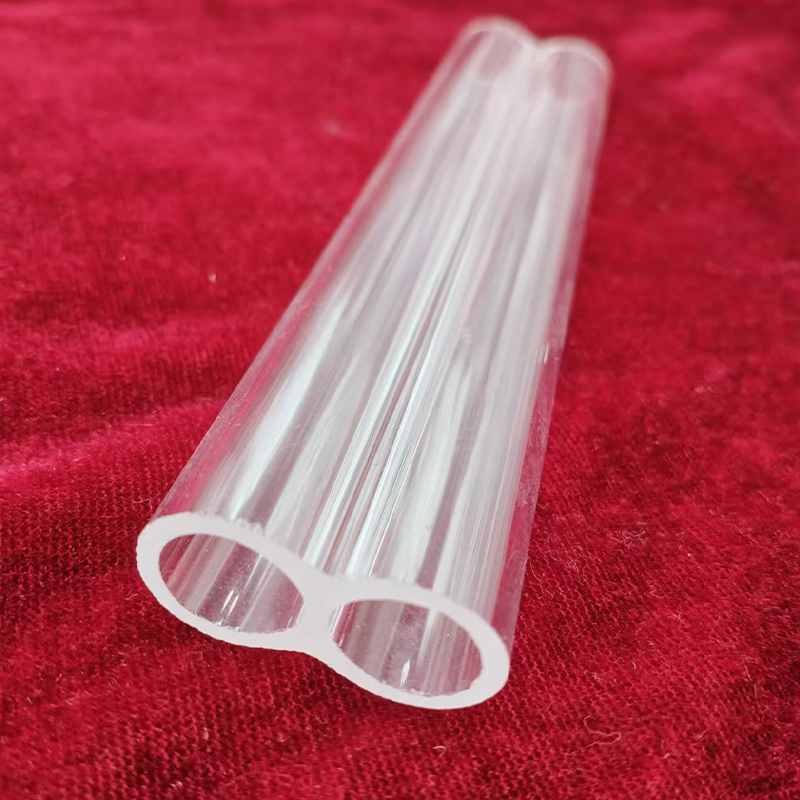
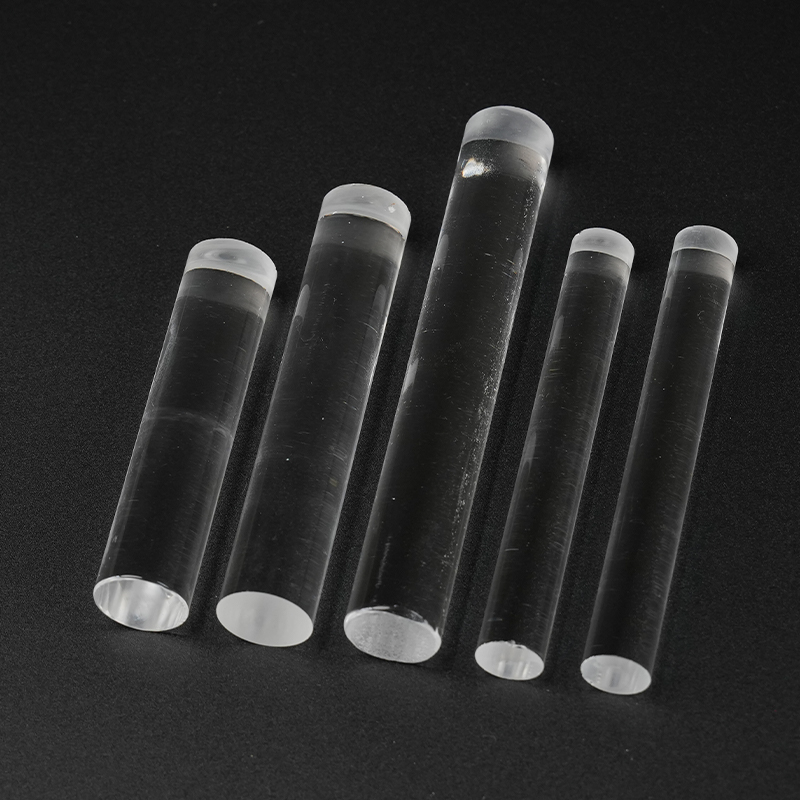
The company's broader product range includes quartz glass tubes, double-hole quartz glass tubes, quartz glass rods, quartz sheets, sapphire windows, calcium fluoride glass windows, infrared and ultraviolet coatings, high-pressure resistant aluminosilicate glass window panels, quartz glass instruments, high borosilicate glass instruments, quartz crucibles, quartz gold-plated tubes, quartz heaters, quartz infrared heating tubes, far-infrared directional radiation heaters, ultraviolet germicidal lamps, and other special types of quartz glass products. This broader manufacturing foundation, particularly the experience gained producing high borosilicate glass instruments and laboratory-grade quartz components, feeds directly into the same composition control, forming precision, and annealing discipline required to produce a reliable High Borosilicate Glass Handicraft Series, including double wall glass cups, decanters, pots, jars, teapots with lids, and French press pots. As a supplier with cross-category technical glass experience, Yancheng Mingyang applies this same quality control approach to handicraft and household glassware development, treating thermal performance and finish consistency as manufacturing priorities alongside visual design. Buyers and distributors sourcing a Double Wall Glass Cup, Borosilicate Glass Decanter, High Borosilicate Glass Cover, Borosilicate Glass Pot, Borosilicate Glass Jar, High Borosilicate Glass Teapot With Lid, or a French Press Pot are welcome to request further technical detail on composition, sizing options, and finishing choices to match a specific retail, hospitality, or wholesale requirement.
Care and Maintenance Tips for Borosilicate Glass Handicrafts
High borosilicate glass is durable and long-lasting under normal use, and a few consistent handling habits help preserve both its appearance and its thermal performance over time.
- Allow a pot or teapot to cool briefly before placing it directly into cold water, since even highly heat-resistant glass performs best when avoiding the most extreme possible temperature swings.
- Check that a lid or cover is seated evenly before lifting a pot or jar, since an uneven seat can place unnecessary stress on the rim over repeated use.
- Clean cups, decanters, and jars with a soft cloth or sponge, avoiding abrasive scouring pads that can dull the surface finish over time.
- For a double-wall cup, avoid submerging the piece for extended periods if the seal integrity is uncertain, and inspect occasionally for any change in insulation performance.
- Store jars, pots, and teapots with adequate spacing to avoid rim-to-rim contact, which is the most common cause of small chips during storage and transport.
- For a French Press Pot, rinse the carafe promptly after use to prevent coffee residue from building up on the interior surface over repeated brewing cycles.
Frequently Asked Questions
Q1: What is the main difference between high borosilicate glass and ordinary soda-lime glass?
High borosilicate glass contains a higher proportion of boron trioxide, which lowers its thermal expansion coefficient significantly compared with soda-lime glass. This gives it much stronger resistance to thermal shock, along with better chemical stability and a harder, more wear-resistant surface.
Q2: How does a Double Wall Glass Cup keep drinks hot while staying comfortable to hold?
A double wall cup has a sealed air gap between an inner and outer wall of glass. Because air conducts heat far more slowly than solid glass, less heat reaches the outer surface, which keeps the exterior cooler to the touch while the beverage inside stays warmer for longer.
Q3: Can a High Borosilicate Glass Teapot With Lid go directly from the refrigerator to boiling water?
High borosilicate glass generally tolerates a temperature differential of roughly 160 to 170 degrees Celsius, which covers most common kitchen temperature swings. As with any glass product, moderate and gradual temperature transitions are still a sound general practice to extend product life.
Q4: Is a Borosilicate Glass Jar safe for storing acidic foods, such as citrus-infused liquids?
Yes, high borosilicate glass resists attack from most common acids and does not leach its own components into stored contents. This chemical stability is one of the key reasons borosilicate jars are commonly used for a wide range of food and beverage storage.
Q5: What should a buyer check when sourcing from a High Borosilicate Glass Handicraft Series Supplier?
Ask about typical SiO2 and B2O3 composition ranges, the annealing process used to relieve internal stress, and whether coordinated pieces such as jars, pots, and their matching lids are tested together. A supplier with broader experience producing laboratory-grade borosilicate and quartz glass instruments often brings additional process discipline into household and handicraft glassware lines as well.
Featured Products
Copyright © Yancheng Mingyang Quartz Products Co., Ltd. All Rights Reserved.
Wholesale Quartz Products Manufacturer Quartz Glass Factory