

 +86-0515-86223369
  0
0 en
en English
 日本語
日本語 Español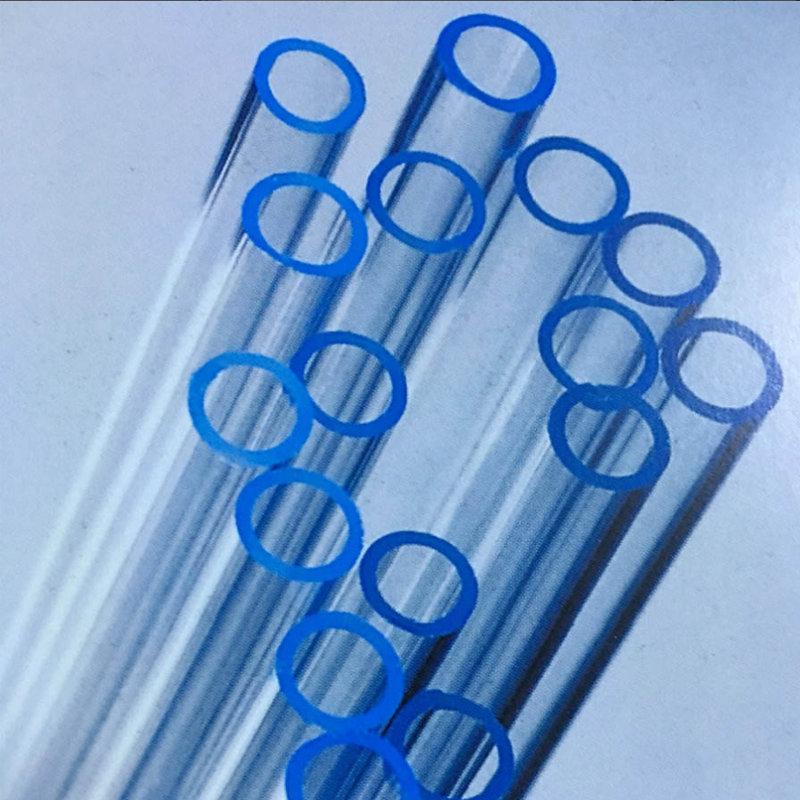


If you need any help, please feel free to contact us
 Products & Solutions
How to Ensure Durability and Precision of Fused Quartz Rods?
Content
- 1 Fused Quartz Rods: Direct Answers on Durability and Precision
- 2 Key Factors Affecting Durability of Fused Quartz Rods
- 3 Precision Comparison: Fabrication Methods for Fused Quartz Rods
- 4 Mechanical Strength Retention at Elevated Temperatures
- 5 Radar Comparison: Fused Quartz vs. Alternative Optical Materials
- 6 Fused Quartz Rod Cutting Guide & Handling Best Practices
- 7 Frequently Asked Questions About Fused Quartz Rods
- 8 Conclusion: Ensuring Durability and Precision of Fused Quartz Rods
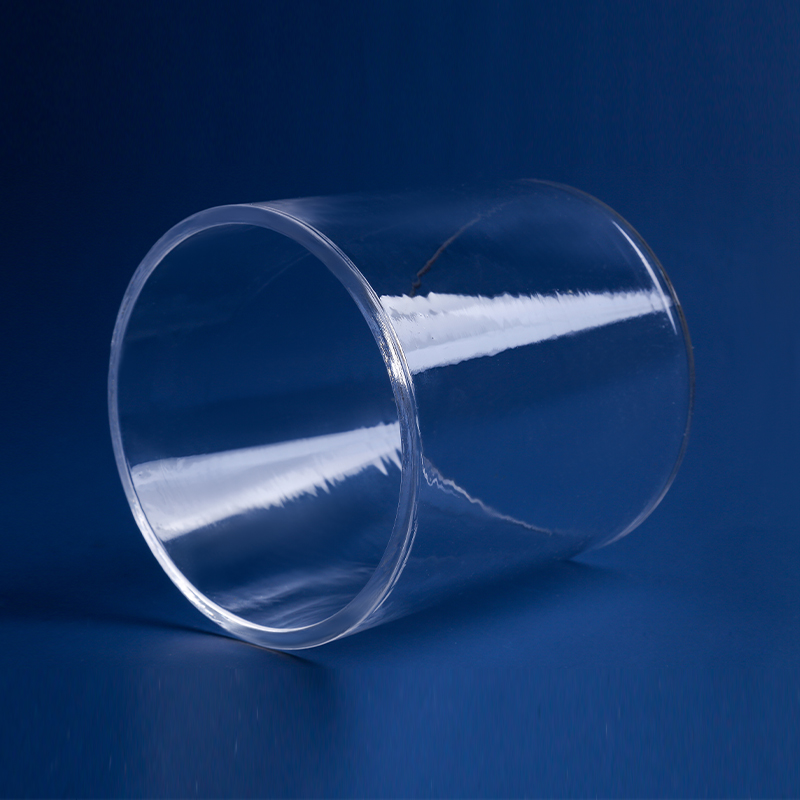
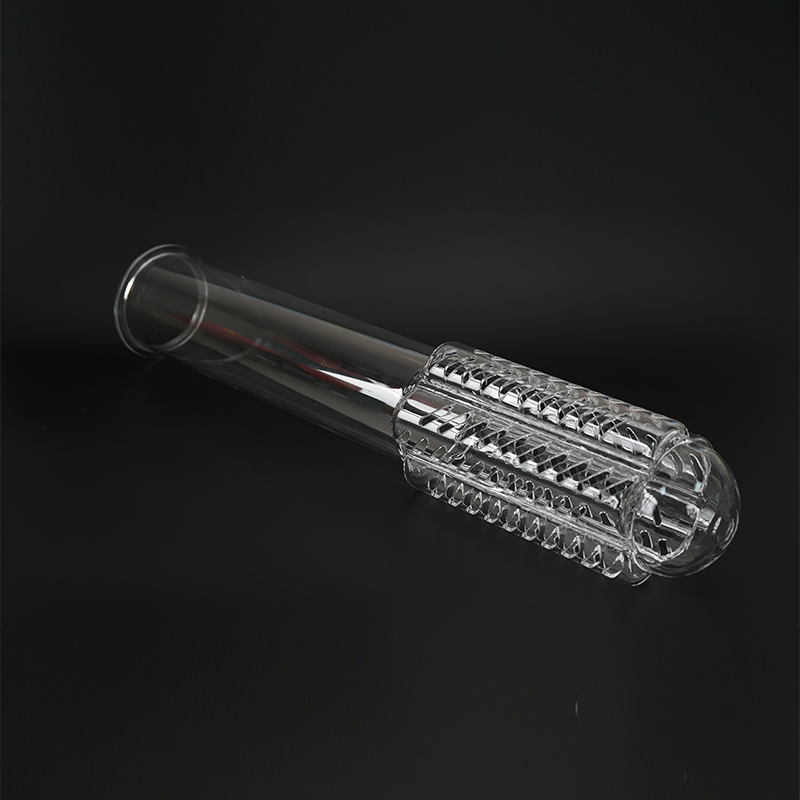
Yancheng Mingyang Quartz Products Co., Ltd. is a company specializing in the production of quartz and special glass products. Yancheng Mingyang Quartz Products Co., Ltd. is the production plant of Jinzhou Mingde Quartz Glass Co., Ltd. in Jiangsu. Since its establishment, the company has developed rapidly, introduced advanced technology and production equipment at home and abroad, and continuously improved and improved product quality. Relying on its own advantages, we have developed a variety of products suitable for the market and meet the needs of different customers, and solved many urgent production problems for our customers. The company's products include quartz glass tubes, double-hole quartz glass tubes, quartz glass rods, quartz sheets, sapphire windows, calcium fluoride glass windows, infrared ultraviolet coatings, high-pressure resistant aluminosilicate glass window panels, quartz glass instruments, high borosilicate glass instruments, quartz crucibles, quartz gold-plated tubes, quartz heaters, quartz infrared heating tubes, far-infrared directional radiation heaters, ultraviolet germicidal lamps and other special types of quartz products.
Fused Quartz Rods: Direct Answers on Durability and Precision
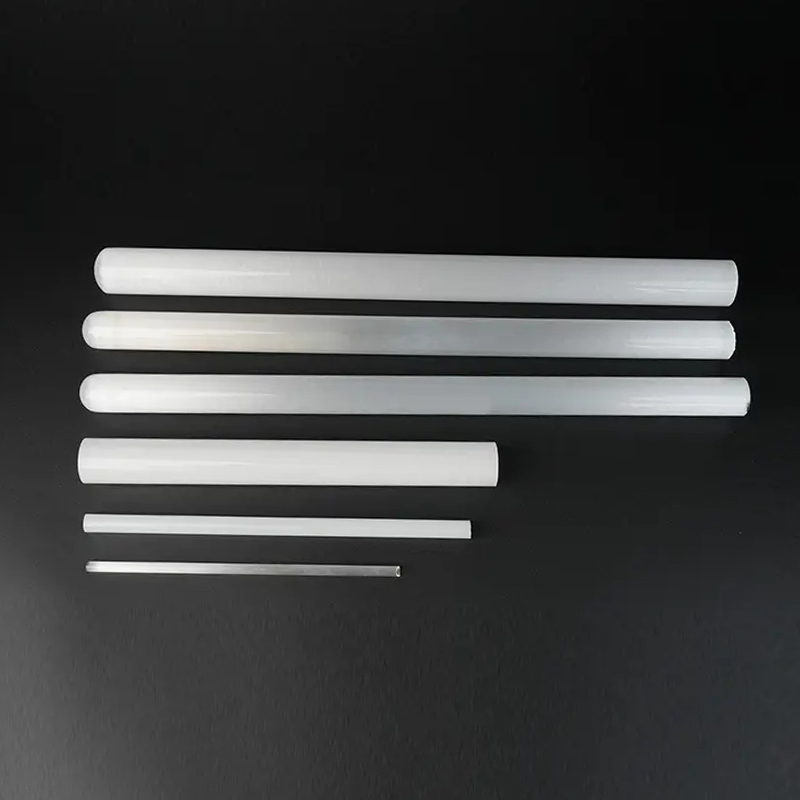
Ensuring durability and precision of fused quartz rods requires three core actions: proper annealing after fabrication to relieve internal stress, controlled handling using clean gloves and padded supports, and precision cutting with diamond-impregnated blades at recommended feed rates (0.5-1.5 mm/s). According to quartz glass products manufacturing data, improperly annealed fused quartz rod can develop micro-cracks leading to a 60% reduction in mechanical strength. The direct conclusion: high precision fused quartz rods demand strict thermal history control and scratch-free surface finishing. This guide provides four data visualizations – horizontal bar chart, line graph, column chart, and radar comparison – to illustrate best practices for handling, machining, and quality control of industrial quartz rod and optical quartz rod types. Whether for fused quartz rod for laboratory use or quartz rod for industrial applications, these principles apply universally.
As a manufacturer of quartz glass and special optical glass, Yancheng Mingyang recommends that users follow a fused quartz rod cutting guide and avoid thermal shock (maximum temperature change rate 5°C/min for rods over 10mm diameter). The following sections provide data-backed protocols.
Key Factors Affecting Durability of Fused Quartz Rods
Several factors influence the longevity of fused quartz rods. The horizontal bar chart below ranks these factors based on failure analysis data from quartz products laboratories.
Internal stress from improper annealing scores highest at 9.7 – fused quartz rods that are not stress-relieved can spontaneously fracture under temperature changes as small as 30°C. Surface scratches (9.2) act as crack initiation sites; a 10μm deep scratch reduces bending strength by up to 45%. Thermal shock (8.8) is critical for high temperature quartz applications; heat resistant quartz rod can withstand 1100°C but rapid cooling from 800°C to room temperature in under 5 seconds causes failure. Chemical contamination (7.5) matters for lab quartz rod used in acidic environments; high purity quartz glass tube production includes strict contamination control. UV exposure (6.2) induces solarization over years of intense exposure, but UV fused quartz cuvettes are formulated to resist this. Understanding these factors helps users select appropriate durable fused quartz rods for their specific environment.
Precision Comparison: Fabrication Methods for Fused Quartz Rods
The precision of fused quartz rod dimensions depends heavily on the fabrication method. The bar graph below compares achievable tolerances for different finishing techniques used by quartz glass products manufacturers.
CNC centerless grinding achieves the tightest tolerance of ±5μm, essential for high precision fused quartz rods used in fiber optics and metrology. Diamond turning (±15μm) is suitable for optical quartz rod applications where surface finish matters more than absolute diameter. Hot extrusion (±50μm) is common for larger diameter quartz rod for industrial applications such as furnace components. As-drawn rods (±100μm) are acceptable for fused quartz rod for laboratory use where visual clarity is the primary requirement. For fused quartz rod cutting guide, users should specify required tolerance class when ordering. A high-quality quartz glass sheet or rod from a reputable quartz glass products supplier will include a certificate of dimensional analysis. When combining rods with precision fittings, specify grinding allowance of 0.1-0.2mm for interference fit applications.
Mechanical Strength Retention at Elevated Temperatures
Heat resistant quartz rod maintains mechanical integrity up to 1100°C, but strength varies with temperature. The line graph below shows flexural strength retention for fused quartz rods from room temperature to 1000°C.
At 1000°C, fused quartz rods retain 82% of room-temperature flexural strength, significantly outperforming borosilicate glass (which softens above 550°C). This property makes quartz rod for industrial applications ideal for semiconductor diffusion furnaces and high-temperature sight glasses. The gradual strength reduction is linear, with no sudden drop indicating phase change. For high purity heat resistant fused quartz glass boat applications, this data supports continuous operation at 1000-1100°C. However, thermal shock resistance is more critical than absolute strength: a fused quartz rod heated to 900°C should not be exposed to water or cold air. Quartz carbon fiber infrared heating tube designs leverage this strength retention. For laboratory quartz crucible handling, always preheat the crucible before adding cold samples. The graph confirms that high temperature quartz maintains structural integrity under normal operating conditions, making it a reliable material for thermal processing equipment.
Radar Comparison: Fused Quartz vs. Alternative Optical Materials
For optical quartz rod and special optical glass applications, material selection impacts durability and precision. The radar chart compares fused quartz against borosilicate glass and soda-lime glass across five critical attributes.
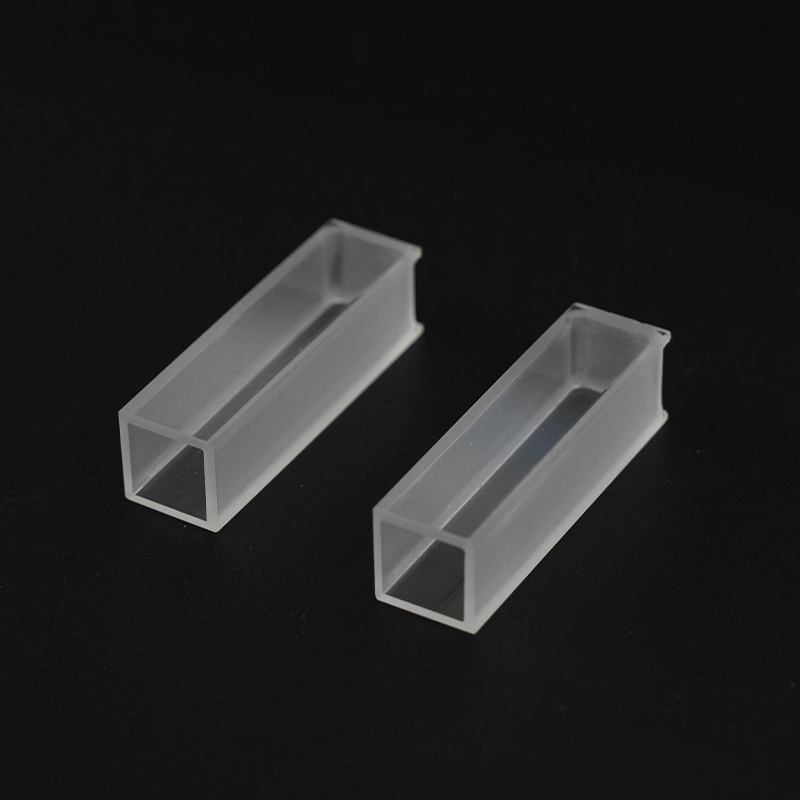
Fused quartz excels in thermal stability (98) and UV transmission (95), making it the preferred quartz glass for UV spectroscopy and high-temperature windows. For UV fused quartz cuvettes and quartz cuvette rectangular applications, the material's low coefficient of thermal expansion (0.55 x 10^-6 /°C) ensures dimensional stability. Borosilicate offers moderate performance but is less durable for thermal cycling. Soda-lime glass is unsuitable for precision or high-temperature applications. For quartz glass sheet or quartz glass window fabrication, fused quartz allows high-precision polishing to λ/10 flatness. Crystal alchemy bowls and singing bowls made from fused quartz produce clearer tones due to uniform density. The radar chart confirms that for high purity quartz glass tube and clear quartz crucible applications, fused quartz is the superior choice where durability and precision are paramount.
Fused Quartz Rod Cutting Guide & Handling Best Practices
Proper cutting and handling preserve the precision of fused quartz rods. The table below provides a quick reference for common operations.
| Operation | Recommended Tool / Method | Key Parameter |
|---|---|---|
| Cutting fused quartz rod | Diamond wafering blade, 0.4-0.6mm thick | Feed rate 0.5-1.0 mm/s, coolant water |
| End surface polishing | Ceramic lapping plate + diamond slurry (9μm to 1μm) | Final Ra <0.02μm for optical use |
| Cleaning | Ultrasonic bath with isopropyl alcohol or acetone | 5-10 minutes, 40-60°C |
| Annealing after grinding | Controlled furnace, 1050°C for 2 hours, slow cool (5°C/min) | Stress birefringence <5nm/cm |
| Storage | Foam-lined tube or individual plastic sleeves | Avoid contact between rods |
For fused quartz rod for laboratory use, always wear clean nitrile gloves to prevent fingerprint etching at high temperatures. When cutting high precision fused quartz rods, use a diamond blade with continuous rim to minimize chipping. After cutting, chamfer edges with 400-grit diamond file. For quartz rod for industrial applications involving vacuum systems, polish ends to 1μm finish to ensure seal integrity. Halogen heater and quartz carbon fiber infrared heating tube manufacturers should inspect rods for micro-cracks using polarized light before assembly. Following these guidelines ensures durable fused quartz rods that meet specification tolerances.
Frequently Asked Questions About Fused Quartz Rods
Q1: What is the maximum continuous operating temperature for fused quartz rods?
A: Fused quartz rods can be used continuously at 1100°C and intermittently up to 1200°C. For high purity heat resistant fused quartz glass boat applications, 1150°C is typical. Above 1200°C, devitrification may occur over extended periods.
A: Fused quartz rods can be used continuously at 1100°C and intermittently up to 1200°C. For high purity heat resistant fused quartz glass boat applications, 1150°C is typical. Above 1200°C, devitrification may occur over extended periods.
Q2: How do I prevent thermal shock when using fused quartz rods in heating applications?
A: For heat resistant quartz rod, limit heating/cooling rates to 5°C/min for rods >10mm diameter. Pre-heat the rod to 200°C before inserting into a 1000°C furnace. Never apply cold water to hot quartz rod.
A: For heat resistant quartz rod, limit heating/cooling rates to 5°C/min for rods >10mm diameter. Pre-heat the rod to 200°C before inserting into a 1000°C furnace. Never apply cold water to hot quartz rod.
Q3: What is the typical surface finish achievable on optical fused quartz rods?
A: Optical quartz rod can be polished to Ra <0.02μm, achieving laser-quality surface finish. For UV quartz plate applications, 20/10 scratch-dig specification is available from qualified quartz glass products suppliers.
A: Optical quartz rod can be polished to Ra <0.02μm, achieving laser-quality surface finish. For UV quartz plate applications, 20/10 scratch-dig specification is available from qualified quartz glass products suppliers.
Q4: Can fused quartz rods be welded or spliced together?
A: Yes, using oxy-hydrogen flame welding. The joint area should be annealed afterward. For glass pipe quartz glass tube assemblies, flame welding produces strong, leak-tight seals. Professional quartz glass rod manufacturers offer custom welding services.
A: Yes, using oxy-hydrogen flame welding. The joint area should be annealed afterward. For glass pipe quartz glass tube assemblies, flame welding produces strong, leak-tight seals. Professional quartz glass rod manufacturers offer custom welding services.
Q5: How to choose between fused quartz and high borosilicate glass for a specific application?
A: Choose fused quartz when you need: UV transmission below 250nm, continuous use above 500°C, or low thermal expansion (0.55 vs 3.3 for borosilicate). Choose high borosilicate measuring cup or triangular flask chemistry glass for routine lab work below 400°C with less precision requirement.
A: Choose fused quartz when you need: UV transmission below 250nm, continuous use above 500°C, or low thermal expansion (0.55 vs 3.3 for borosilicate). Choose high borosilicate measuring cup or triangular flask chemistry glass for routine lab work below 400°C with less precision requirement.
Conclusion: Ensuring Durability and Precision of Fused Quartz Rods
Ensuring durability and precision of fused quartz rods requires attention to annealing quality, handling practices, and appropriate fabrication methods. Data from horizontal bar, column, line, and radar charts demonstrate that internal stress control is the single most important factor, followed by surface integrity and thermal management. For high precision fused quartz rods, specify CNC centerless grinding for ±5μm tolerances. For fused quartz rod for laboratory use, follow the cutting guide to avoid edge chipping. As a manufacturer of quartz glass tubes, quartz crucibles, and UV quartz plates, Yancheng Mingyang Quartz Products Co., Ltd. recommends that users work with established suppliers who provide annealing certificates and dimensional reports. Whether for optical quartz rod, industrial quartz rod, or crystal singing bowl applications, these principles ensure long service life and consistent performance.
Contact us for fused quartz rod specifications
Request quartz glass catalogs and product details | Send an inquiry for custom quartz fabrication
Get more information about high purity quartz solutions — Yancheng Mingyang Quartz Products Co., Ltd.
Featured Products
Copyright © Yancheng Mingyang Quartz Products Co., Ltd. All Rights Reserved.
Wholesale Quartz Products Manufacturer Quartz Glass Factory