

 +86-0515-86223369
  0
0 en
en English
 日本語
日本語 Español



If you need any help, please feel free to contact us
 Products & Solutions
Applications of Capillary Quartz Tubes?
Content
- 1 What Are Capillary Quartz Tubes Used For?
- 2 UV Laser Systems
- 3 High-End Metal Halide Lamps
- 4 Electro-Optical Light Sources
- 5 Optical Sensing and Spectroscopy
- 6 Semiconductor and Photovoltaic Processing
- 7 Medical and Bioanalytical Instruments
- 8 Key Material Properties That Enable These Applications
- 9 Selecting the Right Capillary Quartz Tube for Your Application
What Are Capillary Quartz Tubes Used For?
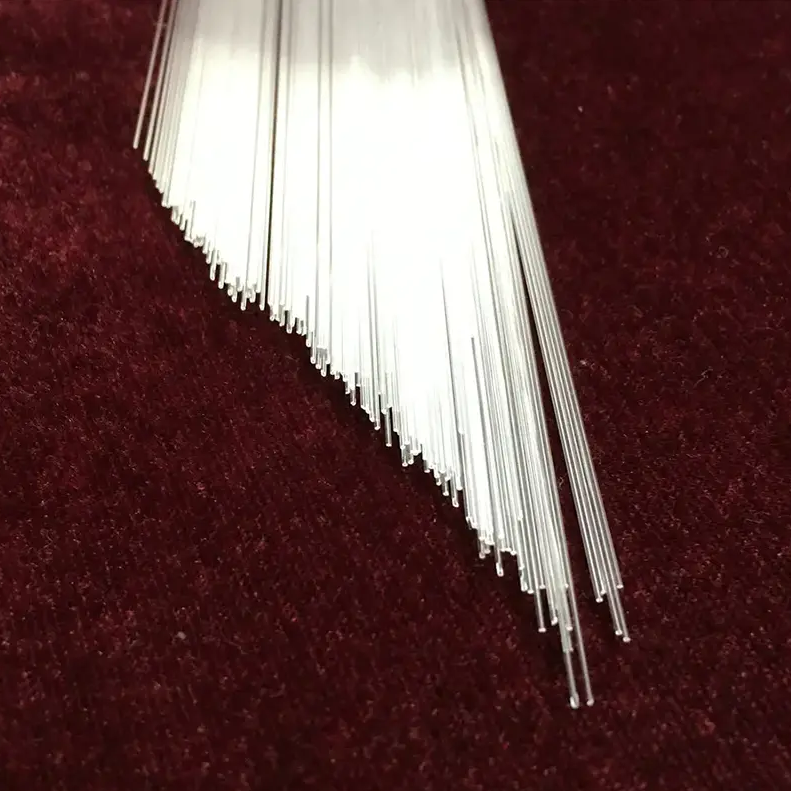
Capillary quartz tubes are precision components used across a wide range of demanding optical, lighting, and scientific applications. Their core advantage lies in combining high UV-to-near-infrared transmittance, ultra-low hydroxyl (OH) content, and exceptional thermal stability—properties that make them indispensable where standard glass simply cannot perform. From UV lasers to high-end metal halide lamps, these tubes serve as critical structural and optical elements.
UV Laser Systems
One of the most demanding applications for capillary quartz tubes is in UV laser systems, including excimer lasers and solid-state UV lasers. These systems require optical components that transmit efficiently at wavelengths as short as 190–250 nm, where most conventional glasses absorb heavily.
Hydroxyl groups (OH) present in quartz cause significant absorption in the UV range, particularly near 245 nm. Capillary quartz tubes manufactured through high-temperature vacuum processing reduce OH content to extremely low levels—often below 1 ppm—which directly prevents light attenuation and material degradation over extended use.
Additionally, the low autofluorescence of high-purity quartz ensures that background noise is minimized in laser cavities and beam delivery systems, preserving signal integrity in precision applications.
High-End Metal Halide Lamps
Metal halide lamps operate at extremely high internal temperatures—often exceeding 800°C—and require envelope materials that can withstand both thermal stress and chemically reactive halide compounds. Capillary quartz tubes are a preferred choice for the inner arc tubes and feed-through channels in these lamps.
Key performance requirements met by capillary quartz tubes in this application include:
- Resistance to devitrification (crystallization) at sustained high temperatures
- Low metallic ion contamination (typically <1 ppm for Fe, Al, Ca) to prevent discoloration of emitted light
- Minimal bubble and inclusion content, which could create hot spots or mechanical failure points
- Low OH content to prevent hydroxyl-induced light decay over the lamp's operational lifetime
These properties collectively ensure stable lumen output and long service life in professional lighting equipment.
Electro-Optical Light Sources
Capillary quartz tubes are widely used as envelope or structural components in a broad class of electro-optical light sources, including deuterium lamps, xenon arc lamps, and mercury vapor lamps. These devices depend on the tube's ability to transmit light efficiently from UV through the near-infrared spectrum (roughly 190 nm to 2500 nm).
The narrow inner diameter of capillary tubes—often ranging from 0.5 mm to several millimeters—allows precise control of the discharge channel geometry, which directly influences the spatial distribution and intensity of emitted light. This makes dimensional accuracy a critical manufacturing parameter.
| Light Source Type | Relevant Quartz Tube Role | Key Property Required |
|---|---|---|
| Deuterium Lamp | UV window / envelope | High UV transmittance (<200 nm) |
| Xenon Arc Lamp | Arc tube / discharge channel | Thermal stability, bubble-free |
| Metal Halide Lamp | Inner arc tube, feed-through | Low OH, low metallic ions |
| Mercury Vapor Lamp | Discharge envelope | High purity, chemical resistance |
Optical Sensing and Spectroscopy
In analytical instrumentation and optical sensing, capillary quartz tubes serve as sample flow cells, fiber optic conduits, or structural elements within spectrometers and fluorescence detectors. Their low autofluorescence under UV excitation is a particularly valued property in these contexts.
When a quartz material fluoresces under excitation light, it adds unwanted background signal that degrades the detection limit of the instrument. High-purity capillary quartz tubes suppress this effect, making them suitable for:
- Fluorescence spectroscopy flow cells requiring signal-to-noise ratios below 0.01%
- Raman spectroscopy sample holders where background suppression is critical
- Absorption spectroscopy cells operating in the deep UV range
- Laser-induced breakdown spectroscopy (LIBS) components
The narrow and precisely controlled inner diameter of capillary formats enables micro-volume measurements, which is increasingly important in life sciences and chemical analysis.
Semiconductor and Photovoltaic Processing
Quartz tubes—including capillary formats—are used extensively in semiconductor fabrication for processes such as diffusion, oxidation, and chemical vapor deposition (CVD). In these environments, tubes are exposed to temperatures from 900°C to over 1200°C, often in combination with reactive process gases.
Ultra-low metallic contamination is non-negotiable in semiconductor applications, as trace metal ions can diffuse into silicon wafers and degrade device performance. Capillary quartz tubes produced from high-purity raw materials with strict contamination controls meet the stringent purity standards required in clean-room environments.
In photovoltaic (solar cell) manufacturing, similar high-temperature processing steps use capillary quartz components as gas delivery channels and process tube inserts.
Medical and Bioanalytical Instruments
Capillary quartz tubes find application in medical diagnostics and bioanalytical platforms, particularly those employing UV light for detection or sterilization. Examples include capillary electrophoresis (CE) systems, UV-based microfluidic chips, and DNA/RNA analysis instruments.
Capillary Electrophoresis
In CE systems, the separation capillary is illuminated by UV light (typically at 214 nm or 254 nm) to detect separated analytes. Quartz capillaries are preferred over polymer alternatives because they offer stable UV transmittance over thousands of run cycles and do not leach plasticizers or absorbers into the analyte stream.
UV Sterilization Systems
In UV water purification and air sterilization systems, quartz tubes encase the UV lamp and must maintain high transmittance at germicidal wavelengths (primarily 254 nm) over extended operational periods. The low OH content of vacuum-processed capillary quartz tubes prevents the hydroxyl-induced solarization that gradually reduces UV output in lesser-grade materials.
Key Material Properties That Enable These Applications
The broad applicability of capillary quartz tubes is rooted in a specific set of material characteristics. Understanding these properties clarifies why quartz outperforms alternatives in the applications described above.
- High transmittance from UV to near-infrared (190–2500 nm): Enables use across the full optical spectrum in precision systems.
- Ultra-low OH content (achieved via high-temperature vacuum processing): Prevents absorption-related degradation in UV lasers and high-end lamps.
- Low metallic ion and impurity content: Reduces light scattering and contamination risk in semiconductor and analytical applications.
- Controlled bubble and inclusion content: Eliminates structural weak points that could cause failure under thermal or photonic stress.
- Thermal stability up to ~1100°C continuous use: Supports high-temperature processing environments without deformation or devitrification.
- Low autofluorescence under UV excitation: Critical for background suppression in spectroscopic and sensing instruments.
Selecting the Right Capillary Quartz Tube for Your Application
Not all capillary quartz tubes are equivalent. When selecting a tube for a specific application, consider the following parameters:
- OH content specification: For UV laser and UV lamp applications, specify low-OH grades processed under vacuum conditions.
- Dimensional tolerances: Capillary inner diameter tolerances as tight as ±0.01 mm may be required for flow cell or discharge channel applications.
- Purity grade: Semiconductor and analytical applications typically require metallic ion content below 1 ppm for key elements.
- Bubble class: Optical applications benefit from bubble-free or Class A grades to avoid scattering losses.
- Operating wavelength range: Confirm that the tube's transmittance curve covers the specific wavelengths in your system, particularly in the deep UV below 250 nm.
Matching material grade to application requirements avoids premature failure and ensures consistent performance throughout the component's service life.
Featured Products
Copyright © Yancheng Mingyang Quartz Products Co., Ltd. All Rights Reserved.
Wholesale Quartz Products Manufacturer Quartz Glass Factory